For some 20 years, the Energy Systems Laboratory has been helping to put on the Texas Energy Summit, formerly the Clean Air Through Energy Efficiency (CATEE) Conference. The Summit is a project of the Energy Systems Laboratory (ESL), a division of the Texas A&M Engineering Experiment Station (TEES), a unit of The Texas A&M University System.
The Summit comes out of a requirement from 2001 legislation that ESL examine how initiatives in energy and buildings can reduce the emissions of air pollution that leads to high levels of smog in Texas main urban areas. As we have for many years, Sierra Club was a partner organization for the summit and participated in many sessions. This year, our Legislative and Conservation Director also was recognized with a prize for his work on sustainable policy.
What Is the Energy Systems Laboratory (ESL)?
ESL conducts research, provides energy code technical assistance to state and local governments and the building industry, develops code compliance calculators and calculates emissions reduction benefits from energy efficiency and renewable energy initiatives, develops energy-modeling systems, provides research engineering services to real-world projects, and disseminates relevant information and education to public audiences of interest through training and conferences.
About the Texas Energy Summit
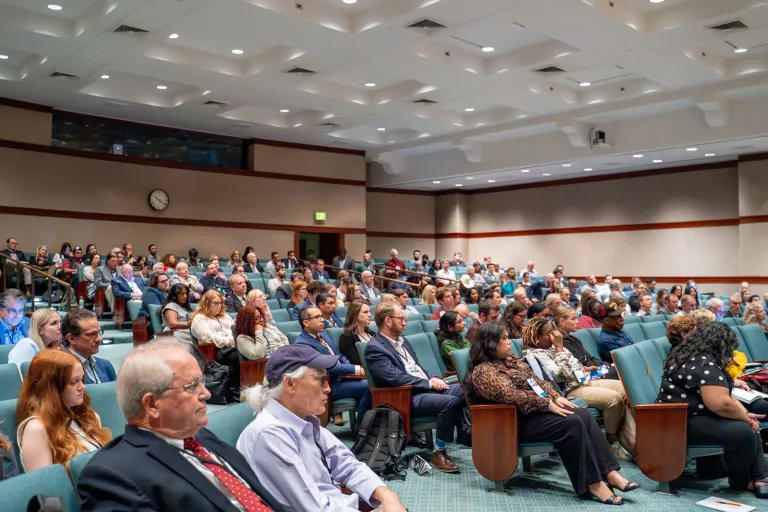
The Texas Energy Summit provides a forum for Texas stakeholders, policymakers, and practitioners of all things energy and energy efficiency to come together once a year to learn, discuss and grow. This year’s summit was expansive with discussions on codes, heat pumps, renewable energy development, large loads, the rising cost of energy and the rising demand for energy, mainly from new “large loads” like cryptomines, steel mills, hydrogen production, data centers, electrification of oil and gas production, and artificial intelligence.
Key Takeaways from the Summit
Trying to summarize the key takeaways out of a summit with so many topics is difficult, but one key message was that Texas has a growing economy and if we are to continue to thrive as a state, assuming that the quickest and cheapest forms of energy are to be used, we need not to get in the way of technological change. This includes both continued development of wind, solar and storage, but also incorporation of onsite technologies like distributed batteries, Integrating electric vehicles into our electric grid, demand response, energy efficiency, and heat pumps to heat our buildings with electrical systems. Another theme was the need to make all of these changes in a way that is affordable given the many Texans who can not afford rising bills, especially as we build out new transmission infrastructure.
Recognizing Outstanding Work
A number of organizations and individuals received recognition for their great work. One organization that was highlighted for their outstanding research and policy development was the Texas Energy Poverty Research Institute, which has worked tirelessly on programs to make energy efficiency and solar programs work for low-income Texans, while doing important research on energy poverty, burden and access.
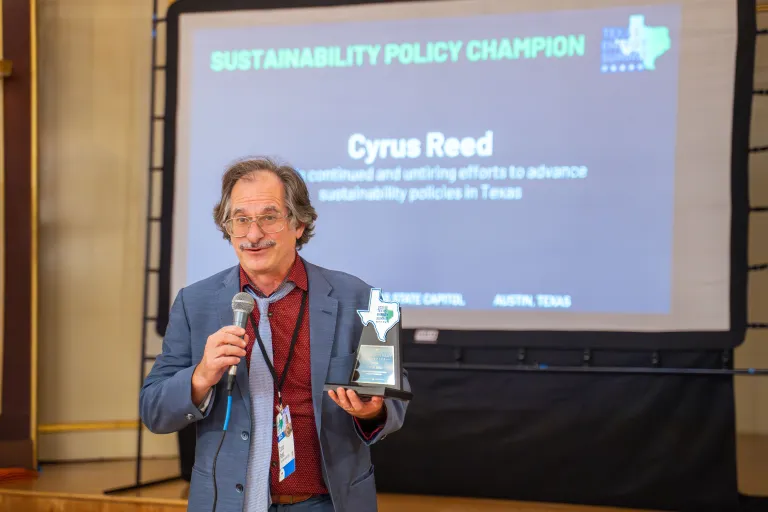
Sierra Club’s Cyrus Reed received an award as Sustainability Policy Champion for his continued work at the Legislature and the PUCT on promoting energy efficiency policy, funding for research and modern energy codes among other issues.
Also receiving special recognition was San Antonio City Councilmember Phyllis Viagran was recognized for her work in advancing energy resilience, collaboration, and sustainability in San Antonio.
Another awardee included former State Energy Conservation Office head Dub Taylor, who has since left state government to head up the Texas Property Assessed Clean Energy Authority, while current SECO head Eddy Trevino, who has literally administered hundreds of millions of dollars in federal and state grants and loans, benefitting thousands of Texans and the grid as a whole.