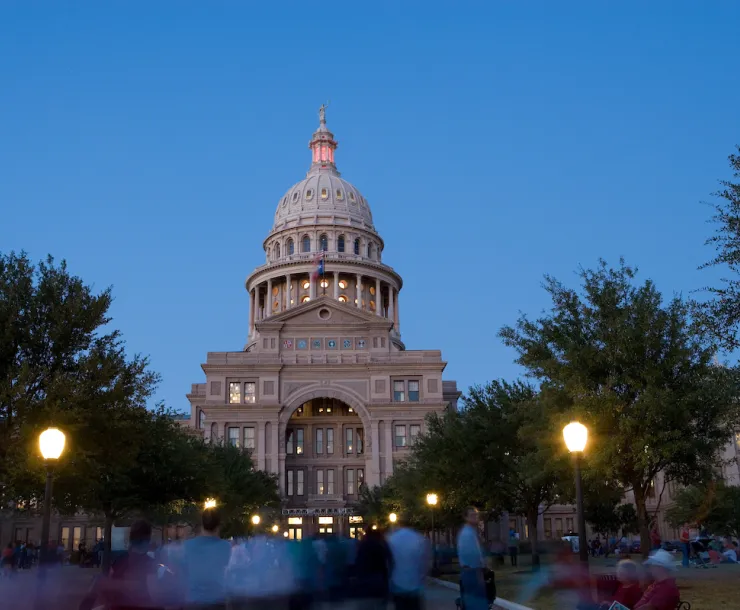
At the Sierra Club Lone Star Chapter, we believe Texans deserve leaders who put people, the planet, and our future first. Our Texas Legislative Scorecard holds elected officials accountable for their actions at the Texas Capitol - tracking how they voted on key bills that impact our air, water, climate, and communities. This is more than a report card - it’s a tool for transparency and accountability that Texans can use to stay engaged during the interim (the period of time between legislative sessions), and communicate with their legislators about their vision for a better Texas.
With every edition of our Legislative Scorecard, we try to answer two simple questions:
- Do your state legislators have the courage to stand up against polluting special interests?
- Do they spend political capital fighting for the environment and its people?
There are far too many complexities to be comprehensive in our assessment. So, we have selected key votes and actions that show you what we see at the Texas Legislature. You can read more about the scorecard development process in the actual scorecard.
Constructing the Legislative Scorecard is a forward-looking exercise. It’s up to you to hold your elected officials accountable for their actions. It is essential to reclaiming our public institutions for the people they are meant to serve.
Download the full 2025 Texas Legislative Scorecard
A Word from Sierra Club Staff About Our Legislative Scorecard
Sierra Club Lone Star Chapter 2025 Legislative Scorecard - Summary and Trends
Did your state legislators have the courage to stand up to polluters, big utilities, and special interests? That’s what our scorecard is designed to find out.
- Electric utilities fought - and won - to keep the status quo of high electric bills, using their influence with Republicans and Democrats to quash major energy efficiency legislation.
- With only five State Reps earning perfect scores, and one State Senator, the Texas Legislature is in desperate need of more leaders willing to spend political capital on pro-environment, pro-people bills.
- SB 7 and HJR 7, the big water infrastructure bills, dominated the conversation about water issues. Other important water bills relating to salinity standards and plastic nurdle pollution, went nowhere.
- While most Democrats defended attacks on renewable energy, some Republicans also recognized their value to the Texas economy and our pocketbooks and helped fight back attempts to stifle solar and wind.
- Rep. John Smithee was the highest scoring Republican at 67%.
- Rep. Richard Raymond was the lowest scoring Democrat at 43%.
- Some Democrats caved to corporate special interests on nuclear subsidies and oil and gas wastewater.
The results are clear: too many legislators on both sides of the aisle still side with powerful interests over the people they serve. But what will we do with that information? The legislative interim is our chance to turn awareness into action, to meet with legislators in our communities, and to remind them who they work for. When Texans speak up, we shift the balance of power away from corporate polluters and toward a better future for all.
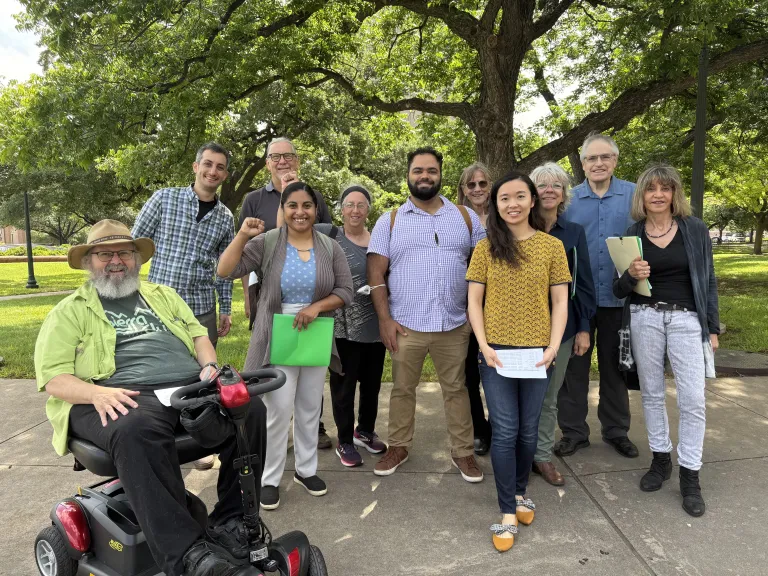
Scoring Methodology
We start with a list of floor votes that reflect the consequential moments of key Sierra Club priorities as much as possible. That includes bills we fought for and against, in addition to amendments to bills both good and bad. Most of the time, the votes were on third (and final) reading. Though some can be on adoption of an amendment.
Then, we assign weights to each vote based on two fundamental questions:
- On a scale of 1-10, how high were the stakes on this vote? How consequential would this bill be to the lives of Texans?
- On a scale of 1-10, how difficult was it to persuade legislators to vote the right way?
Based on estimates provided by our lobby team, a unique weight was given to each vote. For example, Sen. Kolkhorst’s bill - SB 819 - that would have added discriminating permitting requirements for renewable energy was pegged at a 9 for stakes, and an 8 for difficulty because of the special interests pushing the bill, giving it a total of 17 out of 20. Assigning the weight to this vote, then, produced a value of 11.64% of the total raw score to the SB 819 vote.
How Did Your Legislator Score?
Now that the scores are in, it’s time to see how your legislators measured up. Knowledge is power - and knowing your legislators’ voting record gives you the tools to hold them accountable. As we move through the interim, one of the most important times to engage with elected officials, your voice matters more than ever. Legislators are hearing from someone - the question is, who will it be? Texans who care about clean air, safe water, and a livable climate, or the paid corporate lobbyists fighting to weaken protections and gain favor for special interests? It’s up to us to make sure they hear from the people they represent. Find out who represents you here.
But while it was a grueling session, we can confidently say we - as a team - did remarkably well given the harsh political climate at the Texas Capitol. We made remarkable progress despite a hostile legislature. What we achieved was due in no small part to you. Thank you.
Key Votes (Click to View More)
TEXAS HOUSE VOTES
HB 1359
Author: Rep. Ana Hernandez
Summary: HB 1359 would have established a statewide Income Based Assistance Fund
similar to the System Benefit Fund, which helped low-income households pay their electric bills, as well as payment assistance to low-income households during weather extremes. Funding would have been allocated by the Legislature for the program, and an appropriation was included in the state budget if the bill had passed. There are numerous examples across the country where this type of program proves its worth by minimizing utilities being shut off because poorer Texans can’t afford their bills.
Our Position: A vote for this bill was a vote for the Sierra Club position.
Outcome: HB 1359 passed the House 100-45, but never received a hearing in the Senate Business & Commerce Committee.
HB 5623
Author: Rep. Yvonne Davis
Summary: HB 5623 would have made energy efficiency programs eligible to access the Texas Energy Fund, which was approved by voters in 2023. To date, the TEF is a massive multi-billion dollar subsidy for wealthy gas power plant builders, some distribution and transmission resiliency upgrades and backup power. It would have been great if the Public Utility Commission of Texas could have also used the fund to provide grants to weatherize our homes and businesses and reduce energy waste in our buildings.
Our Position: A vote for this bill was a vote for the Sierra Club position.
Outcome: The House voted 78-61 in favor of HB 5623, but recognizing that a constitutional amendment that accompanied the bill - HJR 218 - was passed on a 74-67 vote, and thus did not receive a two-thirds majority requirement (ie 100 votes), Davis withdrew the bill before its third reading.
HB 5323
Author: Rep. Ken King
Summary: The idea behind HB 5323 was to ensure that the various state agencies that have regulatory or financial programs that help reduce energy waste can collaborate and work with other stakeholders to expand access and use of energy waste reduction programs. Its success could be explained by it having minimal mandates, no fiscal note, and a Republican carrying the bill.
Our Position: A vote for this bill was a vote for the Sierra Club position.
Outcome: HB 5323 was signed by Gov. Abbott and becomes effective Sept. 1, 2025.
SB 1253
Author: Sen. Charles Perry
Summary: Most new residential developments are required to pay water and wastewater impact fees, which helps pay for the infrastructure that all cities rely on. SB 1253 would have created a credit for builders who installed water conservation features that reduced water needs, or promoted reuse or savings that go beyond required codes or local ordinances.
Our Position: A vote for this bill was a vote for the Sierra Club position.
Outcome: SB 1253 passed both houses but was vetoed by Gov. Abbott on June 22 because of an amendment added to the bill that was unrelated to the bill itself. However, during the Second Special Session, a similar version of the bill (SB 14) was passed and signed by the Governor.
HB 14
Author: Rep. Cody Harris
Summary: Nuclear power’s dependence on government support is tremendous. After decades of trying to persuade us it’ll be “too cheap to meter” they’re still clamoring for our tax dollars, and they managed to dupe our state’s elected officials out of $470 million mostly through new appropriations. HB 14 creates several “pots” of taxpayer subsidies for development and construction of “new” nuclear power plants. If they are constructed, the bill also authorizes incentives for the production itself, undermining our energy-only market where the risk is supposed to be on developers, not taxpayers or ratepayers.
Our Position: A vote for this bill was a vote against the Sierra Club position.
Outcome: HB 14 was signed by Gov. Abbott and takes effect Sept. 1, 2025.
HJR 138
Author: Rep. Daniel Alders
Summary: HJR 138 would have amended the state constitution to ban a carbon tax or related tax that is focused on reducing greenhouse gases. Does Texas have a carbon tax? No, it doesn’t, but HJR 138 would have prevented any future efforts to financially disincentivize climate pollution. At best, this resolution was a waste of time fighting something that doesn’t exist for political grandstanding. At worst, it makes it that much harder to fight climate change in the future and we need to consider more policy tools.
Our Position: A vote for this bill was a vote against the Sierra Club position.
Outcome: HJR 138 failed to reach the two-thirds vote necessary for constitutional amendments to pass the House (93-47).
HB 49
Author: Rep. Drew Darby
Summary: HB 49 limits the liability of oil and gas producers with regard to the disposal of oil and gas wastewater. The bill undermines the “cradle to grave” basis for the management of most hazardous materials in Texas law, and instead allows liability to transfer with the wastewater as it goes through the treatment and disposal process. Most egregiously, it states that if a company that is treating the wastewater follows its permits in a reasonable manner, neither the original creator of the waste nor the treatment facility can be held liable if downstream users later have negative impacts.
Our Position: A vote for this bill was a vote against the Sierra Club position.
Outcome: HB 49 was signed by Gov. Abbott on June 20, and takes effect on Sept. 1, 2025.
HB 5246 Conference Committee Report
Author: Rep. Greg Bonnen
Summary: HB 5246 was a comprehensive bill that dealt with the space and aerospace industry, and a new Texas Space Commission. Initially, Sierra Club took no position on the bill. However, we opposed two bad bills related to SpaceX in the House. In the last days of the session, after the bad bills had failed, similar language from one of those bills was added to the HB 5246 conference committee report that authorizes the the new Texas Space Commission to consult with the city of Starbase - or frankly any other city near a spaceport - to close highways, beaches or other public venues. The board of the Texas Space Commission will be named by the Governor, Lt. Governor, and Speaker and is sure to have at least one representative of Space X on it.
Our Position: A vote for the conference committee report was a vote against the Sierra Club position.
Outcome: HB 5246 was signed by Gov. Abbott and takes effect on Sept. 1, 2025.
HB 3556 - Darby Amendment
Author: Rep. Drew Darby (Bill author: Rep. Cody Vasut)
Summary: Rep. Darby’s amendment to HB 3556 turned a terrible bill into a more appropriate one for coastal environmental protection. Without it, HB 3556 would have required any new coastal wind projects to consult with the Abbott-appointed Texas Parks and Wildlife Commission, and allow the TPWD essentially veto power over any wind project. However, the amendment removed the potential for TPWD to veto projects, and instead required a more cooperative consultation to lead to better, more responsible projects.
Our Position: A vote for the amendment was a vote for the Sierra Club position.
Outcome: HB 3556 was signed by Gov. Abbott on June 20, and takes effect on Sept. 1, 2025.
HB 871
Author: Rep. Ron Reynolds
Summary: Building codes might not be the most exciting topic, but when it involves better protection of new buildings from floods and extreme weather, it can have a life saving impact. HB 871 would have updated the state’s building codes in municipal areas to do this by raising the code from the 2012 International Residential Code and 2012 International Building Code to the 2018 IRC and IBC, which contain more modern requirements for flooding, extreme weather and hurricanes. However, the bill, which did not receive Lt. Gov. Dan Patrick’s unofficial 100 vote threshold for House bills to move through the Senate, was never even referred to committee in the Senate.
Our Position: A vote for the bill was a vote for the Sierra Club position.
Outcome: HB 871 passed the House but did not get referred to a committee in the Senate.
SB 783
Author: Sen. José Menéndez
Summary: This bill cleaned up statutory language to allow the State Energy Conservation Office (SECO) to update the building energy codes for all residential and commercial construction, and also update the building energy codes for state government and university buildings. The bill should lead to more energy efficient new construction and encourage cities to adopt the latest building codes. A win for climate resiliency and a win for taxpayers because more energy efficient public buildings cost less to heat and cool.
Our Position: A vote for the bill was a vote for the Sierra Club position.
Outcome: SB 783 was signed by Gov. Abbott and becomes effective Sept. 1, 2025.
HJR 7
Author: Rep. Cody Harris
Summary: This constitutional amendment authorizes $1 billion per year for 20 years to be used for water infrastructure and flood protection beginning in 2028 by allocating a portion of State Sales and Use Tax to the Texas Water Fund. Sierra Club did not support an initial version of the bill because it would have required a majority of the money to be used for new water supply projects, HJR 7 removed this requirement and instead gave more discretion to the TWDB on how to use the money. The bill provides an important downpayment on water infrastructure needs that should attract federal, local and private investments. Voters will decide in November whether or not to approve the constitutional amendment.
Our Position: A vote for the bill was a vote for the Sierra Club position.
Outcome: HJR 7 was signed by Gov. Abbott and will become effective if voters approve Proposition 4 this November.
SB 819
Author: Sen. Lois Kolkhorst
Summary: The bill was a draconian attempt to add extra regulations and costs to solar and wind energy. For example, the bill would have created setback requirements which would have severely restricted wind development, while also creating new financial requirements and a requirement to get a permit from the Public Utility Commission of Texas before operating, essentially giving the state a veto power over wind and solar development that it does not have over other forms of electric generation. SB 819 would have placed a chilling effect on future development and undermined this growth. Responsible siting is important, but the bill was governmental overreach.
Our Position: A vote for the bill was a vote against the Sierra Club position.
Outcome: SB 819 was passed by the Senate but died in the House State Affairs Committee.
SB 495
Author: Sen. Kevin Sparks
Summary: SB 495 sought to limit the use of ESG (environmental, social, and governance) ratings in the insurance industry by prohibiting the Commissioner of Insurance from adopting certain rules relating to ESG assessments and from requiring an insurer to comply with certain rules, regulations, directives, or standards that were developed using ESG ratings. While it is unlikely that the Texas Department of Insurance would do this anyway, the bill undermined national efforts to incorporate risks related to climate change into our rules for insurance companies and would have undermined the independent authority of TDI and the insurance industry.
Our Position: A vote for the bill was a vote against the Sierra Club position.
Outcome: SB 495 was passed by the Senate but was never placed on the House floor.
SB 388
Author: Sen. Phil King
Summary: SB 388 was an anti-market energy bill that would have required that at least 50% of all new electric power supply in Texas be “dispatchable” going forward. It also, inexplicably, declared energy storage ineligible. The bill would have undermined our all-of-the-above energy market by giving a backdoor incentive to construct more gas power plants, even though it would increase our energy bills. With major investments in Texas largely consisting today of storage and solar, which are cheaper and faster to build than gas, the bill would have severely impacted reliability and affordability, and led to higher levels of pollution.
Our Position: A vote for the bill was a vote against the Sierra Club position.
Outcome: SB 388 was passed by the Senate but died in the House State Affairs Committee.
SB 783
Author: Sen. José Menéndez
Summary: This bill cleaned up statutory language to allow the State Energy Conservation Office (SECO) to update the building energy codes for all residential and commercial construction, and also update the building energy codes for state government and university buildings. The bill should lead to more energy efficient new construction and encourage cities to adopt the latest building codes. A win for climate resiliency and a win for taxpayers because more energy efficient public buildings cost less to heat and cool.
Our Position: A vote for the bill was a vote for the Sierra Club position.
Outcome: SB 783 was signed by Gov. Abbott, and became effective Sept. 1, 2025.
SB 1253
Author: Sen. Charles Perry
Summary: Most new residential developments are required to pay water and wastewater impact fees, which helps pay for the infrastructure that all cities rely on. SB 1253 would have created a credit for builders who installed water conservation features that reduced water needs, or promoted reuse or savings that go beyond required codes or local ordinances.
Our Position: A vote for this bill was a vote for the Sierra Club position.
Outcome: SB 1253 passed both houses but was vetoed by Gov. Abbott on June 22 because of an amendment added to the bill that was unrelated to the bill itself. During the Second Special Session, a similar version of the bill (SB 14) was passed and signed by Abbott.
HB 14
Author: Rep. Cody Harris
Summary: Nuclear power’s dependence on government support is tremendous. After decades of trying to persuade us it’ll be “too cheap to meter” they’re still clamoring for our tax dollars, and they managed to dupe our state’s elected officials out of $470 million mostly through new appropriations. HB 14 creates several “pots” of taxpayer subsidies for development and construction of “new” nuclear power plants. If they are constructed, the bill also authorizes incentives for the production itself, undermining our energy-only market where the risk is supposed to be on developers, not taxpayers or ratepayers. Our Position: A vote for this bill was a vote against the Sierra Club position.
Outcome: HB 14 was signed by Gov. Abbott and took effect on Sept. 1, 2025.
HB 49
Author: Rep. Drew Darby
Summary: HB 49 limits the liability of oil and gas producers with regard to the disposal of oil and gas wastewater. The bill undermines the “cradle to grave” basis for the management of most hazardous materials in Texas law, and instead allows liability to transfer with the wastewater as it goes through the treatment and disposal process. Most egregiously, it states that if a company that is treating the wastewater follows its permits in a reasonable manner, neither the original creator of the waste nor the treatment facility can be held liable if downstream users later have negative impacts. Our Position: A vote for this bill was a vote against the Sierra Club position.
Outcome: HB 49 was signed by Gov. Abbott on June 20, and took effect on Sept. 1, 2025.
SB 1927
Author: Sen. Adam Hinojosa
Summary: Subdivision and commercial land developers have wanted the ability to cut down more trees without having to comply with local tree ordinances for some time. This session, Sen. Adam Hinojosa - despite having no Ashe Junipers in his district - filed the bill again that would allow developers and homeowners to clear cut ashe juniper trees without having to comply with local city ordinances. Ashe Junipers are important habitats for many migratory bird species including the Golden Cheeked Warbler. Our Position: A vote for this bill was a vote against the Sierra Club position.
Outcome: The Senate passed the bill but it died in the House State Calendars Committee.
HB 5323
Author: Rep. Ken King
Summary: The idea behind HB 5323 was to increase collaboration between numerous state agencies that have regulatory or financial programs to help reduce energy waste. Its passage could be explained by it having minimal mandates, no fiscal note, and a Republican carrying the bill. Nearly identical bills, HB 3826 and SB 2717, were carried by Democrats, but neither made it all the way through.
Our Position: A vote for this bill was a vote for the Sierra Club position.
Outcome: HB 5323 was signed by Gov. Abbott and became effective Sept. 1, 2025.
HB 5246
Conference Committee Report Author: Rep. Greg Bonnen Summary: HB 5246 was a comprehensive bill that dealt with the space and aerospace industry, and a new Texas Space Commission. Initially, Sierra Club took no position on the bill. However, we opposed two bad bills related to SpaceX in the House. In the last days of the session, after the bad bills had failed, similar language from those bills was added to the HB 5246 conference committee report that authorizes the the new Texas Space Commission to consult with the city of Starbase - or frankly any other city near a spaceport - to close highways, beaches or other public venues. The board of the Texas Space Commission will be named by the Governor, Lt. Governor, and Speaker and is sure to have at least one representative of Space X on it. Our Position: A vote for the conference committee report was a vote against the Sierra Club position.
Outcome: HB 5246 was signed by Gov. Abbott and took effect on Sept. 1, 2025.
HJR 7
Author: Rep. Cody Harris
Summary: This constitutional amendment authorizes $1 billion per year for 20 years to be used for water infrastructure and flood protection beginning in 2028 by allocating a portion of State Sales and Use Tax to the Texas Water Fund. Sierra Club did not support an initial version of the bill because it would have required a majority of the money to be used for new water supply projects, HJR 7 removed this requirement and instead gave more discretion to the TWDB on how to use the money. The bill provides an important downpayment on water infrastructure needs that should attract federal, local and private investments. Voters will decide in November whether or not to approve the constitutional amendment. Our Position: A vote for the bill was a vote for the Sierra Club position.
Outcome: HJR 7 was signed by Gov. Abbott and will become effective if voters approve Proposition 4 this November.
SB 383
Author: Sen. Mayes Middleton
Summary: This simple, but destructive, bill would have banned offshore wind in Texas by saying that offshore wind can’t be built in state waters, and the PUCT cannot approve any transmission lines that go through state waters, essentially undermining any efforts to build offshore wind farms either in state or federal waters. While the development of Gulf Coast offshore wind is still many years away, especially with a new administration that is opposed to its development, banning an energy resource in statute with our growing electricity needs is bad public policy. Sited appropriately, offshore wind can provide a steady, reliable, and clean resource that could create thousands of jobs. Our Position: A vote for the bill was a vote against the Sierra Club position.
Outcome: SB 383 passed the Senate, but was never placed on the House floor for consideration.
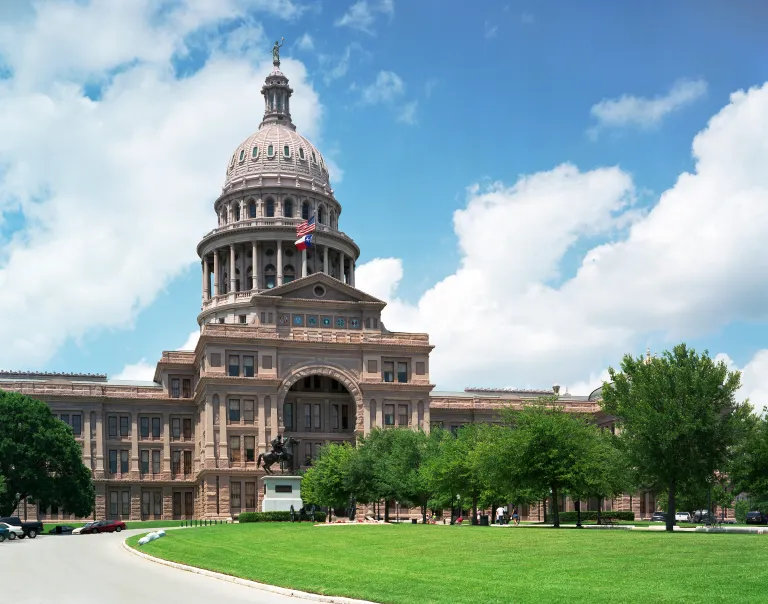
What to Do With the Scorecard
Knowing your legislators’ scores is just the beginning - what you do next is what drives real change. Here’s how you can turn this information into action:
- Share the Scorecard: Post it on social media and tag your legislators. Let them, and your community, know you’re paying attention.
- Spread the Word: Send the scorecard to your friends, family, and neighbors. The more Texans who know the truth, the stronger our collective voice becomes.
- Contact Your Legislators: The interim is one of the most important times to talk to your representatives about the issues that matter most. We can help set up meetings, prepare talking points, and connect you with others in your district.
Our Legislative Action Team is reactivating for the interim to help Texans like you organize, hold legislators accountable, and be in community with likeminded neighbors. Sign up here to join the team and be part of the movement holding Texas leaders accountable for the future we all deserve.
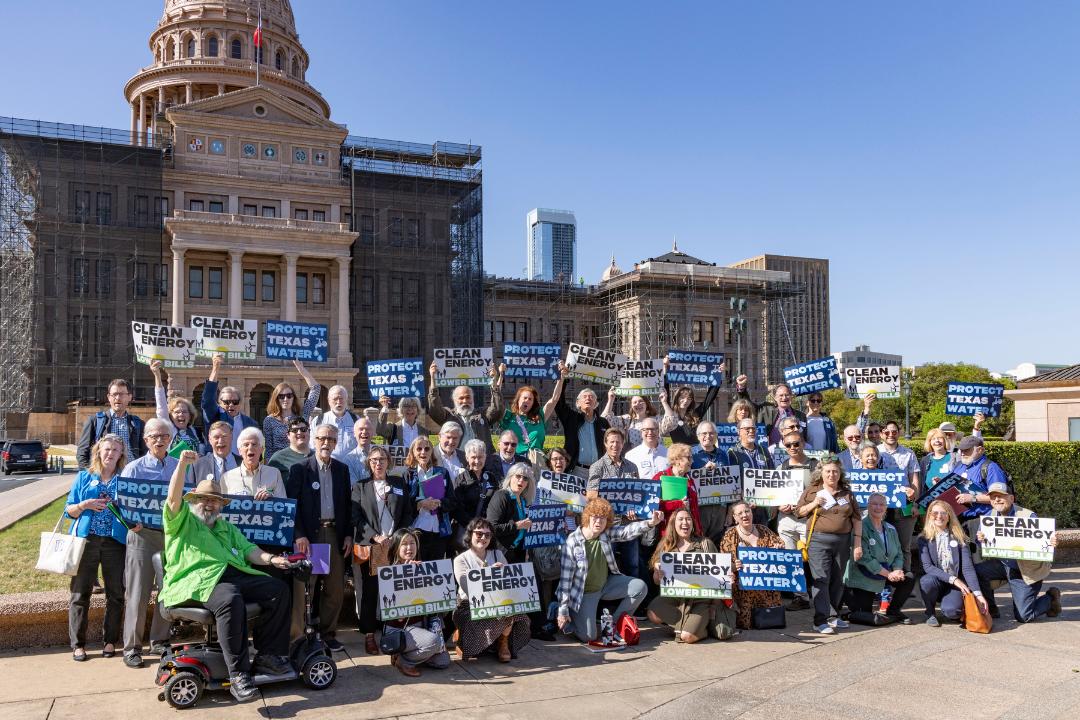
Join Our Legislative Action Team
To win at the Texas Capitol takes a lot of people working together to put pressure on state legislators to do the right thing. Sign up to receive more information about ways you can get involved advancing our pro-Texan, pro-environment legislative agenda.
Frequently Asked Questions
Q: Why are some votes worth more than others?
A: Put simply, some bills affect our lives and the environment more than others, and we made the choice to make some votes count more than others accordingly.
Q: Why does an excused absence on the same vote affect legislators differently?
A: If a legislator was excused for a floor vote, we removed that vote - and its weighted value - from the votes that comprise a legislator’s score. We also made unique adjustments to certain legislators’ scores based on additional actions (or inactions) by the legislator, or through follow up conversations about missed votes. As an example, in some cases, a legislator didn’t have an “excused” absence, but a unique circumstance kept them from voting on a particular item.
Q: How are unexcused absences and “present not voting” scored?
A: If a legislator was marked as absent or “PNV,” we treated that as a vote against the Sierra Club position, unless there was an entry in the journal indicating how they would have voted in those cases, or unless we determined there was a unique circumstance that kept them from voting.
Q: Who was the highest scoring Republican?
A: Rep. John Smithee, who scored 67%. With the exception of HB 49, for which he had an excused absence, Rep. Smithee voted YES on every vote we included in our scorecard, including the ones we were opposed to.
Q: Who was the lowest scoring Democrat?
A: Rep. Richard Raymond, who scored 43%. He’ll never be mistaken for an environmental champion, often being the crucial swing vote for bad anti-renewable bills, and voting in line with corporate polluters.
Q: Did anyone score 0%?
A: Yes, two legislators: Reps. Shelley Luther and Nate Schatzline. They could use this to gloat to their right-wing base. One could also point out that the rest of their anti-environment colleagues voted at least once with the Sierra Club.
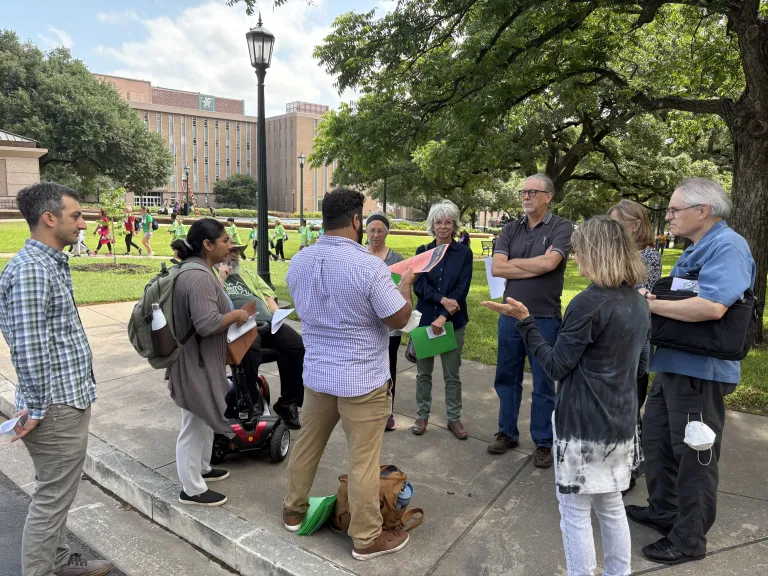
Stay Connected
Want to stay in the loop on upcoming legislative actions, events, and ways to hold Texas leaders accountable? Sign up for our email updates and be the first to know how you can make a difference during the interim and beyond.
Blog Posts
Texas Legislature Heats Up with New Charges and Upcoming Hearings

Large Loads in Texas: What They Are, Why They Matter, and What Comes Next