By Evgenia Spears
For over two decades, seawater desalination has been discussed as a potential solution to the growing water needs of Texas. Recently, the conversation has gained even more momentum. The 2022 State Water Plan includes seawater desalination as one of the water supply strategies, aiming to produce 179,000 acre-feet of freshwater per year by 2030, and 192,000 acre-feet by 2070. These targets highlight the increasing role seawater desalination is expected to play in the water future of our state.
What Is Seawater Desalination?
Simply put, it’s the process of removing salt from ocean water to turn it into freshwater.
Texas’ Seawater Desalination Plans
While Texas doesn’t yet have a large-scale desalination plant, seven projects are currently proposed, with five of them in the Corpus Christi area. One of these projects, the Inner Harbor Seawater Desalination Plant pursued by the City of Corpus Christi, is moving quickly through the regulatory process and could become the first large-scale seawater desalination facility in Texas. If approved, it will produce 30 million gallons (about 92,000 acre-feet) of freshwater daily. Sounds great, right? Well, before you start imagining all that freshwater pouring in, let’s take a deeper dive and see why rushing into seawater desalination might not be the best idea for Texas.
Environmental Risks of Seawater Desalination
One of the biggest environmental risks of desalination is the concentrated brine, a hypersaline waste product created during the process when salts get removed from marine water. The proposed Inner Harbor Seawater Desalination Plant mentioned earlier plans to discharge 51.5 million gallons of brine per day into the Inner Harbor ship channel. This channel is hydrologically connected to Corpus Christi Bay and Nueces Bay, both of which are important ecosystems for many marine species.
Threats to Texas' Coastal Ecosystems and Endangered Species
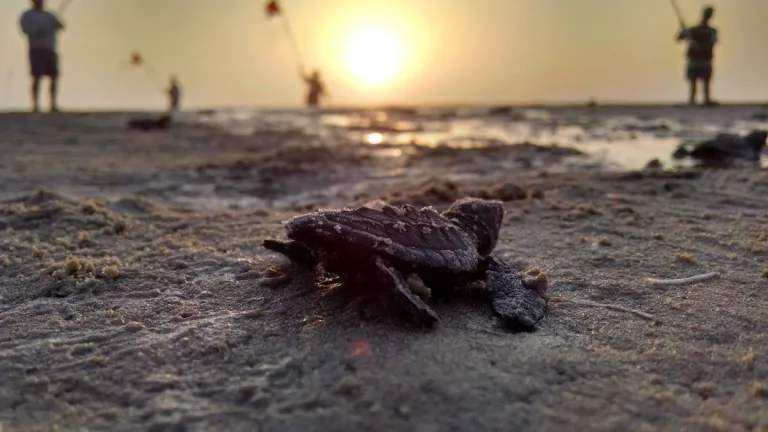
The brine could increase salinity levels in coastal waters, and can harm aquatic life, including the endangered Kemp’s Ridley Sea Turtle. These turtles, along with many other species, rely on a stable salt balance in the water to survive and reproduce.
Economic Risks of Seawater Desalination
The potential harm to Texas' coastal ecosystems could also hurt local economies. The state’s oyster industry, which generates $43 million annually, could be damaged by brine discharges. Similarly, the coastal tourism economy, especially wildlife tourism, brings billions of dollars every year. If desalination is not properly managed, it could put these industries at risk and hurt the communities that depend on them.
The Cost of Seawater Desalination
Desalinating seawater is an expensive and energy-consuming process. In Texas, it costs about $1,400 to produce one acre-foot of freshwater. On top of that, the energy required for desalination can put a strain on the state’s power resources, which could lead to higher energy costs for everyone.
Rising Water Bills for Texans
Desalinated water isn’t cheap to produce, and that cost will be passed on to consumers. The price for desalinated seawater can range from $3.60 to $5.80 per 1,000 gallons, not including the cost of transporting it to where it’s needed. This means higher water bills for households and businesses.
Regulatory Gaps in Texas’ Desalination Plans
The lack of strict and clear salinity standards is concerning for a state that has chosen seawater desalination as one of the primary water supply strategies. Currently, the Texas surface water quality standards are vague and don’t adequately address the risks associated with seawater desalination. The TAC 30 §307.4(g)(3), where Texas salinity standards are outlined, only states that “salinity gradients in estuaries must be maintained to support attainable estuarine-dependent aquatic life uses,” but there are no clear guidelines on how to manage salinity levels in our coastal waters. This leaves our aquatic ecosystems vulnerable, as the lack of specific regulations means there is no guarantee that desalination projects won’t harm the delicate balance of salinity in our bays and estuaries.

Insufficient Permitting Regulations for Intake and Discharges
The intake process for seawater desalination can harm marine life. Large and small aquatic organisms can get trapped or sucked into the plant, a problem known as impingement and entrainment. Texas currently has no regulations to prevent these problems. Likewise, there are no proper regulations for discharges of concentrated brine. The most cost-effective option is to discharge brine into bays and estuaries, as opposed to more dynamically mixing waters of the Gulf of Mexico. In fact, experts recommend discharging brine at least three miles seaward into the Gulf. However, this option is significantly more expensive, and Texas currently lacks any regulations to incentivize or enforce offshore discharges.
The Call for Responsible Seawater Desalination in Texas
Most of the above-mentioned concerns were listed in the Sierra Club’s request for reconsideration of the permit approval for the Inner Harbor seawater desalination plant. To be clear: we’re not against using seawater desalination as a water supply strategy. Our concern is with rushing into it without carefully considering the potential harm it could cause to our ecosystems, livelihoods, and economy. Help us advocate for responsible seawater desalination!

Actions You Can Take to Protect Texas Water
- Take action by signing the petition and letting TCEQ know that Texas needs more stringent and clear salinity standards
- Attend the upcoming public meeting and tell TCEQ why you are concerned about the approval of the Inner Harbor Seawater Desalination Plant. Date and time: March 13, 2025 at 9:30 a.m. Location: Room 244 of the Texas Workforce Commission at 101 East 15th Street in Austin, TX. Click here to check if the virtual attendance option will be offered.
- Attend the public meeting of the TCEQ Surface Water Quality Advisory Work Group on March 27, 2025, at 9:30 a.m. Click here for more information.
- Join our Water for People & the Environment Committee to stay up-to-date on water developments across the state, and sign up to attend our upcoming meeting on March 10 focusing on seawater desalination.
- Reach out to your legislators to express your concerns using our resources.