By Cyrus Reed, legislative and conservation director for the Lone Star Chapter
Well it took a while but this last week the Texas House of Representatives finally started considering bills on the House Floor and moving bills quickly out of committees. And that’s not unusual - the Senate moves fast, the House has a more deliberative process.
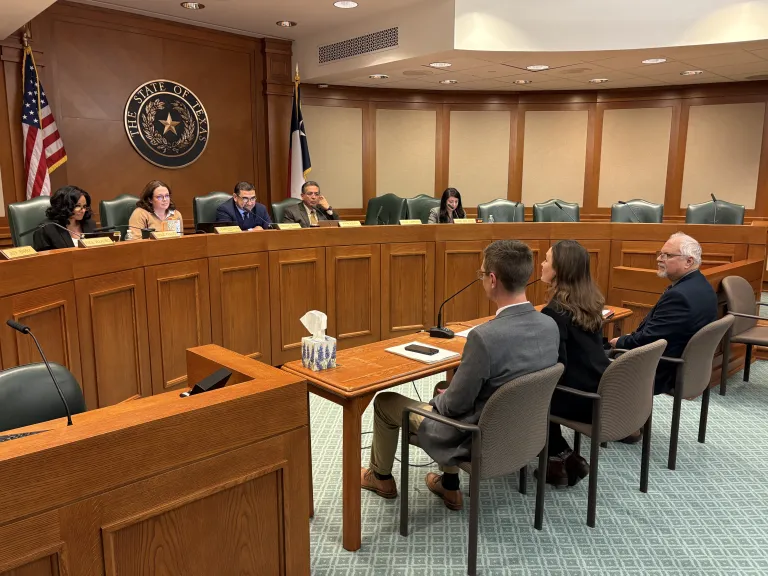
Texas Budget Week: What SB 1 and HB 500 Mean for the Environment
This week should be a doozy as the House is scheduled to take up the state’s two year-budget - known as SB 1 which sets out all the funding for state agencies for Fiscal Year 2026 and 2027 - as well as HB 500, the supplemental appropriations bill for this fiscal year - basically extra money in state coffers. Both bills are up Thursday and most committee meetings have been cancelled, knowing that “budget” night traditionally goes into the wee hours.
There’s a lot of important funding in both bills, though expect some fireworks over education spending, spending for retired teachers, vouchers and the amount of property tax relief. Sierra Club is focused on making sure that there is adequate funding for well plugging ($100 million in extra funds), air quality monitoring (money for PM 2.5 and hydrogen sulfide monitoring), water infrastructure ($400 million for flood and $2.5 billion for water infrastructure) and studies of salinity in our bays and estuaries. We are working with several offices on potential riders or amendments, including getting attention on a taxpayer handout of - get this - $750 million for “new” nuke development, and it wouldn’t even need voter approval.
Beyond the budget, two bills by Mary Gonzalez - HB 422 and HB 365 - that would increase the potential for funding and assistance for the Economically Distressed Areas Program for water and wastewater infrastructure will be on the House floor this week and the Sierra Club will be supporting them. Another great bill supported by the Sierra Club - HB 1400 by Cody Harris - will increase funding for groundwater analysis and scientific research is also being considered this week on the house floor
Water Infrastructure and Conservation Bills Gain Ground
Speaking of water, this last week the Senate, on a 31-0 vote, approved SB 7, the big Senate version of the water infrastructure bill. One positive development was Perry added an amendment on the senate floor that opened up the Texas Water Fund to also fund wastewater and water reuse, important strategies for water management. While the Sierra Club was neutral on the bill, our big concern is the Senate’s plan to dedicate up to 80% of any money to the “New Water Supply for Texas” fund which is intended for projects like water imports, marine desalination and treated “fracked” produced water. The bill itself doesn’t have that percentage breakdown but it sets the state for it through a separate constitutional amendment, known as SJR 66. SJR 66 has yet to get a hearing.
The House heard their version of the water infrastructure bill - HB 16 - this last week and we were there to support it. Meanwhile their version of the constitutional amendment for the house - HJR 7 - has been sent to the Calendars committee and could be on the House floor as soon as next week.
Nuclear Subsidies in Texas: $750 Million Handout or Energy Boondoggle?
Also moving forward is the big Nuclear handout bill - HB 14 - and its accompanying constitutional amendment - HJR 8 - which could allow not only the $750 million in taxpayer funds found in HB 500, but potentially up to an additional $2 billion - taxpayer subsidies to a new industry that is risky and expensive. The Sierra Club and many citizens came out to oppose the bill and will work to limit the damage. A similar bill in the Senate - SB 2967 - by Schwertner - has a hearing this week and Sierra Club was there to vociferously oppose it.
SpaceX Bills Threaten Public Beach Access in South Texas
Speaking of the senate, this week they passed two bills intended to help Elon Musk be able to shoot off his rockets at SpaceX whenever he wants. The two bills - SB 2168 and SB 2230 - sponsored by Adam Hinojosa, the state senator representing South Texas - passed the Senate 21-10 and 24-7 and both would make it easier for SpaceX to close the Boca Chica - sometimes referred to as the “poor people’s beach” - and evacuate folks forcibly. You can read our testimony here. The bills move to the house where they will be picked up by State House Representative Janie Lopez, the Republican from Brownsville. Sierra Club, local Cameron county officials, indigenous organizations and environmental activists are all aligned against the bill which would give untold power to oligarch Musk.
Ash Juniper Bill Sparks Controversy Over Local Tree Protections
Another terrible bill by Adam Hinojosa - SB 1927 - which would prevent cities from taking action to protect Ash Juniper trees - got a hearing Monday in the Local Government Committee. Interestingly, there are no Ash Juniper trees in Hinojosa’s district of South Texas, leaving some scratching our heads. In the House, Troxclair has the bill, which we fought last session. Troxclair makes more sense, as she is a real estate agent in areas West of Austin where there are a lot of ash juniper trees. Our own Conservation Director, Dr. Craig Nazor, was there to oppose the bill.
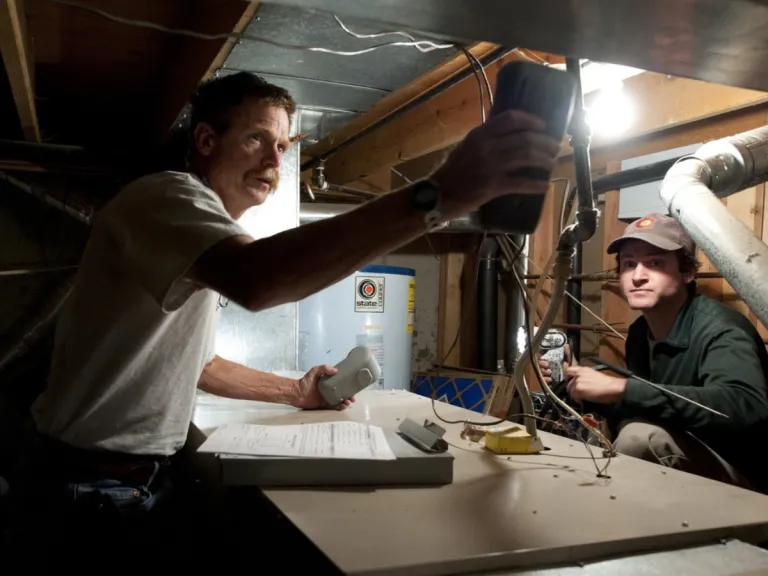
Energy Efficiency Moves Forward - Some Major Programs Still Stalled
This week a bill supported by the Sierra Club - SB 783 by Menendez - moved out of committee and could be on the Senate floor this week. The bill authorizes the State Energy Conservation Office to consider better energy codes for new construction, saving energy and money for both residential and commercial construction. The house version - HB 1360 - was also heard in committee and the House and should get out this week. Another great bill - HB 1359 by Hernandez - which would create a state-backed payment assistance program for electricity bills - passed out of committee.
Two more good bills - SB 2771 by Menendez and HB 3827 by Hernandez - get hearings this week. The bill would create the Texas Energy Efficiency Council composed of the main state agencies that deal with demand-side programs like PUCT, SECO and the TDHCA. Another good bill - HB 3237 by Turner - also gets a hearing. The bill would require universities and certain political subdivisions to report their energy use and how they intend to lower it. This then allows SECO to work on programs like energy audits or loans and grants to help our public buildings reduce their energy use.
While we are excited by this movement of these great bills - our main priority - increasing utility rate-based energy efficiency programs - has yet to get a hearing. There are as many as six bills that would require improvements in the programs, but none of them have even got a hearing yet - despite our best efforts. This Wednesday we will be telling the Senate and House enough is enough - we need movement on this now!
Fossil Fuel Favoritism: Bad Energy Bills Advance in the Senate
Some other bad bills - notably SB 388 and SB 819 - are moving forward. SB 388 - which sets an arbitrary requirement that 50% of future generation must be “dispatchable” - gas or nuclear - passed out of the Senate and could be referred to a committee soon. In addition, SB 819 by Kolkhorst - a bill intended to make the development of wind and solar energy more difficult by creating new fees, permitting and setback requirements - passed out of committee on a 7-3 vote in the Senate. Over 70 individuals and organizations - including the Sierra Club - came out in opposition during the long hearing last Tuesday. It is expected that the bill will pass the Senate but we will have to fight hard to keep it from passing the House.
Plugging Orphan Wells and Raising Fines on Polluters: The Legislative Push
Bills intended to make it easier to plug oil and gas wells that are no longer used and useful are moving but with difficulty. SB 1150 by Middleton which tries to limit the number of years that wells can be “Extended” before they are required to plug is an industry-backed bill that is a modest improvement, but Middleton is having difficulty moving it due to smaller operator opposition. The bill is being considered this week - HB 2766 - by Geren. Sierra Club is neutral on the bill because we think it doesn’t go far enough and we will be working with allies to improve it.
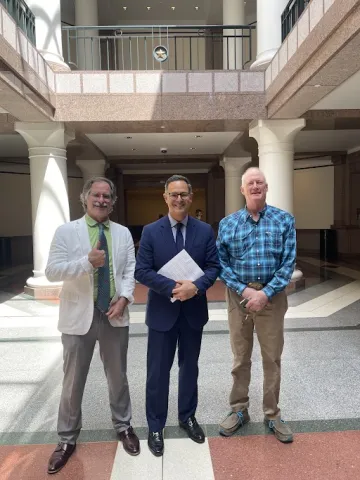
One bill we do support - HB 2891 by Anchia - got a hearing this week. The bill would finally update the maximum fines that the Texas Railroad Commission can impose on operators that break the law, raising maximum fines from $10,000 per day to $25,000. Sierra Club and many landowners were there to support the bill. We last changed our maximum fines in 1983, when I graduated high school and when the pilot for “Miami Vice” was sold. We were there dressed in our best “Miami Vice” outfit to support the bill.
Protecting Texas Bays: Salinity Standards, Desalination Oversight, and Plastic Pollution
We're still awaiting hearings on our water quality priority bills - HB 3728 to establish salinity standards, HB 5341 to strengthen regulations for seawater diversion from bays and estuaries for desalination facilities, and HB 4028 (SB 2441) to control pre-production plastic pollution.
All three would better protect our bays and estuaries from pollution.
Want to help? Take action on HB 3728 here.