EPA Under Zeldin: Pushing Rollbacks that Endanger Public Health
Well, that didn’t take very long. Only a few months into the new administration, the US Environmental Protection Agency (EPA), under Administrator Lee Zeldin, is proposing to rollback a number of EPA rules and standards. These standards were designed to reduce air and water pollution from the largest group of polluting industrial plants in the US - coal and other power plants - due to their massive boilers in which they burn train loads every single day of coal, lignite and fuel oils.
Texas Faces Dire Consequences
Coal trains of 130+ railcars - loaded to the brim with coal - are traveling nonstop from giant open pit mines - including the Powder River Basin in Wyoming. This is particularly egregious in Texas which is growing by leaps and bounds, with expanding electric demands, meaning that any rollbacks will only make air and water quality, climate change and our public health outcomes worse than in most other states.
Coal Still Powers Texas - At a Cost
While Texas has been moving towards cleaner forms of energy like wind, solar and battery storage, coal-fired power plants still provide a significant amount of power to our grid, and many of these older units lack modern pollution-control equipment. Gas-powered power plants are the largest source of power in Texas, and some of the proposed rollbacks could lead to increased emissions from these units as well.
Fortunately, even this administration must follow administrative procedure, meaning there are opportunities to submit comments to push back against these short-sighted proposals that make our air quality and health worse, and potentially file legal challenges to unlawful final actions that weaken public health protections.
We’ll be submitting comments. Will you? Here’s some more information so you feel informed and confident speaking up for our environment, communities, and future.
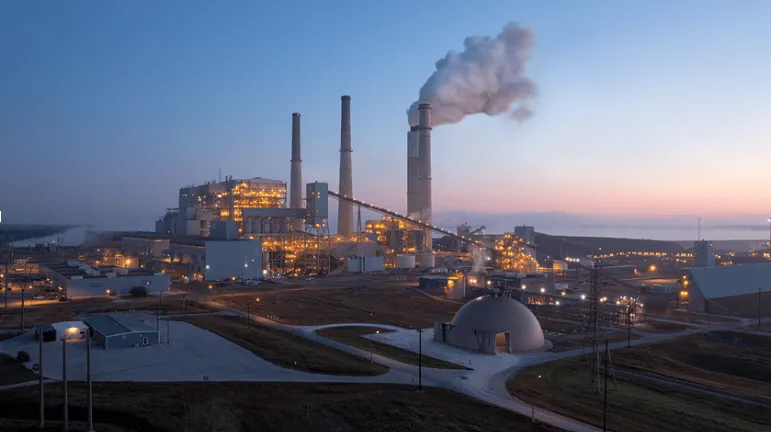
What EPA Rules Are Being Rolled Back?
Five Key Standards on the Chopping Block. The five standards are:
- Effluent Limitations Guidelines (ELG)
- Mercury and Air Toxics Standards (MATS)
- Good Neighbor Plan
- Regional Haze
- Greenhouse Gas emission standards
Every single rule that the Trump EPA is trying to repeal was written to keep Americans safe, and prevent us from getting sick. This new EPA doesn’t seem to care. To be crystal clear, these repeals would sell out our health and our access to clean air and water to help fossil fuel corporations cut corners and evade accountability.
Polluters Win, Texas Communities Lose
The Sierra Club offers a new tool that shows the pollution toll if all five major EPA provisions are repealed. According to the Coal Pollution Dashboard, if these standards are eliminated, in each year after the regulation would have required changes, coal-fired power plants could emit even more toxic pollutants.
The Data: What Happens If These Rules Disappear?
Emissions could skyrocket compared to what they would have been had the current rules been fully implemented — as calculated in tons per year (one ton = 2,000 pounds indicating a ton is a large volume of air pollution):
- 47,084 tons more nitrogen oxides (Good Neighbor Plan)
- 62,175 tons more nitrogen oxides and 431,424 tons more sulfur dioxide (Regional Haze state plans)
- 868 pounds more mercury and 2,597 tons more fine particulate matter (MATS)
- 325,541 tons more wastewater pollution (Effluent Limitation Guidelines)
- 532 million metric tons more carbon dioxide (Greenhouse Gas standards)
Texas-Specific Pollution Increases
In Texas, the tool shows some staggering results, including:
- 7,811 tons more nitrogen oxides (Good Neighbor Plan)
- 89,604 tons more sulfur dioxide (Regional Haze)
- 128 tons of particulate matter and 327 tons of mercury pollution (MATS) (327 tons mercury = 296.6 million grams with mercury harmful in a few grams)
- 2,808 tons more wastewater pollution (Effluent Limitation Guidelines)
- 74 million metric tons more carbon dioxide (Greenhouse Gas standards)
Communities Most Impacted by Coal Pollution
The communities perhaps most impacted will be those around the Martin Lake coal plant in northeast Texas owned by Vistra and the W.A. Parish coal plant outside of Houston in Fort Bend County owned by NRG. These two power plants are some of the deadliest power plants in the country; analysis shows they rank 5th and 8th respectively on Sierra Club’s list of deadliest coal plants.
Ozone and Particulate Matter in DFW and Houston
Although ozone pollution in the very high atmosphere is important to protect us from the sun’s radiation, ground-level ozone (or smog) is dangerous to human health and the environment. Ground-level ozone pollution is created when nitrogen oxide and volatile organic compounds pollution react in the atmosphere on hot, sunny days. The Parish coal plant is the largest emitter of ozone-causing nitrogen oxide pollution in the Houston ozone nonattainment region of eight counties and among the hundreds of large industrial plants. Coal combustion generally, and nitrogen oxide pollution specifically, also contribute to the formation of fine particulate matter, which can travel hundreds of miles and can cause serious cardiovascular and respiratory health impacts
How Nitrogen Oxides Worsen Urban Air Quality
Even though Parish is southwest of Houston in Fort Bend County, the four coal-burning units are located within the Houston airshed and contribute to high ozone levels at air monitors to the west and southwest, such as Bayland Park where high 8-hour ozone levels are often measured every year. Parish’s nitrogen oxides collective stack plume is often visible as a brownish haze along IH-10 driving into Houston because Parish is upwind of IH-10 near Sugarland. Parish needs to emit less nitrogen oxide emissions, not more.
Parish Plant's Plume and DFW’s Dirty Air
Even the Dallas-Fort Worth (DFW) ozone nonattainment region will be impacted by the large nitrogen oxide stack emissions that routinely blow from a cluster of upwind East and Central Texas coal plants (Limestone, Fayette, Twin Oaks, Oak Grove, Sandy Creek, Martin Lake, Spruce, etc.). DFW already violates the EPA’s 2015 and 2008 ozone standards of 70 ppb and 75 ppb averaged over three-years. Nitrogen oxides are also precursors to nitrate fine particles (NOxPM2.5) and DFW has excessive fine particulate pollution above the EPA’s recent new annual standard of 9.0 micrograms per cubic meter averaged over three-years that includes nitrate fine particles.
You can help right now push back against three of these proposed rules. Let’s get into the details.
Hazy Days: Weak Regional Haze Plan Will Hurt Parks and People
The EPA has proposed to approve an incredibly weak and do-nothing plan submitted by the Texas Commission on Environmental Quality to deal with haze pollution - literally soot in the air that travels hundreds of miles impacting both health and visibility in our Class 1 natural areas like Big Bend and Guadalupe Mountains National Park.
EPA Proposes to Approve Texas’ Do-Nothing Haze Plan
Under the Federal Clean Air Act, states must clamp down on pollution to avoid impacting our most sacred vistas, and Texas has for years ignored basic science, allowing large coal plants and other sources of industrial haze pollution to cut down on their pollution. While previous administrations had plans to require TCEQ to cut down on pollution from these sources, this administration has greenlit a plan that requires no additional controls on coal plants in Texas.
To get really specific, on May 23, 2025, EPA published in the Federal Register “Air Plan Approval; Texas and Oklahoma; Texas Regional Haze Plans for the First and Second Implementation Periods and Five-Year Progress Report; Oklahoma Regional Haze Plan for the First Implementation Period.” Essentially, EPA proposed to approve the Texas and Oklahoma regional haze State Implementation Plan (SIP) submissions as satisfying applicable requirements under the Clean Air Act (CAA) and EPA's Regional Haze Rule: (1) Texas 2014 five-year progress report and 2021 plan for the second implementation period; (2) portions of the 2009 Texas and 2010 Oklahoma plans that relate to reasonable progress requirements for the first planning period.
EPA is letting Texas' and Oklahoma’s largest polluting sources of SO2, NOx, and PM2.5off the hook from reducing emissions that cause haze pollution. We are deeply concerned with EPA’s reversal of action and that will continue to allow controllable pollution that could well be reduced with cost-effective controls to dirty the air in our parks and communities. Martin Lake and W.A. Parish coal plants are some of the deadliest power plants in the country; analysis shows they rank 5th and 8th respectively on Sierra Club’s list of deadliest coal plants. Texas’ coal plants contribute to Texas regional smog, haze, mercury and other harmful impacts.
Texas' and Oklahoma’s polluting facilities emit more than 250,000 tons of sulfur dioxide (SO2) and nitrogen oxides (NOx) per year, impacting visibility and air quality in over 80 protected Class I areas, including Big Bend and Guadalupe Mountains National Parks and Wichita Mountains Wilderness Area in Texas and Oklahoma, but also in places as far away as the Grand Canyon in Arizona and Mammoth Cave National Park in Kentucky.
What This Means for National Parks and Local Economies
As you know, Texas is home to the spectacular Big Bend and Guadalupe Mountains National Parks both featuring unmatched solitude, dark night skies and breathtaking vistas. These parks, and other national park lands across Texas, attracted over 5.3 million visitors last year that supported over 4,400 jobs in our communities. Visitation to park lands adds over $488 million to Texas’ economy, boosting communities across Texas and fueling small businesses in park communities. Oklahoma’s national park lands attract over 2.1 million visitors that support nearly 400 in-state jobs and contribute $40 million to the state’s economy. Bad air quality can impact visitation and threaten these economic benefits.
Why EPA’s Reversal Matters and What’s at Stake
All of the SIPs identified in this action completely fail to make any “reasonable progress” toward clearing the air of haze pollution in Texas, Oklahoma, and surrounding states and communities. Specifically speaking to the Texas regional haze SIP for the second planning period, the EPA has illegally changed course and has proposed to now approve of TCEQ’s weak plan. Past review by EPA in October 2024 had clearly identified significant flaws with the plan that failed to meet the goals and requirements of the Clean Air Act and the Regional Haze Rule. EPA’s current proposed approval has no new information or rationale that adequately justifies the change.
Speak Out: Submit Comments by July 23rd
Sierra Club and our allies are pushing back and you can take action. EPA has given the public until July 23rd to make comments. While Sierra Club will be submitting technical comments, we need as many comments as possible to show broad opposition to this do-nothing plan. You can read about the full haze proposal at EPA’s website here if you really want to get into the details.
If you agree that this is a really bad proposal and literally it requires basically nothing and rolls back a previous EPA plan that would have required action, you can take action here.
Mercury Rollbacks: Reversing Protections Against Neurotoxins
The previous administration had approved new MATS - or Mercury and Air Toxics Standards - for existing and new power plants to reduce Mercury and other toxic air emissions that directly impact health, including the elderly, the young, and those with preexisting conditions.
Texas Lakes Already Contaminated with Mercury
Texas lakes are already too polluted with bioaccumulating mercury compounds in aquatic ecosystems mainly from coal burning power plants. Since the 1990s, methyl mercury in larger fish can easily exceed 1.5 ppm that the Texas Health Dept uses as a safety guideline for freshwater fish consumption. If Texas applied the safety guideline used by most Northeastern states of 0.5 ppm methyl mercury, virtually all Texas lakes would have fish that are unsafe to eat.
Since the 1990s, even recreational fisher groups like Texas Black Bass Unlimited started doing catch and release as a standard practice due to the toxic mercury bioaccumulation concerns. Stack mercury emissions are a serious health issue since mercury can not be destroyed and is easily converted to methyl mercury in the aquatic ecosystems by bacteria. Mercury even at a single gram is exceptionally toxic in the environment with 453.6 grams in a pound and coal plants will be allowed to emit hundreds of pounds (thousands of grams) every year. Zero stack mercury pollution is the only safe level and no coal plant can meet zero even under the best standards.
How MATS Protections Are Being Undone
Under current rules, many older power plants built in the 1970s-80s before state air permitting required modern pollution controls - and in particular - coal-fired power plants would be required to reduce their emissions and install modern pollution control equipment. These new standards reflect levels commonly- and cost-effectively achieved by existing and new EGUs, though with a timeline to comply with the new standards. It is only fair that all power plants meet achievable standards designed to better protect communities, ozone nonattainment areas, and aquatic ecosystems. Unfortunately, the new administration is proposing to roll back standards that the Biden EPA had determined were cost-effective, repealing emission reductions that are readily-available and already in use throughout the industry.
More specifically, the EPA is proposing to repeal:
- The filterable particulate matter (fPM) emission standard for existing coal-fired EGUs of 0.010 pounds per million British thermal units of heat input (lb/MMBtu). The previous fPM standard, 0.030 lb/MMBtu, would remain in place.
- The fPM emission standard compliance demonstration requires all coal- and oil-fired EGUs to use PM continuous emission monitoring systems (Stack CEMS).
- The mercury (Hg) emission standard for existing lignite-fired EGUs of 1.2 pounds per trillion British thermal units of heat input (lb/TBtu). The previous Hg standard, 4.0 lb/TBtu, would remain in place.
Coal Plants Will Emit More Mercury and Particulate Matter
This will lead to continued high volumes of mercury, particulate matter and other toxic emissions in communities throughout Texas, but including in areas like Fort Bend County Texas, where the Parrish coal plant is located. Particulate Matter and mercury are both proven killers, shortening life-spans and leading to a host of poor health outcomes. In essence this proposal increases pollution in many frontline communities so that the coal industry doesn’t have to spend more money to clean up their mess.
For detailed information about the proposal, visit the EPA’s website here.
Public Hearing on July 10th: Make Your Voice Heard
Fortunately we can let the EPA know exactly how we feel about this short-sited and offensive proposal. The EPA is holding a virtual hearing on July 10th, but is asking members of the public to preregister here.
Greenhouse Gas Rollback: Climate Denial in Action
A third proposal by EPA is to essentially gut the greenhouse gas emissions rule adopted by the previous administration to remove all national limits on greenhouse gas emissions from power plants.On June 11, 2025, EPA Administrator Lee Zeldin proposed to repeal all “greenhouse gas” emissions standards for the power sector under Section 111 of the Clean Air Act.
EPA’s Argument Against GHG Regulations
Essentially, the EPA is making the ridiculous argument that emissions from power plants of carbon dioxide and other greenhouse gases don’t have a real impact on climate change, which is as silly as it sounds.
The EPA is proposing that the Clean Air Act (CAA) requires it to make a finding that GHG emissions from fossil fuel-fired power plants contribute significantly to dangerous air pollution, as a predicate to regulating GHG emissions from those plants. The EPA is further proposing to make a finding that GHG emissions from fossil fuel-fired power plants do not contribute significantly to dangerous air pollution. The EPA is also proposing, as an alternative, to repeal a narrower set of requirements that includes the emission guidelines for existing fossil fuel-fired steam generating units, the carbon capture and sequestration/storage (CCS)-based standards for coal-fired steam generating units undertaking a large modification, and the CCS-based standards for new base load stationary combustion turbines.
Why Power Plant Emissions Still Matter
While it is true that there are other important sources of greenhouse gases like the transportation sector, or methane emissions by oil and gas drilling, emissions from power plants are still a major component of climate change in Texas, the US and the world. Controlling those emissions is cost-effective and an important way to reduce the gases that cause the climate extremes we suffer from.. Every day.
July 8th Hearing: Speak Out for Climate Action
EPA will be holding a virtual public hearing on July 8, 2025, from 11:00 AM - 7:00 PM (ET) on the proposed repeal of the Greenhouse Gas (GHG) Emissions Standards for Fossil Fuel-Fired Electric Generating Units. To preregister, you must fill out this form by June 29th.
Coal Plant Pollution Kills - And Texans Will Pay the Price
Coal pollution increases risk for asthma, heart attacks, respiratory illnesses, cancer, and premature deaths. Mercury exposure during pregnancies can cause developmental delays, brain damage, intellectual disabilities, and blindness in infants. Particulate Matter and toxics attached to particulate matter can also reduce respiratory function, increase heart attacks and lead to premature deaths.
Take Action Today to Protect Texas Communities
Rolling back these lifesaving safeguards will only hurt our health, but also our wallets. The increased risk of illness means taking more time off work, pricey hospital visits and medication, all when Americans can afford it least.
Please consider adding your voice against these dangerous rollbacks!