By Cyrus Reed
Key Takeaways:
- Billions in handouts for corporations like SpaceX, film studios, and gas and nuclear developers - while critical community needs go underfunded.
- Flood resilience gets shortchanged, with only a fraction of the $54B needed allocated to actual flood projects.
- Governor vetoes summer SNAP program, blocking up to $500M in federal aid for Texas families.
- Climate and water funding is mixed - wildfire response and infrastructure see big boosts, but energy efficiency and air quality are left out.
Texas finished up our regular legislative session in June, which included passage of the state’s two year budget for FY 2026 and FY 2027, as well as the supplemental budget for this fiscal year. The main budget bill, known as SB 1 (coming in at a whopping 1055 pages) is full of funding allocations for state agencies and programs. The supplemental budget bill - HB 500 - is focused on more short-term needs and comes in at a scant 122 pages. Both provide plenty of examples of the influence of powerful stakeholders, and also reflect the priorities of legislators, the Governor, and those stakeholders.
State Flood Plan
In August of 2024, the Texas Water Development Board approved the Texas State Flood Plan, which laid out a number of specific policy and funding recommendations. The plan incorporated from regional planning groups more than 4,609 flood risk reduction solutions: 3,097 flood management evaluations, 615 flood mitigation projects, and 897 flood management strategies in the regional flood plans with an estimated total implementation cost of more than $54.5 billion.
As part of the state flood plan, the TWDB recommended that the legislature approve funding for technical assistance for flood projects for smaller communities, and an early warning flood alarm system, the legislature did not allocated specific funds for these asks.
Obviously, the legislature did not approve $54.5 billion and it is difficult to parse out what was funded as part of the budget that would address this myriad of projects. There is identified in the budget about $90 million in FY 2026 and $91 million in FY 2027 that address flood management and flood projects. This includes a slight expansion in the TexMesonet network - hydrometeorological stations - through an increase of $940,000. That’s about half what the agency requested - and a slight increase of about $800,000 in Surface Water Data Collection and Analysis. This funding supports improved data on evaporation, reservoir sedimentation, and streamflow - critical to flood modeling, permitting, and long-term planning.
Finally, as part of a major investment in water infrastructure of $2.5 billion - mainly for water supply and wastewater - in HB 500, the supplemental bill, the legislature did line item some specific flood projects many of which are projects identified in the aftermath of Hurricane Harvey, including:
- $54,000,000 for Cypress Ditch Regional Flood Mitigation Project
- $4,000,000 for Nueces County Drainage District No. 2
- $15,000,000 for Helms Stormwater Detention Basin Conveyance Project
- $25,000,000 for Waller County Regional Stormwater Detention Basin
- $12,000,000 for Jackson County Drainage;
- $10,000,000 for Lower Clear Creek Watershed Flood Project;
- $5,000,000 for Kingwood Diversion Ditch Improvements;
- $22,500,000 for Cypress Creek Watershed Flood Mitigation Project #1;
- $11,000,000 for Carpenters Bayou Watershed Improvements;
- $5,000,000 for Spring Shadows Drainage and Paving Project;
- $8,000,000 for City of Weslaco Water and Drainage Improvements;
Did the Governor Line-Item Veto Anything?
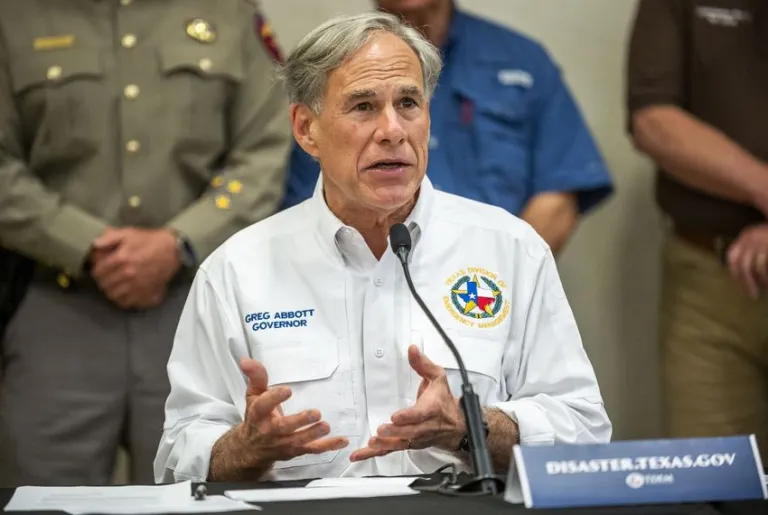
Governor Abbott made some clarifications that certain “riders” tied to specific legislation that didn’t pass would not be in effect. He also specifically instructed the Texas Commission on Environmental Quality not to follow a rider that would have prohibited it from engaging in any permitting of water projects that involved interbasin transfers since that is not likely constitutional without underlying legislation.
The Governor specifically vetoed a summer electronic benefit transfer program of $60 million that was meant to bring down up to $500 million in federal funds for summer SNAP (Supplemental Nutrition Assistance Program) designed mainly to help buttress funding for low-income Texas families and children. His rationale? Basically, with the federal government in the midst of changing many of these programs, it didn’t make sense to include this in the budget and they could always revisit it later.
What’s in the Supplemental Budget Bill?
A lot. About $13 billion that is added to the current fiscal year budget. A good summary can be found here produced by the Legislative Budget Board but let’s show a few of the big-ticket items.

Water Infrastructure: Texas Water Development Board
The bill provides roughly $2.6 billion in All Funds to the Texas Water Development Board, including $2.5 billion for water infrastructure and related grants, and $131.3 million to draw down matching federal funds for the base program level and Infrastructure Investment and Jobs Act grants (Clean Water SRF: $48.3 million; Drinking Water SRF: $83.0 million). It’s important to note that while this money still must be approved through a process at the Texas Water Development Board, a significant portion – $581 million - is earmarked for specific water projects.
Space Industry: Handouts to SpaceX and Others
HB 500 includes $300 million to the Space Exploration and Aeronautics Research Fund through the Comptroller of Public Account. Elon Musk and Jeff Bezos are sure to put their hands out.
Movie Industry: Well Alright, Alright, Alright
When Matthew McConaughey, along with Woody Harrelson, actively lobbied the Texas legislature to increase film and television production incentives, the legislature listened, providing a total of $250 million through the Governor’s office for the Texas Moving Image Industry Incentive Program.
Nuclear Energy Investments
Despite our efforts to prevent subsidies for new nuclear power, HB 500 includes two provisions that benefit developers of new nuclear plants.
First, through the Governor’s office, and passage of HB 14, the Legislature provided $350 million to the Texas Advanced Nuclear Development Fund.
Then, in classic earmarking, a specific line-item of $120 million is slated to go to Texas Tech University to work with private companies on demonstration reactors both for campus but also to desalinate fracked wastewater. The line-item will assist one company - Natura - in its efforts to build out new salt molten technologies being explored. Recently, they received a construction permit for a demonstration project at Abilene Christian University and the subsidy will further help this company.
CHIPS - Texas style
Last session, Texas passed its own state version of a CHIPS program designed to provide incentives to build an advanced semiconductor industry in the state. The legislature set aside some $680 million for that purpose. This session, they added to that by providing additional direction - and money - $250 million more - through the Governor’s office.
The money directly benefits high-rolling technology companies either in Texas or wanting to come to Texas. Recently, the Governor approved two grants - one for $5.3 million to MGC Pure Chemicals America, Inc. (MPCA), which produces super pure hydrogen peroxide and ammonium hydroxide used as cleaning agents to remove micro-dust particles and organic matter from semiconductor chips, and another for SpaceX. That grant is for $17.3 million to produce Starlink kits and their component parts, including advanced packaged silicon products.
Fighting Fire in a Changing Climate
Given the devastating fires in West Texas, the bill also includes an additional $618 million for Texas A & M Forest Service, including money for aircraft for wildfire suppression, and assistance for rural and other fire departments for equipment and other assistance.
Plugging Oil & Gas Wells with Taxpayer Dollars
In a perfect world, the bonds, fees and fines paid by the oil and gas industry should pay for plugging abandoned and orphaned wells. But, this is Texas, and the legislature chose to meet an exceptional request from the Texas Railroad Commission for an extra $100 million from “general revenue” instead.
While Sierra Club supported the need to allocate additional money to plug wells, we also advocated for legislation to increase fees and bonding levels of industry to not put the clean up on the back of Texas taxpayers. Under HB 500, the taxpayers will pay!
Don’t Forget the Alamo
The bill also includes $150 million in the continued redevelopment of the Alamo, with a certain interpretation of history through the General Land Office.
Local Parks, Aquariums and Headquarters
HB 500 does provide another $60 million in funding for local park grants, $24 million for a redo of the Texas Parks and Wildlife Department, and a $2 million grant for the Texas State Aquarium Wildlife Rescue Center. A full list of the “earmarks” for the local park grants is found in “Article IX” of the overall budget found in SB 1.
Other Important Funding Areas
Other important funding efforts included adding money to the Employees Retirement System of Texas ($1 billion), the Texas University System ($1.3 billion), another $1.3 billion for jails, and around $1 billion for the Texas Facilities Commission for various new state office buildings.
What’s in the Texas Main Budget Bill?
Don’t expect us to reduce over 1,000 pages of a bill, plus related legislation, into a few words and do it justice. The main bill includes funding for education, health and human services, transportation, and everything else. Remember, as is always the case, the majority of funding of the state’s budget is dedicated to public education (about 30%), higher education (10%), health and human services (31%), and business and economic development which includes transportation (14.3%). Also contained in the budget (and in some cases supported by separate legislation) is:
- $51 billion in property tax relief;
- $1 billion (to start) in vouchers for private education, a number that if no changes are made would grow to $3 billion per year by FY 2028 and $4 billion by FY 2030;
- $5 billion in the Texas Energy Fund, which includes $2.2 billion in loans and grants for more gas power plants as well as
- $1 billion for “resiliency” projects outside of ERCOT and up to $1.8 billion for backup power packages;
Over $3.3 billion for border security, including $230 million in additional “Border” security grants through the Governor’s Office; $1.19 billion in “Secure the Border” funds to the Department of Public Safety, and $1.765 billion to the Texas Military Department.
Yes, there was significant new funding provided for some of the key agencies for which the Sierra Club advocated, including additional funding for staff and an extra $2 million for local monitoring of particulate matter at the Texas Commission on Environmental Quality. The Texas Railroad Commission is getting $7.2 million for a new effort to track wastewater from fracking and money for mapping areas with high hydrogen sulfide. There will also be new funding efforts in agricultural water conservation grants ($7.2 million) and grants ($7.5 million) for groundwater conservation districts to conduct projects and programs for groundwater research, science, and data collection that benefit local groundwater management and planning through the Texas Water Development Board.
The budget is a moral document that reflects leadership priorities like property tax relief and border security, but also special incentives for well-heeled corporations and lobbyists from the movie, nuclear, and space technology industries. There are many important provisions in the bill supported by the Sierra Club, but many pieces of legislation and funding efforts that we supported were not included - like energy efficiency grants, payment assistance programs, money for water quality studies, and additional air quality monitoring measures.