By Shane Johnson, Clean Energy Organizer
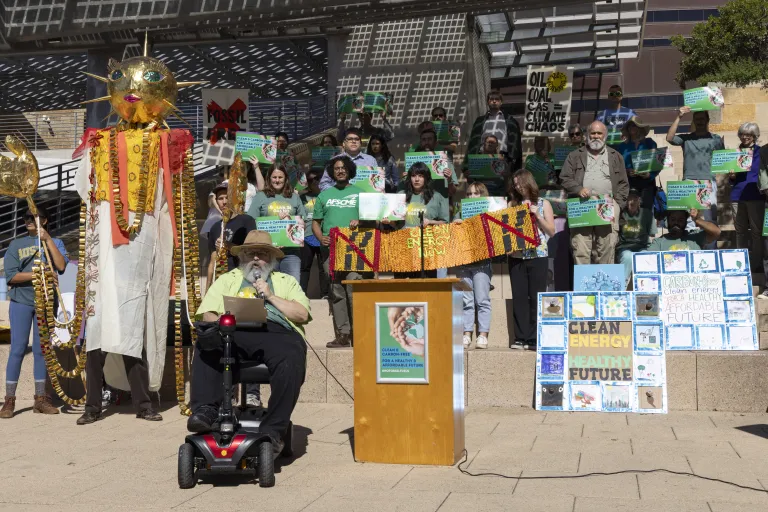
Last month, Austin Energy announced several new clean energy programs, and the Austin City Council adopted a much-anticipated new project to carry out 100 MWs of battery energy storage in the Austin-area, while an additional utility-scale battery project - reportedly for another 40 MWs - remains in the works. This major step towards achieving our carbon-free city energy goal is a direct result from community pressure and organizing from the summer of 2023 to December 2024, that won major commitments towards clean energy and battery storage in the City’s Resource, Generation, and Climate Protection Plan to 2035 (2035 Resource Plan).
Catching Up with Other Texas Utilities
Austin Energy (AE) was, frankly, a couple of years behind major utilities around Texas who had already announced or even finished building bigger projects, helping their bottom line and reinforcing the reliability of their power systems. This energy storage goal is essential to not only Austin climate action goals, but also helping address recent financial problems that contribute to increasing bills and potentially reliability problems.
The Financial Case for Energy Storage in Austin
AE has suffered significant financial losses over the last few years - in part due to the difference in prices of electricity between Austin and the parts of the state where they have power plants.
How ERCOT’s Load Zones Affect Austin Energy Prices
The Texas electric grid, commonly referred to as “the ERCOT grid”, works differently from other grids in that every utility that buys and sells power must buy the power at the prices corresponding to their “load zone” - in this case the Austin area -, but when the power they sell to their customers (to earn revenue) is at a different location, the prices between their power plants and where their customers are can be completely different.
Using Batteries to Offset High Electricity Costs
In Austin, this has meant buying power that is extremely expensive in the Austin-area while selling most of their power in west, north, and south Texas where it is often cheaper because of so many renewables far from population centers. Locating utility-scale batteries within our “load” zone is a way to charge the batteries when prices are cheaper and then sell them at higher prices during peak times, offsetting energy purchase.
Grassroots Advocacy Stopped New Gas Plants
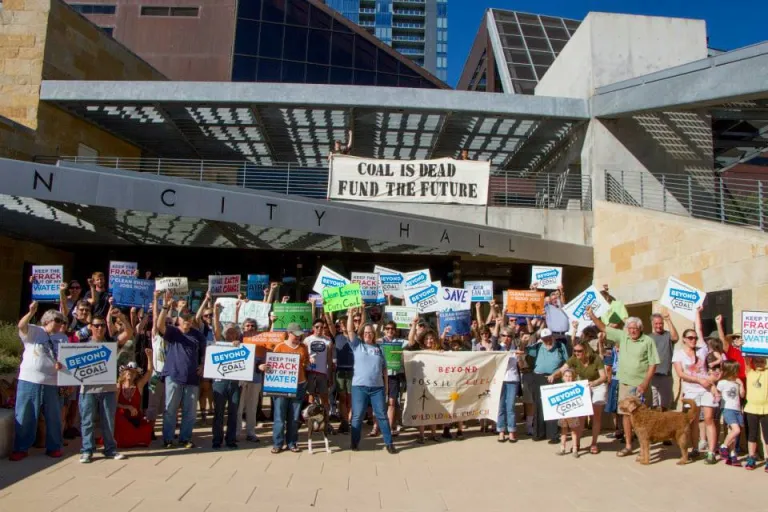
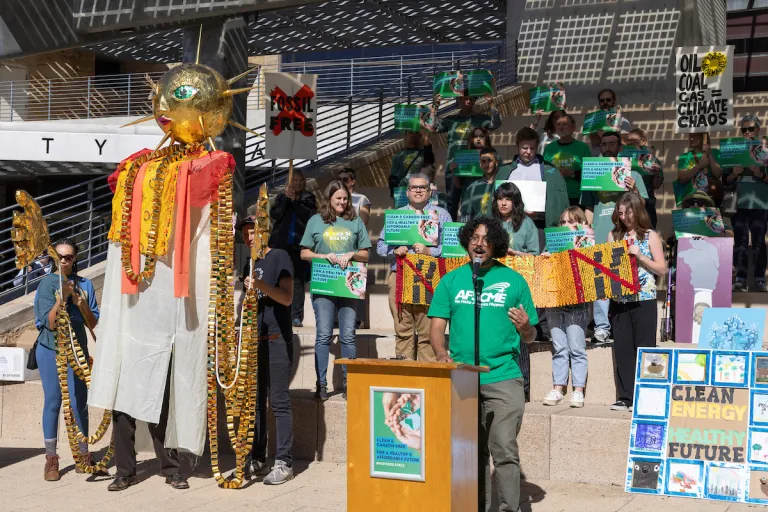
Advocates fought long and hard over the final 6 months of 2024 against a proposal from AE leadership to build new gas generators which would maximize profit but dismiss the City’s climate goals. In the end, community pressure largely won out—with the City Council adopting a new plan that would explore new gas power plants but only after first adopting major energy storage projects and expanding City efforts to reduce wasted electricity and to turn off excess power (usually from heavy industry) when the grid is strained. We hope that once enough battery projects and expansions in these other clean energy programs are carried out, AE will no longer have any need to pursue new gas plants.
Expanding Demand Response Programs in Austin
In addition to the new large battery projects Austin Energy is building, AE has announced a major expansion to their “demand response” program, focused on city and other public buildings, and a cutting-edge new program to encourage residents around the city to add batteries to their homes. Both of these programs are major wins for helping keep our grid more reliable, as well as helping to limit revenue losses (because of the price reasons outlined above in the third paragraph) that can help prevent our individual utility bills from skyrocketing even more.
Meeting the City’s 270 MW Demand Response Target by 2035
Austin Energy expanded their demand response program to include all city buildings and can now count 195 city buildings participating in their commercial building demand response program, along with another 100 county, state, and federal buildings. This is crucial to meeting our city-wide goal of 270 MW of demand response by 2035.
New Home Battery Rebate Program for Austin Residents
AE will soon launch a program to allow residents to earn a rebate for adding batteries to their homes and then allow those with home batteries to connect to our local distribution grid (think the smaller power lines in the Austin-area), allowing AE to control use those batteries to make the grid more reliable and chip away at financial losses—but customers keep the right to override utility control of their home battery at any time if they need it for themselves.
Lower Costs, Fewer Fossil Fuels, and a Stronger Grid
Austin Energy should be applauded for these new efforts - utility-scale batteries, local customer-sited batteries, and the addition of demand response programs at public buildings - which will lower costs to customers and lower the need to burn fossil fuels in our local area. But it is also the direct result of the work of Sierra Club, many allied organizations, and hundreds of citizens, as well as the politicians that listened to their advocacy.
Get Involved
There's plenty of ways to get involved and help shape Austin's clean energy future. Contact Shane Johnson or reach out to Sierra Club's local Austin Group for more information.