By Cyrus Reed, Legislative and Conservation Director
As the saying goes - you lose some, and you win some.
Well, maybe.
Last week, in a unanimous decision, the three Commissioners at the Public Utility Commission of Texas voted to reject their own staff’s petition to establish a “secondary cap” on performance bonuses that utilities would earn next year for exceeding their modest energy efficiency demand goals.
What’s That? A performance bonus is the extra cash utilities get when they beat their demand-reduction and energy-saving targets - paid by customers.
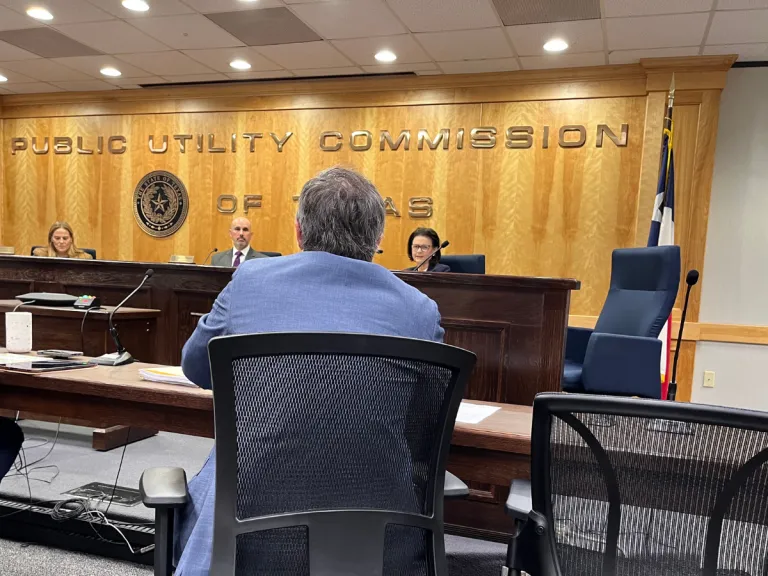
PUCT Votes Down Bonus Cap Proposal for Utilities
Under Docket No. 57172 (Commission Staff’s Petition to Establish a Secondary Cap on Performance Bonuses under 16 TAC § 25.182(e) for the 2024 Program Year), PUCT staff, the Office of Public Utility Counsel, and the Sierra Club argued that it is unfair for utilities to collect performance bonuses sometimes amounting to more than 40% of their total energy efficiency program budgets simply because of a formula in the current rules - especially when those outsized bonuses are driven by an unusual year of significantly higher‑than‑normal energy prices.
The staff petition would have established a very reasonable - and, in our opinion, still too high - limit of 25% of the total program budget. Ratepayers - residential and commercial - pay the eight investor-owned utilities in Texas to run programs to help consumers lower energy demand and save overall energy use, but also pay for “bonuses” if the utilities exceed those goals. Ok, great, create an incentive for utilities to do more, but is it fair that utilities earn 40% or more from ratepayers for slightly exceeding their modest goals? And the companies get to keep all those profits and not reinvest them in programs that help consumers?
Why the PUCT Said No to the Bonus Cap
The Commissioners said that, while the petition filed by PUCT staff was legal and was timely filed, they were not convinced that the current rules guiding the PUCT energy efficiency programs, allowed for a secondary cap to be established.
Quite simply, there is not an “exception” rule for the bonus. It’s a calculation, and the Commissioners were basically saying calculate it based on our rule and the utilities get to keep that money.
Nevertheless, the Commission did create a schedule for their long-awaited energy efficiency rules. While short on specifics, the rulemaking calendar - under Project No. 57606 – CY 2025 Rulemaking Calendar - shows energy efficiency rules will have a proposal released on August 21, with a final decision expected in December.
The Sierra Club - with your help - will be pushing the PUCT to come up with a robust rule that hopefully expands goals and programs (especially for working Texans), makes performance bonuses more reasonable, and allows flexibility and input into how the programs are run. In August, 2022 - Sierra Club filed a rulemaking petition which was denied, but with the promise that the PUCT would take up rulemaking in the future. Hopefully, this time those issues - three years later - will be addressed.
What’s That? Rulemaking is the formal process of making or changing utility rules - open to public input.
Understanding Performance Bonuses and Avoided Costs
Under rules adopted by the Commission that span more than a decade, any utility that meets its energy savings goal, and then exceeds its energy reduction goal - currently set at 0.4% peak demand - is entitled to a “bonus” recovered from ratepayers. The Public Utility Commission of Texas utilizes "avoided cost" calculations to determine the financial benefits of energy efficiency programs. These calculations help assess the value of energy and capacity that are avoided due to these programs and inform how utilities are compensated for energy efficiency initiatives. The avoided cost is essentially the cost the utility would have incurred to generate or procure that same amount of energy or capacity if the efficiency program hadn't been implemented.
What’s That? Avoided cost is what the utility didn’t have to spend to make or buy power - because you used less.
In Texas, energy efficiency performance bonuses for electric utilities are calculated based on the net benefits of their energy efficiency programs, with a maximum bonus of 10% of the total net benefits. Utilities can earn this bonus by meeting their energy reduction goals and exceeding their demand reduction goal, with a 1% bonus for every 2% their demand reduction goal is exceeded.
The issue is that because the bonus is calculated on the avoided cost of energy - how much money it costs to generate or pay for electricity - when energy prices go up the bonuses go up. The staff petition was focused on the benefits that accrued due to high energy costs in 2023, which were calculated in 2024, and then would be recovered in 2026.
Why 2024’s Avoided Costs Are an Outlier
The avoided cost of energy calculated in 2024 (based on 2023 data) was $166.20, driving up the EECRF bonus calculation in 2026. The table below shows the Avoided Cost of Energy by year. Quite simply, PY 2024 is an outlier which makes an already “rich” bonus for utilities even more rich.
While the legislature established the basic demand reduction goals and said that utilities that exceed these goals are entitled to a performance bonus, the overall energy savings goals and the exact formula on how the bonuses are recovered are established through rulemaking.
It was the PUCT that created the mechanism related to the performance bonus through rulemaking - and it is the PUCT that can change it through rulemaking. They don’t need legislation.
In fact, while the Sierra Club supported the proposal by the PUCT to establish a secondary cost cap of 25%, that cost cap was only applicable to one year, and therefore Sierra Club was advocating that rulemaking be opened up as well. In our own rulemaking petition, we had suggested that the maximum bonus should be 15%, and only if the utility exceeded both demand and savings goals.
What’s That? A Demand Reduction Goal is a target set for utilities to lower the highest amount of electricity used at once (“peak demand”) - usually during hot summer afternoons or cold snaps - by helping customers use less energy.
How Much Are Texas Utilities Asking for in Bonuses?
A lot. Let’s look at a few of the proposed EECRFs (Energy Efficiency Cost Recovery Factors) this year, and how much utilities are asking for in performance bonuses. It’s staggering. The three largest investor-owned utilities in ERCOT have all filed for extremely large performance bonuses while only planning very small increases in programmatic expenses that actually benefit consumers.
What’s That? An Energy Efficiency Cost Recovery Factor (EECRF) is a charge added to your electricity bill that lets utilities recover the cost of running their energy-saving programs - and also collect performance bonuses.
Oncor
The largest utility - Oncor - In its latest energy efficiency cost recovery factor filing, is requesting $104,807,363. Oncor's request regarding the 2026 EECRF is based on the following components:
- $63,800,000 in energy efficiency expenses forecasted for the 2026 program year;
- $7,622,221 for the total under-recovery of 2024 energy efficiency costs that includes the required interest payment;
- $32,560,930 energy efficiency performance bonus under 16 TAC § 25.182(e) based on Oncor's energy efficiency achievements in 2024; and
- $816,517 for the estimated EM&V costs for the evaluation of program year 2025
In other words, ONCOR’s proposed bonus - which can go straight to shareholders - is roughly 32% of the total proposal. Assuming this is approved, Oncor shareholders are earning 30 cents on the dollar for exceeding 0.4 percent of peak demand. It is worth noting that of the states that have energy efficiency goals - and there are 29 of them - Texas has the lowest.
CenterPoint
Similarly, the second largest utility - CenterPoint - is requesting approval to recover a total of $95,837,175 through its Rider EECRF in 2026, consisting of:
- Estimated 2026 energy efficiency program costs of $50,155,355;
- A performance incentive for 2024 program achievements of $40,313,445;
- $576,924 for 2026 EM&V expenses assigned to the Company by Commission Staff;
- A charge of $4,298,232related to the under-recovery of 2024 program costs;
- A credit of $448,229 for the interest related to the under-recovery and
$44,990 in 2024 EECRF proceeding expenses
Again, if this proposal is approved, CenterPoint Energy would earn $40 million in bonuses, while spending about $50 million on actual program expenses that directly help consumers save energy or avoid peak demand expenses. The $40 million comes out to about 42% of the total budget.
AEP
Finally, the third largest ERCOT utility is AEP Texas. AEP Texas is requesting the authority to update its EECRF to collect $29,572,509 in 2026 to reflect the following five components:
- Forecasted energy-efficiency program costs of $18,859,458 for program year 2026;
- EM&V expenses of $254,234 for the evaluation of program year 2025;
- An adjustment of $431,959 to account for the under-recovery of program year 2024 energy efficiency costs, including interest in the amount of $40,792 and recovery of 2024 EM&V costs;
- Recovery of $10,006,302 representing AEP Texas' earned performance bonus for achieving demand and energy savings that exceeded its minimum goals for program year 2024; and
- Rate-case expenses of $20,556 incurred by AEP Texas in Docket No. 56553 as authorized by 16 TAC § 25.182(d)(3)(B).
Yes - you got that right. AEP Texas is proposing to spend $18.8 million in program costs, and earn $10 million in benefits. That’s a healthy 33.8% bonus on what it is planning to spend.
Let's Break It Down
Sierra Club’s Push in Rate Cases and Rulemaking
It’s important to note that these proposed budgets - again ultimately paid for by ratepayers - are not finalized, but many of the EECRFs are now in settlement talks. In fact, Sierra Club is involved in two cases related to CenterPoint Energy and AEP Texas. We are pushing them to reduce their performance bonuses and increase spending on programs that help working Texans, but the decision last week by the PUCT on establishing a secondary cost cap has hurt our argument that the bonuses are out of wack. Not having a ruling that would allow us to try and limit the bonus, and instead suggest spending more money on programs doesn’t give us much leverage to make the programs better.
Ok - so the rulemaking will make the programs better right?
It could.
Back in March of this year, the PUC opened up a “Review of the Energy Efficiency Rules” in Project 57743 and asked a series of questions focused mainly on definitions and cost-effectiveness tests. They did not specifically ask questions though on the goals or performance bonuses but we hope they do. Last week they announced there is now a schedule for rulemaking in this docket with a proposal coming in August. Nevertheless, the rulemaking could be robust - covering a multitude of issues needing attention - or be very limited.
Opportunities for Change in the 2025 Energy Efficiency Rulemaking
In our petition for rulemaking, for example, we outlined major changes that we would like to see in the rulemaking, including:
- Raising the percentage of money spent on low-income programs from 10 to 20%;
- Increasing the energy savings goals, bumping it up over time to attempt to achieve a one percent savings goal within four years;
- Reducing the performance bonus to 15% of the total budget;
- Making the cost-efficiency test more flexible by judging the program at a portfolio level and not at a program-by-program approach;
- Increasing cost caps so that utilities are encouraged to do more - today, utilities only spend enough to meet their goals and achieve the maximum performance bonus, but do not seek to do more because of a cost cap that limits the total budget.
Twice, the Texas senate has passed legislation that would have increased the energy efficiency goals - SB 258 by Eckhardt in 2023 - and SB 2994 - by Johnson in 2025 - only to have the bills die in the House. Still, to improve the programs you don’t need legislation - you just need political will by the three Commissioners to do a robust rulemaking.
What’s That? Energy Efficiency means using less energy to do the same job - like upgrading insulation or installing LED lights - so households and businesses save money and the grid works more smoothly.
How Texans Can Get Involved
Next week, we will be submitting comments to the PUC urging them to go big in rulemaking, especially in light of the decision not to limit the bonuses under the present rules by establishing a secondary cost cap.
We need your help. If you agree that it’s well past time for the PUC to initiate a robust rulemaking that increases funding for programs that save energy - while limiting outrageous profits by the billionaires - send a message to the PUC. We will gather comments and submit them in the appropriate docket. With increasing energy prices, huge proposed rate increases, and a surging energy demand, we need the PUC to step up big to force our utilities to deliver real energy savings programs to working Texans.