By Ken Kramer - Ken has worked on water policy and natural resource issues in Texas for 50 years as a professional and a volunteer. He resides in Austin County.
Texas voters have the opportunity this fall to make a major decision about the future of water supply, water quality, and flood management in the state. Among the 17 proposed amendments to the state constitution on the ballot in November is Proposition 4 (Prop 4), a dedication of state funding for water infrastructure over at least the next 20 years.
Prop 4 reads as follows: “The proposed constitutional amendment to dedicate a portion of the revenue derived from state sales and use taxes to the Texas Water Fund and to provide for the allocation and use of that revenue.” Specifics about that dedication and allocation are in Senate Bill 7, enacted by the Texas Legislature this past spring.
There has been a lot of hype but also some misunderstanding about Prop 4. Here are the basic facts:
- Prop 4 earmarks up to $1 billion a year from state sales tax revenue over at least 20 years to the Texas Water Fund to provide state financial assistance (primarily loans) for a variety of water projects initiated at the local level.
- Prop 4 does not impose any new taxes on Texans. This dedicated funding for water projects would come from the existing state sales tax and only when that revenue exceeds $46.5 billion in any given year.
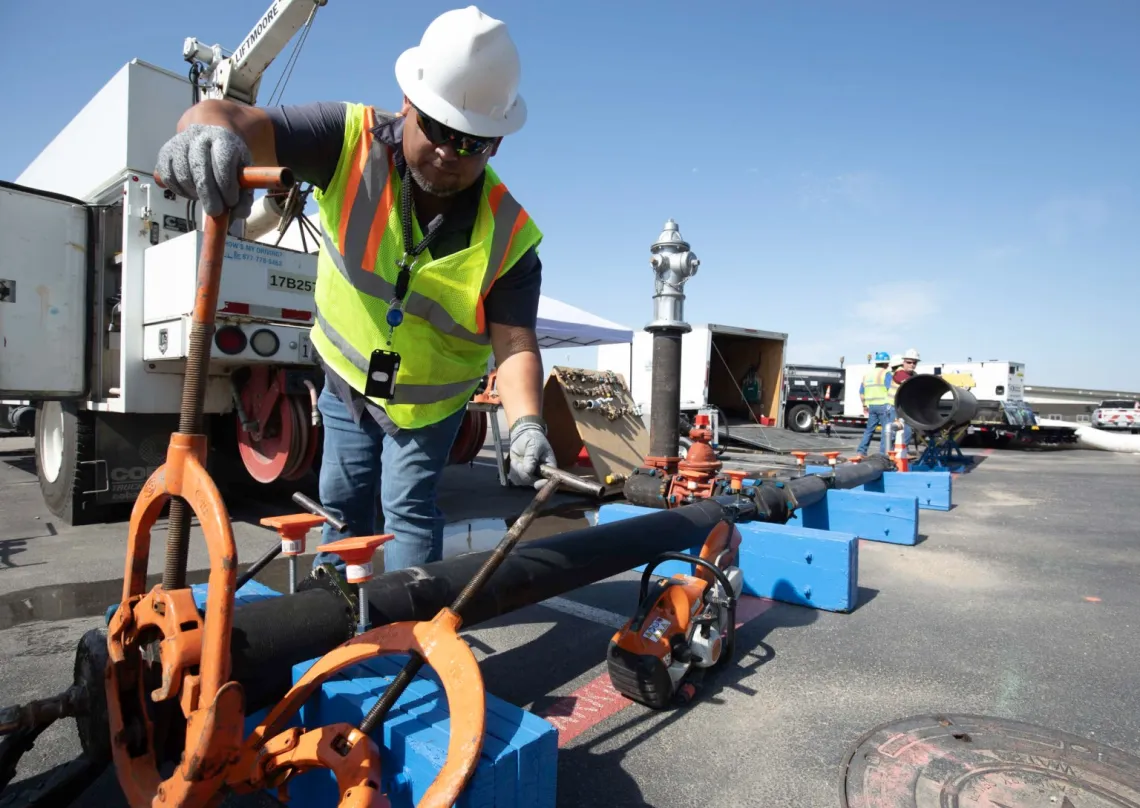
- Neither Prop 4 nor its “enabling” legislation (SB 7) earmark funding for specific water projects but do identify the types of projects for which the Fund may be used – including agricultural water conservation, flood management, new water supply, water loss reduction (such as replacing or repairing leaking water pipelines), rural water projects, and wastewater treatment, among others.
- Prop 4 and SB 7 prohibit the use of the Texas Water Fund to finance the transport of “fresh” (in other words, non-brackish) groundwater from one area of the state to another – a major concern for rural groundwater well owners. Neither Prop 4 nor SB 7 limit private investors from attempting to move groundwater, but private investors are NOT eligible to apply for state financial assistance from the Texas Water Fund – the Fund is for local governments.
- Prop 4 and SB 7 do NOT establish a state water “grid” for moving water around the state – an enormously expensive proposal promoted by one major legislative sponsor but considered unrealistic by other legislators.
- Prop 4 and SB 7 alone will not provide the money to fix all of the state’s water problems and meet all future water needs, estimated to require literally hundreds of billions of dollars, but the dedicated water funding (combined with other funding previously approved) represents a critical step forward in addressing those challenges.
- If Prop 4 is approved, Texans will have a continuing responsibility to make sure the money is well-spent. They will need to encourage local governments and regional water planning and flood planning groups to pursue projects that will provide efficient ways to supply water, responsible measures to manage floods and keep people safe from flooding, and effective wastewater treatment to keep water clean, while maintaining river flows and freshwater inflows into the state’s highly productive coastal bays and estuaries.
Early voting is underway now for Prop 4 and the other proposed state constitutional amendments and continues through Friday, October 31. Registered Texas voters may cast their ballots now or on Election Day, Tuesday, November 4.
Looking for ways to get involved in Texas' water future? Join us for our next meeting of the Water for People and the Environment Committee on November 10, 2025 @ 6:30PM.