By Cyrus Reed
Texas Parks and Wildlife Approves Major Parkland Acquisitions
Earlier this month, the Texas Parks and Wildlife Commissioners approved moving forward with the purchase of three large tracts of land for new public parklands and took up the ongoing issue of Mountain Lions which have long been unprotected in Texas from hunting or reporting. The decision to invest in new parks is a direct result of the efforts in 2023 to set aside $1 billion dollars for new parkland acquisition and development as part of the so-called “Centennial” Fund.
What Is the Centennial Fund?
In 2023, the Legislature passed legislation that created the Centennial Fund, a $1 billion investment in the purchase and development of new parklands. In addition, in November 2023, voters overwhelmingly approved Proposition 14, the constitutional amendment that put into law the creation of the Centennial Fund. The Sierra Club was a supporter of the legislation and the constitutional amendment and is pleased to see the results just two years after the vote.
Since passage of the constitutional amendment, the Texas Parks and Wildlife Department has been using the interest off of the $1 billion as well as other specific money allocated by the Legislature to expand public access to parkland.
Recent Parkland Acquisitions and Expansions
Over the last few years, the TPWD has approved new parkland acquisition and development, including:
- Bear Creek State Park: Acquired in 2025, this 1,720-acre park is currently in the planning phase, and is located near Garner State Park West of San Antonio.
- Post Oak Ridge State Park: Acquired in 2025, this 3,100-acre park will have public hunts for the 2025-2026 season, with other public access being planned. It is located near Lampasas, just across the river from Colorado Bend State Park.
- New Hill Country Park: A 30,000-acre park is in development in Lampasas and Burnet Counties, with initial land purchases already completed.
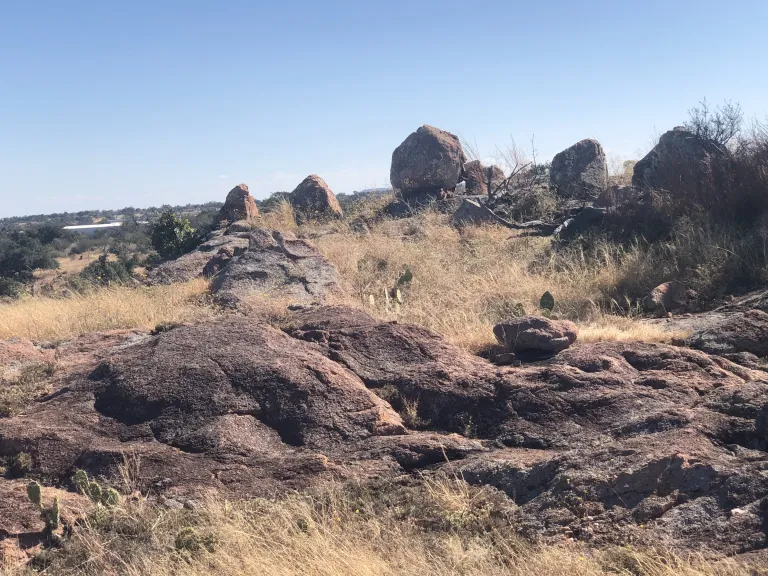
- Enchanted Rock State Natural Area: 3,702 acres were added in 2024 and 2025, with public hunts available for the 2025-2026 season, as well as guided hikes in the new area.
- Government Canyon State Natural Area expansion. Recently, the Texas Parks and Wildlife Commission authorized the acquisition of approximately 823 acres in Bexar and Medina Counties adjacent to Government Canyon State Natural Area.
New Parkland Approvals from TPWD Commissioners
Earlier this month, the Texas Parks and Wildlife Commissioners made even more progress by approving the acquisition of property in 3 new areas, including
- Lockhart State Park expansion. The Centennial Fund was approved to expand Lockhart State Park by some 200 acres. Lockhart is located just southeast of Austin and is a relatively small park but with important recreational and habitat features. Lockhart of course is also a great place for barbecue on the way!
- Silver Lake Ranch: Due in large part to The Moody Foundation, which is giving its ownership of the majority of this 54,000-acre property in Kinney and Edwards counties, Silver Lake Ranch would be established as a new state park. In fact, Silver Lake Ranch would be the second largest state-owned park in Texas . The transfer is pending final documentation, but was approved for initial documentation last week. The new park includes a vast stretch of Hill Country wilderness in Kinney and Edwards counties about 125 miles west of San Antonio.
- Caprock Canyons State Park and Trailway: The TPWD approved authorization to acquire a 1,120-acre parcel from a willing seller to add to Caprock Canyons State Park & Trailway. The land would increase the habitat for the State Bison Herd as well as expand recreational opportunities at the state park in West Texas in Briscoe County.
Mountain Lion Protections in Texas: A Longtime Issue
For more than 30 years, the Lone Star Chapter of the Sierra Club has been telling the TPWD and the legislature that Mountain Lions need better protection. In fact, in 1991 the Sierra Club issued a petition for rulemaking that was denied by the Department, instead arguing that voluntary measures and reports could help protect the Mountain Lion. A panel in 2007 suggested that more data and study was needed to protect the Lion, as did another stakeholder group in 2012. Finally, in 2022, yet another stakeholder group was formed, and looked at several options for better protection of this unique but threatened species.
Last year, the new stakeholder group released a report, leading the TPWD to take some initial action adopting new regulations that ban so-called canned hunts and implemented a 36-hour trap check standard for mountain lions. These changes were the first in more than 50 years regarding management of mountain lions in Texas and moved the state toward more modern hunting and trapping standards. In addition, the Commissioners directed staff to develop a state management plan, which later was called the Texas Mountain Lion Research and Monitoring Plan.
New Texas Mountain Lion Research and Monitoring Plan
At the TPWC meeting last week, TPWD staff discussed the new plan and the need to take some additional measures to improve the long-term viability of the species. Among several goals of the plan is to develop an integrated population study, develop a framework for population monitoring, and third, identify knowledge gaps that exist.
Moreover, they pointed to a loophole in current Texas rules that exempts research on mountain lions from any requirements for scientific permits or the sharing of any scientific information collected, leaving lions largely unprotected and unmonitored. Mountain lions are thus the only native species that doesn’t require a scientific permit, or the sharing of knowledge with the TPWD collected by the studies. Second, there is no mandatory reporting required for mountain lions killed by hunters or through other means, and the staff has finally arrived at the need to address this issue. The original plan, which had been in place for years, was to try to estimate lion populations through voluntary “harvesting” reporting, but TPW biologists now acknowledge that this is insufficient. Knowing how many lions are being “harvested” is essential to estimating population levels, because hunting and trapping are the major causes of mortality in Mountain Lion populations, and population information is essential to protect Lions in Texas.
While the Plan is an important milestone, addressing the loophole and actually considering required reporting of mountain lion deaths will be key to their protections. After discussion, Chair Paul Foster directed staff to prepare a rollout plan for mandatory harvest reporting and to examine the 1997 Texas Administrative Code provision that excludes mountain lions from the scientific-permit requirement. He asked staff to return with a proposal at the commission's March meeting. The Sierra Club will continue to press for changes to protect these unique species which are found in both West Texas and South Texas.
Watch the TPWD Meeting Video
You can watch the video here.