Do you know if your favorite stream or lake is safe to use? Do you know how to find out? Has anyone from the Texas Commission on Environmental Quality asked if you use it? If you’re like most Texans, the answers are no, no, and no. But the Sierra Club is trying to change that.
Over the past couple of months, the Sierra Club Lone Star Chapter has submitted comments on two important but largely unpublicized processes at the Texas Commission on Environmental Quality (TCEQ): Recreational Use-Attainability Analyses (RUAAs) and the Texas Integrated Report (IR). These behind-the-scenes water quality decisions play a major role in determining how Texas rivers and streams are protected.
What Are RUAAs and Why They Matter
RUAAs are studies that TCEQ conducts to determine whether a water body should meet higher or lower recreational water quality standards. In simple terms, these types of studies are designed to help decide how clean a river or creek needs to be for recreational activities like swimming, boating, or fishing. The higher the standard, the cleaner it needs to be. The lower the standard, the more polluted it’s allowed to get.
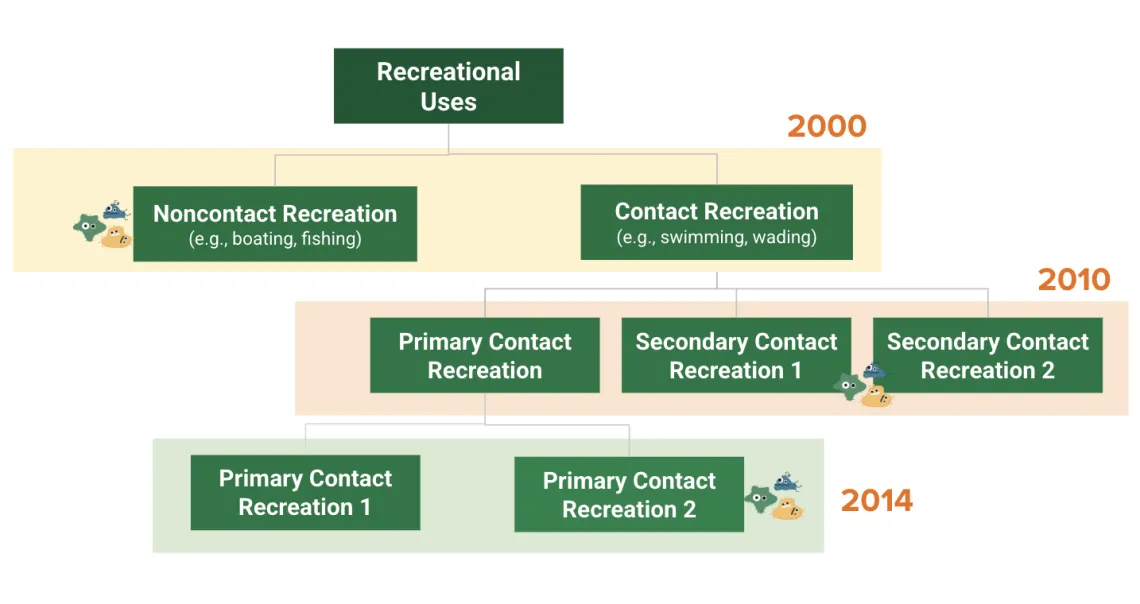
One concern that we’ve repeatedly raised to TCEQ is related to how the agency has changed the way it classifies recreational water uses over time. Back in 2000, there were just two categories: Contact Recreation (like swimming or wading) with the highest level of protections, and Non-Contact Recreation (like fishing or boating) with looser water quality standards. In 2010, TCEQ split these categories, creating Secondary Contact Recreation 1 and 2 categories that allowed higher bacteria levels by assuming that people used those water bodies for activities that involved less direct contact with the water, like fishing, kayaking, and motor boating. Then in 2014, TCEQ split the highest protection category, Primary Contact Recreation, even further into Primary Contact Recreation 1 (PCR1) and Primary Contact Recreation 2 (PCR2). PCR1 assumes people swim, wade, and play directly in the water and therefore sets a stricter bacteria limit. PCR2 assumes those same water recreation activities still happen only less frequently, and as a result allows significantly higher levels of bacteria.
As a result of these revisions to the state’s water quality standards, TCEQ conducts RUAAs to determine if PCR1 is still appropriate or whether a lower standard (PCR2) should be considered based on local conditions. These kinds of revisions to water quality standards are very important because Texans don’t stop using rivers and streams just because a recreational use classification changes, yet RUAAs can be used to reclassify waters in ways that reduce water quality protections posing a risk to public health. It’s also important to remember that once a standard is lowered, it’s very hard to raise it again.
RUAAs are often the first step in deciding whether a creek should be downgraded from PCR1 to PCR2 (though not all RUAAs result in this outcome). When we reviewed the most recent RUAA reports for Ash Creek, Dossier Creek, and Derrett Creek in Tarrant County, we found several issues. While this review stage doesn’t determine whether a downgrade will occur, we noticed that the RUAAs relied on limited field data, minimal stakeholder interviews, outdated land-use information, and narrow assumptions about how people use these creeks. These gaps in methodology create a real risk that a water body could potentially be downgraded not because recreation is truly rare, but because the analysis doesn’t capture the full picture. You can read our full comments here.
The types of concerns we raised in our comments above matter even more once TCEQ moves from the RUAA stage to actually proposing a downgrade. And that’s exactly what happened to a separate set of water bodies last month. Recently, TCEQ proposed to reclassify Honey Grove Creek, Big Cypress Creek, and Lilly Creek (North and Northeast Texas area) from PCR1 to PCR2, which would raise the allowable level of bacteria in these water bodies from 126 colonies per 100 milliliters to 206. In each case, the proposed downgrade relied on insufficient data or limited interpretations of recreational use, while failing to account for the changing watershed conditions that could increase pollution pressures.
The Sierra Club Lone Star Chapter submitted comments opposing these downgrades. In addition, more than 400 Texans from across the state took action by signing a petition to TCEQ to ask the agency not to weaken protections for waters people still swim, wade, and enjoy. You can read our comments here.

What Is the Integrated Report?
The Integrated Report of Surface Water Quality is another important TCEQ process to keep track of as it’s the state's official water quality report card, which identifies which rivers, creeks, and lakes are healthy, and which are impaired (or polluted). It informs the state’s decisions about what waters need cleanup plans and where regulatory attention should go. TCEQ revises the Integrated Report every two years by adding newly identified impaired water bodies and removing those that are no longer considered polluted, while also updating the methodology behind these decisions. The proposed 2026 draft raised several red flags.
TCEQ is proposing to remove the Lower Pecos River – one of the few remaining high-quality water bodies in Texas – from the impaired waters list for total dissolved solids (or salts in water). When a water body is removed from the impaired waters list in the Integrated Report, the state is essentially saying that it now meets water quality standards for the pollutant it was listed for. Yet the Lower Pecos River was listed as impaired only 5 years ago, and remained on the list in the 2024 revision of the Integrated Report. Throughout these years, no documented restoration work has occurred that would explain a sudden improvement in TDS levels. We also noticed that TCEQ based their determination on limited data, not representative of the entire stretch of this segment of the Lower Pecos River. Moreover, we know that the agency is currently reviewing at least five applications to discharge treated oil and gas wastewater (aka “produced water”) into the Pecos River watershed.
In our comments, we expressed concerns that this proposed delisting risks creating the impression that the water quality impairments have been resolved, even though the background and methodology behind TCEQ’s conclusion remain questionable. You can read our comments here.
The Common Issue: Transparency
Across both the RUAA process and the development of the Integrated Report, the underlying concern was the same: decisions with lasting consequences for Texas rivers, streams, and lakes are being made using highly technical data that is difficult, or sometimes impossible, for the public to access, review, and understand. While data may exist within the agency systems, if everyday Texans, local communities, and even experts cannot reasonably find, understand, or analyze it, meaningful public participation cannot happen.
The Integrated Report and RUAAs rarely make headlines, but these administrative water quality decisions quietly determine what levels of pollution are allowed and which waters receive protection. That’s why we submitted comments, requested supporting information, and raised concerns – to make sure that water quality decisions are transparent and protective of the public interest. We’re paying attention and we’ll keep showing up to help ensure Texas waters are safe and protected for generations to come.
Now we need your help. Here’s a quick list of actions you can take:
- Please join the 400+ Texans who have written to the TCEQ to demand better water quality standards.
- Share this blog with everyone you know who cares about water.
- Support the Sierra Club Lone Star Chapter with a financial contribution so we can continue this vitally important work.