By Evgenia Spears
Water in Texas is anything but simple. Diverse geographies, competing demands, intensifying droughts and floods, and layered political and regulatory systems make the Texas water landscape very challenging to navigate. In my work as a water program coordinator, I spend much of my time helping Texans see what can get lost in this complexity: that water is a shared resource, and that the decisions made in one place ripple across the state.
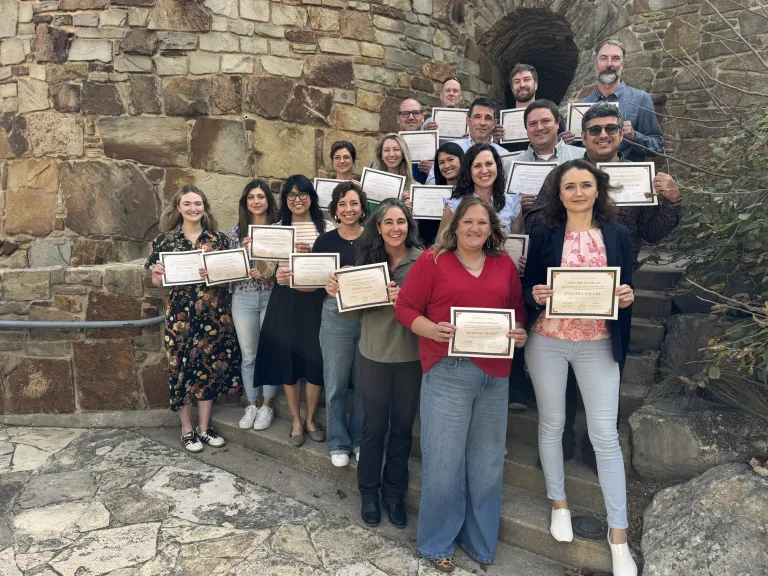
Last year, I had the opportunity to participate in the Texas Water Leaders program, a leadership experience offered by the Texas Water Foundation. I came into the program with a clear sense of how challenging Texas water work could be and a desire to become the kind of leader it demands. What surprised me was how much clarity emerged not from diving deeper into specific water issues, but from pausing to examine leadership itself: how trust is built, how differences are navigated, and how intention shapes impact.
Throughout the program, I spent time with water professionals working across very different parts of the Texas water sector – people whose day-to-day responsibilities rarely overlap, but whose work is deeply interconnected. In our sessions, we talked openly about the human side of water work, including how conflict arises, how communication affects outcomes, and how leadership can either bring people together or push them apart. The experience wasn’t about knowing more about water issues facing Texas – it was about learning how to move forward together. I now regularly cross paths with my fellow cohort members in various meetings and events, which has been a grounding reminder that this work is shared.
Time and again throughout the year, our discussions pointed to the same conclusion that protecting water in Texas requires not only sound policies and reliable infrastructure, but also thoughtful and inclusive leadership. Water challenges don’t exist in isolation, and neither do solutions. They require people who can listen across differences, connect disciplines, and bring others into the conversation.
The Texas Water Leaders program is intentionally designed to cultivate that kind of leadership for our uniquely complex water landscape. I’m deeply grateful for the opportunity to reflect, grow, and build lasting connections through this experience, and for the support that makes leadership development in the water sector possible. Investing in people, alongside policies and projects, is essential if we want Texas water to remain protected, accessible, and abundant for generations to come.
Thank you for being part of that collective effort.