By Cyrus Reed
A Texas Supreme Court hearing in Edinburg, TX is examining whether a state law allowing beach closures for SpaceX rocket launches at Boca Chica violates Texans’ constitutional right to open beach access. Meanwhile, the Lone Star Chapter is also urging the public to oppose a proposed land swap that would transfer hundreds of acres from the Lower Rio Grande Valley National Wildlife Refuge to Elon Musk’s SpaceX.
Texas Supreme Court Hears Case on Boca Chica Beach Closures for SpaceX Rocket Launches
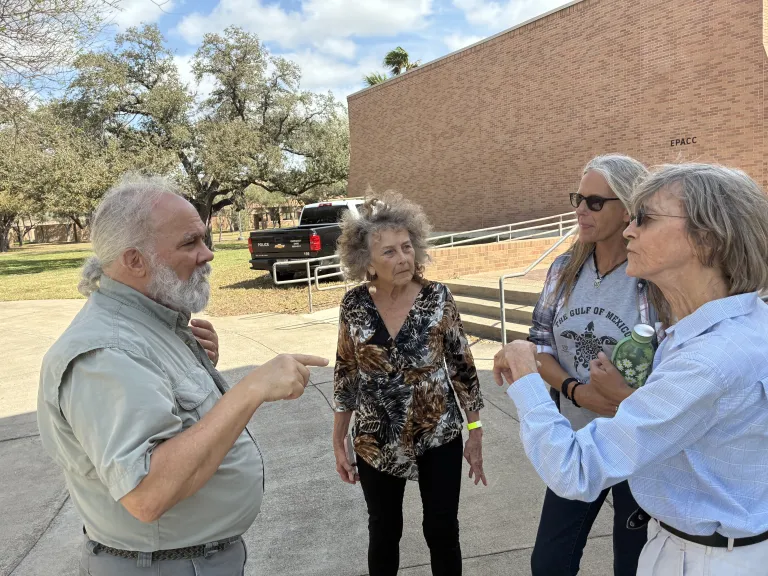
Earlier this month, a unique event occurred in Edinburg Texas at the University of Texas Rio Grande Valley’s Performing Arts Center. Not the usual concert or theater production, but a high stakes Texas Supreme Court case pitting the Carrizo/Camecrudo Tribe of Texas, Save RGV, the Sierra Club, and our allies, like the South Texas Environmental Justice Network, against the Texas state and local government.
Specifically, SpaceX, owned by the world’s richest human, Elon Musk.
At issue was a case brought by the three plaintiffs against the General Land Office, Cameron County, and a law passed by the Texas Legislature which allows government entities to close beach access – in this case Boca Chica beach in South Texas - for the expressed purpose of Musk shooting off his rockets. Specifically, House Bill 2623 (2013), amended the Texas Open Beaches Act to allow for these closures.
Because full access to all Gulf beaches has been state law since the1959 Texas Open Beach Act, and was enshrined by voters into the Texas state constitution in 2009, lawyers representing the plaintiffs maintain that the law passed by the legislature in 2013 allowing beach closures for rocket launches is unconstitutional, violating the rights of local Save RGV and Sierra Club members, but also the members of the Carrizo/Camecrudo Tribe, who use the beach for ceremonial and other purposes.

Public Interest and Community Turnout at the Edinburg Supreme Court Hearing
Appearing before the 9 judges were not only the legal counsel representing the General Land Office, Cameron County and the plaintiffs, but also a crowd of nearly 1,000 people, including advocates, hundreds of local elementary, middle school, high school and college students, and local officials. Both the defendants and plaintiffs were given 20 minutes to make their arguments, but honestly - most of the time was responding to questions posed by the Supreme Court justices.
Key Legal Arguments: Constitutional Beach Access vs Government Safety Powers
The justices seemed interested in trying to get an answer to the question: Where is the line on the constitutional right to unfettered beach access and the right of the government to restrict that access under police powers for safety?
The main lawyer representing the Sierra Club and the other plaintiffs - Marisa Perales - kept it simple, continually pointing the difference between beach closures for natural disasters, a crime wave, or the result of an industrial accident - which are legitimate police protection versus closing a beach for the intent purpose of allowing a dangerous industrial activity - shooting off a space rocket - that could not occur without the government ordering a beach closure. The government attorneys argued that while closing the beach every day would be a restriction of Texan’s constitutional rights, closing it a few times a month was not.

What Happens Next in the Texas Supreme Court Case
Next comes a waiting game. The Supreme Court will consider both written and oral arguments in the coming months, and could decide to send the case back to a lower court where both sides would have the opportunity to further develop their arguments. They could also decide to make a definitive decision one way or the other.
New Texas Legislation Expands Beach Closure Authority
Unfortunately, in the meantime, the Texas legislature went even further last session in allowing for beach closures, allowing a new Texas Space Commission to work with the local city of StarBase to close the beach.
Proposed SpaceX Land Swap Threatens Lower Rio Grande Valley National Wildlife Refuge
Elon Musk and SpaceX, not content with the amount of access they currently enjoy, are now seeking a land swap with important nearby ecological land found in the US Fish and Wildlife’s (FWS) valuable Lower Rio Grande Valley National Wildlife Refuge lands. This proposed trade would have the US Fish and Wildlife give up some 712 acres of public land to SpaceX in return for a similar amount of land controlled by SpaceX found outside of the refuge which would then become government land.
Why Environmental Advocates Oppose the SpaceX Land Swap
Such a swap would set a dangerous precedent and open the National Wildlife Refuge System and Valley residents to the dismemberment of environmental, social, and cultural heritage. The US Fish and Wildlife Service has already conducted an Environmental Assessment and is proposing a Finding of “No Significant Impact” ruling that would allow for the government to give the people’s land to a space company owned by the world’s richest individual.
We are instead insisting that the FWS must be required to enact a full Environmental Impact Statement.
Public Comment Deadline: Oppose the SpaceX Land Swap by March 31, 2026
We must say no to this dangerous swap deal and call for a full EIS under the National Environmental Policy Act. Comments on the proposal are due March 31st and we are asking our members and supporters to comment before the deadline.