Texas leads the nation in plastic manufacturing, with 36 facilities across the state producing materials that make things we use every day, like tooth brushes, food packaging, plastic bags, water bottles, to name a few. Long before it becomes something we recognize, plastic exists in a very different form called pre-production plastics – the raw materials used to make familiar plastic products.
Pre-production plastics are a type of microplastics that come as tiny pellets (often called ‘nurdles’), as well as powders and flakes. Pellets are small, round, and translucent, typically looking like little beads, while powders and flakes are much finer and less visible.
Pre-production plastics often end up in the environment through spills during manufacturing and transport. They also may be washed off industrial sites by stormwater runoff or leak into the environment with wastewater discharges. As a result, the highest concentrations of these plastic materials are often found near manufacturing sites and along transportation routes, impacting not only coastal waters, but also inland rivers, streams, and lakes.
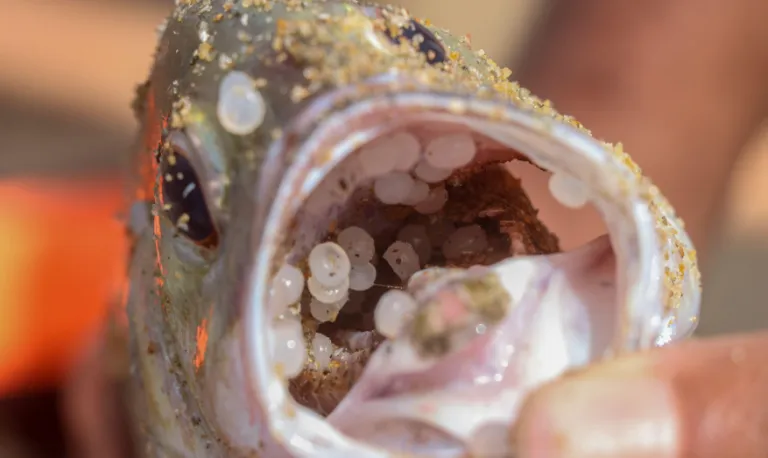
Why Nurdles Are a Major Environmental and Public Health Threat
Not surprisingly, once in the environment, pre-production plastics are extremely hard, if not impossible, to clean up. Many of them end up in our rivers, creeks, lakes, and coastal waters, posing a significant threat to wildlife and human health. Fish, birds, and other animals can mistake nurdles for food and ingest them. Moreover, as pre-production plastics move through the environment, they can adsorb (stick to their surface) pollutants like pesticides and other harmful chemicals, carrying those contaminants into organisms when ingested.
Over time, these plastic pellets break down into even smaller particles and build up (or bioaccumulate) in living organisms, moving up the food chain. This creates a pathway to people, as these microplastics can make their way onto our plates through seafood. Emerging research links microplastics found in the human body to a higher risk of cardiovascular disease and other serious health conditions.
Why This Matters in Texas: Regulatory and Enforcement Gaps
Given these concerning impacts, an important question is: How is pre-production plastic pollution regulated in Texas?
While Texas is a major hub for plastic manufacturing, we don’t currently have a strong regulatory framework to deal with pre-production plastic pollution. In practice, this problem is primarily addressed through permits issued by Texas Commission on Environmental Quality (TCEQ) under the Texas Pollutant Discharge Elimination System (TPDES), rather than through clear rules specifically designed to control pre-production plastic pollution. And because pre-production plastics aren’t explicitly defined in the statute, the regulatory language isn’t specific and largely relies on narrative provisions, like allowing only “trace amounts” of “floating solids” in wastewater discharged by a facility. This language is too general and could be challenging to enforce, not to mention its very limited applicability to discharges of less visible forms of pre-production plastics like powders and flakes.
In 2022, when TCEQ was revising the Texas Surface Water Quality Standards (SWQS), the agency considered language that would have recognized pre-production plastics as a distinct pollutant and proposed prohibition of their discharge. It marked a significant step in the right direction, and Sierra Club commended TCEQ for this proposal. Ultimately, however, this language wasn’t included in the final 2022 SWQS, raising serious questions about whose interests are shaping these decisions in Texas. Despite these challenges, Sierra Club continues to advocate for enforceable standards to address pre-production plastic pollution and submitted comments as part of the ongoing SWQS revision process.
In response to the regulatory gaps, the plastics industry points to the Operation Clean Sweep program, an industry-led initiative which largely relies on self-reporting of spills and voluntary practices to reduce pellet loss at the source. While these kinds of arguments can shape how policymakers view the need for additional regulations, this voluntary approach is not enforceable and is clearly insufficient to address the scale of pre-production plastic pollution in Texas. In fact, the 2025 International Plastic Pellet Count Report identified Texas as a leading hotspot for nurdle pollution, with some of the highest nurdle counts recorded nationwide.
Last legislative session (89th Legislature), Representative Zwiener filed HB 4028, with a companion bill (identical bill) in the Senate – SB 2441 – filed by Senator Zaffirini. The goal of these bills was to establish a clear regulatory framework for pre-production plastics in Texas by defining them in law, requiring monitoring and reporting of spills, and directing TCEQ to incorporate pre-production plastics into the water quality standards. HB 4028 was eventually heard by the House Committee on Environmental Regulation, and Sierra Club submitted written testimony and provided comments at the hearing. Despite growing scientific evidence on the harms of pre-production plastics and the ever-increasing scale of this problem in Texas, this bill didn’t pass. At the hearing, industry representatives referenced the Operation Clean Sweep program as evidence that additional regulation was unnecessary, an argument that continues to shape the conversation around this issue.
What’s Happening Now in Texas: Dow Chemicals and TCEQ
A recent case involving Dow’s facility located in Seadrift, TX, shows how these regulatory gaps play out on the ground. The plant currently operates under a TPDES permit #WQ0000447000 that limits discharges of “floating solids” to “trace amounts.” A local citizen group – San Antonio Bay Estuarine Waterkeeper – filed a notice of intent to sue after documenting significant plastic pellet pollution near the facility. However, the State of Texas, through the office of the Attorney General, filed its own lawsuit, effectively taking the case from the hands of the citizen group.
On one hand, this means the Dow’s violations are now formally recognized by the state. On the other, this development raises concerns about whether the outcome of the case will be as impactful as it could have been, particularly in a state where industry plays a major economic role.
Shortly after the state took over this case, Dow submitted a request to amend its current permit, arguing that the existing limit of “trace amounts of floating solids” in wastewater is too vague and potentially too strict. To put it simply, Dow is seeking to rewrite the rule it's been accused of breaking.
As of now, TCEQ hasn’t taken any action on the Dow’s permit amendment application, but the stakes are high – approving this application could set a dangerous precedent for how plastic pollution is regulated in Texas. At a minimum, Texans should have a meaningful opportunity to weigh in before any decision is made.
We Need Your Help: Request A Public Meeting
The most impactful action you can take next, whether you live on the coast or not, is to request a public meeting.
Public meetings bring greater transparency to the process. They give communities a chance to ask questions about the proposal, raise concerns, and help make sure decisions aren’t made behind closed doors. In fact, TCEQ looks at the level of public interest when deciding if they’re going to hold a public meeting.
Submitting a direct public meeting request only takes a couple of minutes. Before you do, you’ll need to prepare a few things:
- First, the permit number: WQ0000447000 - you’ll enter it at the top of your comment form.
- Second, your name, email, address, and phone number. Fill out the form truthfully and to completion.
- Finally, make sure to include this exact phrase in your comment: “I am requesting a public meeting.”
That wording matters - without it, your request may not be considered. You can use this downloadable guide to help! If Dow is allowed to move forward, it could open the door for more companies to pollute Texas waterways with more plastic. That’s why it’s critical that TCEQ hears strong public demand for accountability and transparency right now.
What Texans Can Do About Nurdle Pollution
Right now, the TCEQ is reviewing rules that decide how much pollution is safe to allow in our rivers, lakes, streams, and wetlands. Whether you enjoy fishing at your local lake, kayaking down a winding river, or simply savoring a refreshing glass of crisp clean water on a hot summer day, your voice is important in protecting the precious water resources of the Lone Star State.
Tell TCEQ that everyday Texans are watching and want our waters protected.
The International Plastic Pellet Count
The International Plastic Pellet Count is an international day of action where volunteers around the world search for plastic pellets in riverbanks, lakeshores and beaches and record what they find, so we can all have a better understanding of where this pollution is happening and make the case for action.
This year’s International Plastic Pellet Count is on Saturday, May 2, and the hosts are looking for organizations and individuals across America & beyond to join this international day of action.
The Nurdle Patrol
Nurdle Patrol is a citizen science project led by the Harte Research Institute at Texas A&M University–Corpus Christi. The Nurdle Patrol’s mission is to track plastic pellet pollution (commonly called nurdles) across coastlines and waterways, remove them from the environment, and raise public awareness about this growing issue.
The project was launched in November 2018 after a significant nurdle spill resulted in tens of thousands of plastic pellets washing up along Mustang Island and North Padre Island, Texas. What began as a local response has since grown into a community-driven, international effort that empowers volunteers to take part in monitoring and protecting their own shorelines.
Anyone can be a nurdle patroller!
Join the Sierra Club's Water for People & the Environment Committee
Are you concerned about water quality in your community? Interested in learning more about Texas water resources? Ready to join a dedicated team that shares your passion for clean water? If so, the Water for People & the Environment Committee is the perfect opportunity for you!
Our Committee brings together local and statewide efforts to tackle water issues across Texas. We connect community advocates with everyday Texans, provide a space to share ideas and best practices, and work together to build a dynamic network of water champions for impactful change.
Whether you're a volunteer, staff, student, academic, public official, or just enthusiastic about water issues, you're in the right place! Join us to connect with like-minded folks, amplify your campaigns, and dive into the wealth of Texas water knowledge. You don't have to be a Sierra Club member to join!