Texas is facing a growing water crisis. Across the state, communities are confronting prolonged drought and increasing uncertainty about how long our water supply can keep up with demand. At the same time, state leaders are beginning to consider large-scale infrastructure solutions like desalination that are expensive and unproven.
But there is a critical part of the conversation that too often goes overlooked. Wetlands already provide many of the water solutions Texas needs. As we recognize World Wetlands Month, it is worth taking a closer look at what wetlands are, why they matter, and what is at stake for Texas.
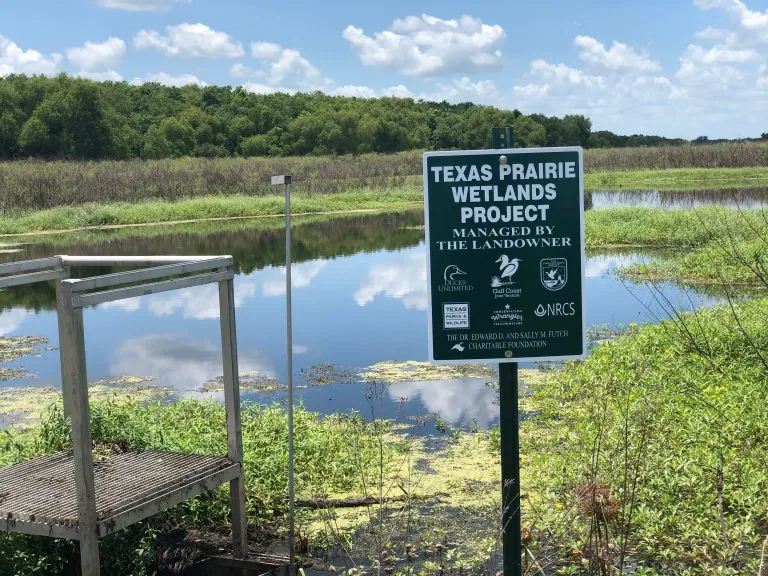
What Is a Wetland?
A wetland is an area of land where water covers the soil or is present either at or near the surface for part or all of the year. This consistent presence of water creates unique conditions that support specialized soils and plants adapted to saturated environments.
Wetlands include marshes, swamps, estuaries, and other water-rich landscapes. While they may look like muddy or undeveloped land at first glance, they are among the most productive ecosystems on Earth.
Does Texas Have Wetlands?
Texas is home to a wide range of wetlands, from the Gulf Coast to inland regions. Coastal marshes and estuaries line the Texas shoreline, while playa lakes, bottomland hardwood forests, and seasonal wetlands are found across other parts of the state.
These ecosystems are deeply connected to Texas’ economy, environment, and ways of life. Coastal wetlands support fisheries and protect against storm surge. Inland wetlands help manage water flow and sustain wildlife across diverse regions. You can explore wetlands in Texas using the interactive U.S. Fish & Wildlife Service Wetlands Mapper.
How Many Wetlands Does Texas Have?
Texas still contains millions of acres of wetlands, but the state has already lost more than half of its original wetland areas. Development, industrial expansion, and poor land management have steadily reduced these ecosystems over time.
The loss is especially significant along the Gulf Coast, where wetlands play a critical role in buffering communities from hurricanes and flooding. As population growth and industrial pressures continue, remaining wetlands face ongoing threats.
Are Wetlands Protected in Texas?
Wetland protections in Texas are limited and often depend on federal law. The Clean Water Act has historically provided a framework for protecting certain wetlands, particularly through regulations that govern dredging and filling activities.
However, the scope of those protections depends on how federal agencies define which waters qualify for protection. Texas itself does not have strong, independent wetland protections in place, leaving many areas vulnerable when federal standards are weakened.
What Has Federal Policy Meant for Wetlands?
Changes in federal policy over the past decade have had significant impacts on wetlands. During the Trump administration, the definition of protected waters was narrowed, removing federal protections from millions of acres of wetlands across the country.
This shift made it easier for development and industrial projects to move forward in areas that were previously protected. Although policies can evolve between administrations, the long-term trend has created uncertainty and risk for wetlands and the communities that depend on them.
Why Wetlands Matter in Texas
Wetlands are not just ecological features. They are essential infrastructure that supports public safety, water quality, and economic stability. They act as natural flood control systems by absorbing excess rainfall and reducing the impact of storms. In a state that regularly experiences both drought and extreme flooding, this function is critical.
Wetlands also improve water quality by filtering pollutants and trapping sediments before they reach rivers, aquifers, and drinking water sources. At a time when Texas is searching for ways to secure its water future, protecting natural filtration systems should be a priority.
They are also vital habitats for wildlife. Wetlands support fish populations, migratory birds, amphibians, and a wide range of species that depend on water-rich environments to survive. In addition, wetlands play a role in addressing climate change by storing carbon and helping buffer communities from extreme weather events.
What Animals Live in Wetlands?
Wetlands are some of the most biodiverse ecosystems in Texas. They provide habitat for alligators, turtles, frogs, and salamanders, along with numerous fish species that rely on wetland areas as nurseries. Birds such as herons, egrets, and migratory waterfowl depend on wetlands for feeding and nesting.
These ecosystems also support mammals like river otters and countless insect species, including pollinators that are essential to agriculture and natural systems.
The decisions Texas makes in the coming years will shape the state’s water future for decades. As legislative leaders explore new infrastructure investments, there is a real opportunity to take a more comprehensive approach.
One of the most important steps that Texas could take is to start recognizing the value of protecting existing wetlands before they’re lost by choosing to adopt stronger wetland protections than the current federal standards. In addition, because Texas is 96% privately owned, successful protection of wetlands is impossible without consistent work with private landowners through conservation incentives, restoration programs, and voluntary partnerships.
Research shows that even small losses of coastal wetlands can significantly increase hurricane property damage, which underscores the critical role that wetlands play in buffering Texas communities from storms and flooding. As our state continues facing the impacts of climate change and experiencing rapid land development, wetlands will become increasingly important from protecting both communities and ecosystems.
What You Can Do
Protecting wetlands starts with awareness, but it does not end there. Texans can play a role by staying informed about water policy, supporting conservation efforts, and speaking up for responsible solutions. Engaging with local and state decision-makers, supporting organizations working on wetland protection, and sharing information within your community all contribute to stronger outcomes.
Wetlands are a critical part of Texas’ landscape. If Texas is serious about addressing its water challenges, protecting wetlands must be part of the plan.