By Bob Hendricks, Chapter Vice Chair
Amazing and hopeful news! After months and even years of delay, the HOMES and HEAR rebate programs to expand energy efficiency opportunities for Texas homeowners appear to be on a slow but steady track toward launch in Texas, possibly as early as this fall. On April 15, during testimony before the House Appropriations Committee, Department of Energy Secretary Chris Wright said that the delayed rebate funds would be released within “a few weeks.”
Meanwhile, last month, the Texas’ State Energy Conservation Office (SECO) announced it has selected and signed a contract with APTIM Federal Services of Baton Rouge, Louisiana, to design and implement the programs. APTIM is already working with SECO on the initial phases, including building rebate-processing systems, developing contractor networks, and creating customer-facing tools. The process also includes gathering stakeholder input and obtaining final approval from the U.S. Department of Energy for the Texas program Design. While APTIM is the main contractor, they are actually working with a number of Texas entities to provide outreach and administration, including the South Central Partnership for Energy Efficiency as a Resource, of which Sierra Club is a member. (Note: Sierra Club takes no federal money and is not participating directly in the program but as a member of SPEER will help promote education and access to the program). All told, assuming everything goes as planned, some $690 million in federal funds could flow through the process over the next five years assuming key metrics are met.
Until recently, the SECO website listed a target launch date of summer 2026. It now states that this design and implementation work will continue “through fall 2026, though the timeline depends on federal review and approval.” SECO has indicated it intends to launch the programs as soon as the remaining federal approvals are secured and is still planning a fall launch.
Where did this funding come from?
Before leaving office, the Biden administration had awarded all planned state funding for the rebate programs created under the Inflation Reduction Act, a multi-billion investment effort in clean energy, energy efficiency, cleaner transportation and other efforts. However, on January 20, 2025, President Donald Trump ordered a freeze on IRA funding while the new administration conducted a review of those programs. That action temporarily disrupted even some early-adopter states that had already begun issuing rebates. Some states paused or delayed their programs as a result.
Several federal court rulings later blocked portions of the administration’s broad funding freeze. At the same time, the administration directed the Department of Energy to review IRA-funded programs and grants. Some clean-energy grants were ultimately canceled including the Solar for All Program. However, on April 15, Secretary Wright stated that the review of the Home Energy Rebate programs had concluded and that the funds would be released “in the near future.” When pressed on the timeline, he clarified: “a few weeks.”
About a dozen states have already implemented at least the HEAR rebate program, which provides rebates for high-efficiency electric appliances and home electrification upgrades. Some states have also implemented the HOMES program, which provides rebates based on the overall energy savings achieved through whole-home efficiency improvements. States have considerable discretion in how they structure their programs
and eligible technologies.
Program administration also varies by state. In some states, rebates are provided instantly at the point of sale by contractors or retailers, which are then reimbursed by the state. In others, consumers apply for reimbursement after purchasing and installing the equipment.
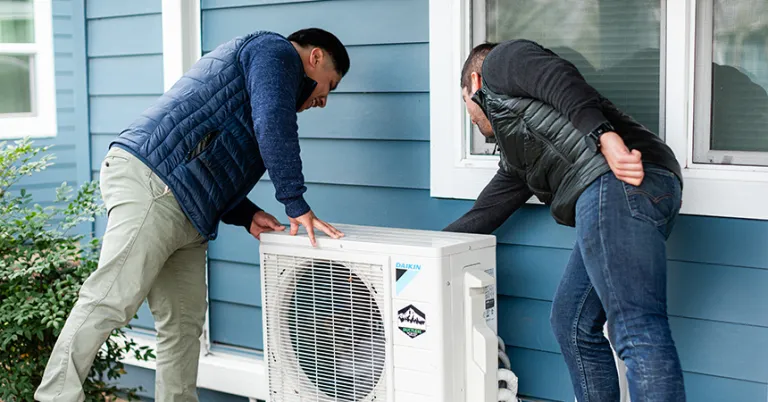
The HEAR program provides rebates covering up to 100% of costs for low-income households and up to 50% for moderate-income households, subject to program caps. Eligible technologies include heat pumps, heat-pump water heaters, insulation, electrical upgrades, and more. Heat pump rebates alone can reach up to $8,000 per Household. The HOMES program is more focused on whole house retrofits including more traditional upgrades like windows and insulation but could help thousands of families in Texas.
When these programs finally launch in Texas, concerned citizens and community organizations will need to help to ensure that the people who could benefit most. Importantly, last legislative session Sierra Club worked with a number of legislators to approve HB 5323 which created the Texas Energy Waste Advisory Committee, composed of 8 state agencies including the Comptroller of Public Accounts - of which SECO is a division - ERCOT - our grid operator, the Public Utility Commission of Texas and the Texas Department of Housing and Community Affairs. The hope is that this advisory committee can help assure that the HOMES and HEAR programs are well coordinated with other federal, state, and utility-funded programs so that Texas families can help reduce strain on the grid, save money and help keep our communities cleaner. Information about EWAC - which is required to issue a report and make recommendations to the legislature by December 1 - can be found here.