Texas is facing a growing pressure on its water supplies. Population growth, intensifying droughts, aging infrastructure, and increasing industrial demand are projected to create significant water shortages in the coming decades. Seawater desalination – the process of removing salt from ocean water to produce fresh water – has emerged as a potential solution to increase the state’s water supply.
But turning ocean water into drinking water isn’t simple: it’s expensive, energy-intensive, and can potentially harm coastal communities and ecosystems. That’s why seawater desalination in Texas should only be considered after more sustainable water supply strategies like water conservation, reuse, and fixing leaky pipes have been maximized.
Texas currently doesn’t have an operating seawater desalination plant, although desalination of brackish groundwater (naturally occurring water with salt levels that fall between freshwater and seawater) is already used in many parts of the state.
Seawater Desalination is Expensive and Energy-intensive
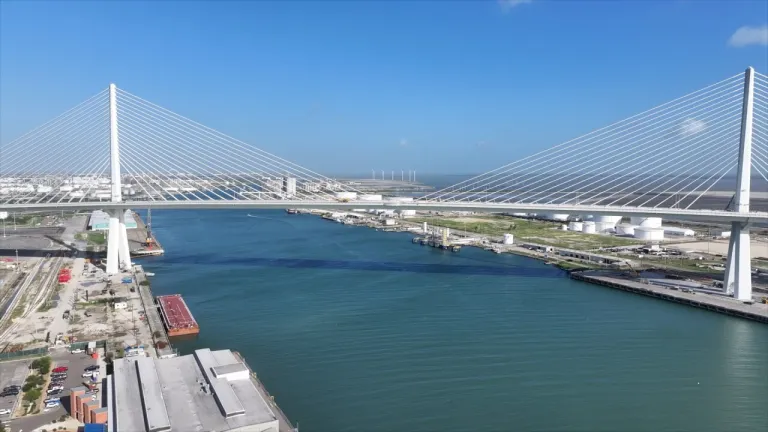
The 2026 regional water plans recently approved by Texas Water Development Board (TWDB) recommend construction of 8 seawater desalination facilities, with five proposed in the Corpus Christi area and three in other coastal regions of Texas. According to the most recent State Water Plan, if all these facilities are built, they would provide less than 4% of the new water supplies the state plans to develop by 2080 (compared to roughly 30% of additional water expected to result from conservation strategies).
At the same time, these projects come with substantial economic costs. The eight proposed facilities are estimated to require about $11.2 billion in public funding, nearly four times the $2.8 billion estimated for similar proposals in the 2021 regional water plans. In addition, two seawater desalination projects are currently being pursued with private funding: the Bayshore Desalination Facility in Galveston Bay and the RGV-Desal project proposed for South Padre Island.
Seawater desalination proposals listed in 2026 regional water plans
Desalinated seawater is expensive. Based on the estimates in the 2026 regional water plans, it could cost between about $2,300 and over $10,000 per acre-foot (or roughly $7 to $32 per 1,000 gallons) once full project costs are included. An acre-foot equals the amount needed to cover 1 acre of land with 1 foot of water, or roughly 326,000 gallons.
Desalination also requires a significant amount of energy. Seawater desalination plants typically use 3,000 to 4,300 kilowatt-hours of electricity per acre-foot of water produced. If all eight state-funded marine desalination proposals were operational, their combined electricity demand could equal the annual energy use of more than 100,000 Texas homes.
Impacts on Coastal Ecosystems
Seawater desalination produces two outputs: fresh water and a highly concentrated salt solution called brine. Typically, about half of the treated seawater becomes fresh water, while the other half becomes concentrated brine that must be disposed of.
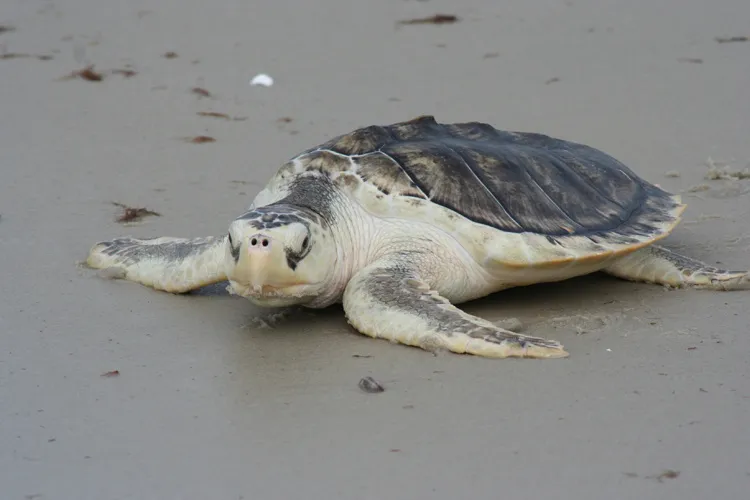
The least expensive option is often to discharge brine into nearby bays or estuaries, but this can disrupt the natural balance of the coastal ecosystems. Texas has a unique barrier island system which limits water circulation with the Gulf of Mexico, meaning brine can accumulate and persist if discharged in the semi-enclosed bays and estuaries. This may lead to elevated salinity levels potentially harmful to fish, oysters, shrimp, and crabs, and degrade critical habitat of the federally endangered Kemp’s Ridley sea turtle.
In addition to brine discharge impacts, pulling in seawater for treatment (water diversion) can harm marine life as larger organisms can become trapped on intake screens (impingement), while smaller organisms can be drawn into the system (entrainment). For example, all plankton – the base of marine food web – will be killed if pulled into desalination intake systems with seawater.
To reduce these impacts, scientists generally recommend locating both seawater intake and brine discharge at least 3 miles offshore. However, building offshore infrastructure can significantly increase project costs. One proposed project in Texas estimated roughly $264 million for offshore brine discharge infrastructure alone.
Impacts on Coastal Communities
Healthy bays and estuaries are the foundation of life along the Texas’ coast. Nearly 7 million Texans live in coastal counties, and hundreds of thousands of jobs in fishing, tourism, shipping, and recreation depend on healthy bays and estuaries. Communities that rely directly on coastal resources, including Indigenous communities, may be especially vulnerable if access to fisheries or traditional food sources is disrupted.
The impacts of seawater desalination can have broader implications for the state’s economy. Each year, our unique coastal ecosystems support more than 100 million pounds of seafood production, valued at $150–$250 million, while saltwater recreational fishing generates about $2 billion annually. Wildlife tourism along the Texas coast brings in over 8 million visitors and contributes roughly $5 billion to the state’s economy each year.
Regulatory Gaps in Texas
Two main agencies handle different aspects of seawater desalination development in Texas: TWDB, which determines eligibility for state funding, and Texas Commission on Environmental Quality (TCEQ), which reviews and issues permits for seawater diversion, brine discharge. As seawater desalination develops in Texas, important regulatory gaps remain:
- Texas lacks enforceable surface water quality standards to manage salinity levels, requiring only that “salinity gradients in estuaries must be maintained to support attainable estuarine dependent aquatic life uses” (TAC 30 §307.4(g)(3)).
- Texas currently allows seawater diversion from bays and estuaries, where marine life can be harmed through impingement and entrainment.
- Seawater desalination permits for brine discharges often rely on limited and site-specific reviews instead of a comprehensive assessment of potential impacts across entire bays and estuaries.
- Neither TCEQ permitting nor TWDB funding criteria currently require seawater diversion and brine discharge to be located at least 3 miles offshore in environmentally suitable zones in the Gulf of Mexico, despite Texas-specific scientific recommendations that resulted from previous legislative action.
- Current permitting doesn't require applicants to demonstrate how brine discharges from multiple seawater desalination facilities could collectively raise salinity over time.

Recommended Policy Solutions for Responsible Seawater Desalination
To ensure seawater desalination is deployed responsibly, the state can take the following steps:
- Direct TCEQ to establish enforceable surface water quality standards for salinity to protect bays and estuaries from concentrated brine discharges.
- Prohibit seawater diversion from and brine discharge into Texas bays and estuaries.
- Require seawater diversion and brine discharge to be located at least 3 miles seaward into the Gulf in environmentally suitable zones identified by scientists.
- Limit eligibility for state funding to facilities proposing to divert seawater and discharge brine at least 3 miles offshore in environmentally suitable zones identified by scientists.
- Require seawater desalination proposals seeking state funding to clearly demonstrate that other sustainable strategies – like water conservation, recycling, and loss mitigation – have been fully pursued and found insufficient to meet water demand.
- Direct TCEQ to set strict permitting standards for design of water diversion systems to prevent impingement and entrainment of marine life.
- Require independent science-based environmental review for any proposed discharge, including analysis of site-specific salinity conditions, baseline ecological studies, and evaluation of cumulative impacts.
- Establish and fund long-term monitoring and adaptive management for seawater desalination in Texas.