Editor's Note: Mountain lions remain one of Texas' most iconic native predators, yet the state still lacks comprehensive data on their population size and distribution. This guest blog explores a decades-long effort to establish basic reporting requirements for mountain lion deaths in Texas and the recent postponement of a proposal that would have helped wildlife managers better understand the species' status across the state.
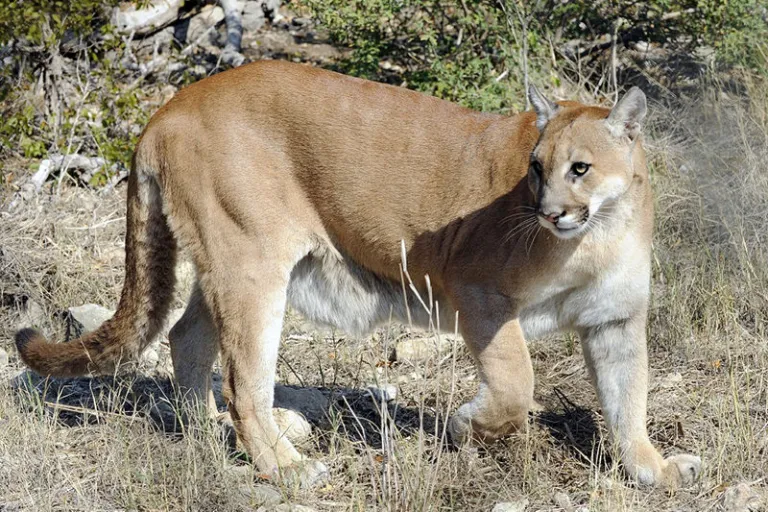
By Dr. Craig Nazor
An unknown intervention has once again stalled action from being taken to even count the number of mountain lions left in Texas.
In 1993, Sierra Club Lone Star Chapter Executive Director Ken Kramer asked the Texas Parks and Wildlife Commission (TPWC) to end the completely unregulated and unreported hunting of mountain lions. He urged the Commission to designate mountain lions as a "game animal," which would require population estimates and hunting regulations while helping ensure the long-term survival of this iconic Texas species.
The TPWC said no.
Kramer then proposed a more modest step: require hunters to report when a mountain lion was killed. Even basic reporting would help wildlife managers estimate population size and track where mountain lions still existed across the state.
Again, the TPWC said no.
Instead, the agency chose to pursue a voluntary reporting program for a few years, with the understanding that mandatory reporting could be considered later if voluntary reporting proved ineffective.
Thirty-two years later, in November, 2025, at a meeting in El Paso, Texas Parks and Wildlife Department (TPWD) Non-Game and Rare Species Program Leader Jonah Evans acknowledged that voluntary reporting had, in fact, failed to provide the information needed to understand Texas' mountain lion population. A citizen advisory committee was formed to examine the issue. The Sierra Club was excluded from participation after some ranching interests characterized the organization as an "animal rights" group. Nevertheless, I remained in contact with the committee's work and followed its progress closely.
The process ultimately resulted in a TPWD proposal that would require mandatory reporting of mountain lion "take." Importantly, the proposal would not have restricted hunting. Texans would still be able to kill mountain lions at any time, in any place, and by any legal method. The only change would be a requirement to report the kill to TPWD.
The proposal was scheduled for consideration by the Texas Parks and Wildlife Commission at its May 28, 2026 meeting.
But not so fast.
On May 27, the day before the meeting, the mountain lion item was suddenly removed from the Commission's agenda. No explanation was provided. No public announcement was issued. The proposal simply disappeared from consideration. Officials indicated that the item was not "dead" and could return at a future Commission meeting.
That leaves room for hope - but it also raises many questions.
Since Sierra Club's original request in 1993, thousands of mountain lions have likely been killed in Texas. Virtually none of those deaths have been officially reported. At one point, independent biologists attempted to collar mountain lions to study their movements and territory sizes. The research had to be discontinued because lion hunters were reportedly tracking the collar signals and killing the collared animals almost immediately.
The result is a system that keeps Texans largely in the dark about one of the state's most iconic predators. We have little reliable information about how many mountain lions remain, where they live, or whether their populations are stable, declining, or approaching disappearance in parts of Texas.
Some say ignorance is bliss. In this case, if mountain lions are to survive in Texas, ignorance is stupidity. The Sierra Club Lone Star Chapter will continue monitoring this situation and keeping our members informed about opportunities to take action on behalf of Texas wildlife.