By Cyrus Reed
Texans from El Paso to San Marcos, Amarillo to the Dallas-Fort Worth area - and really, all across the state - have been flooding local meetings, social media, Capitol hearings, and every other available forum, demanding stronger restrictions and safeguards on the hundreds of proposed data centers coming to Texas. Many are even calling for moratoriums.
Last month, Governor Greg Abbott finally responded by sending a letter to the Public Utility Commission of Texas, calling for further action to ensure that the electricity and transmission costs associated with data centers and other large computational loads aren't borne by everyday Texans. He also asked the Commission to develop a framework to address the massive influx of these "large loads."
And yes, if you're thinking this has something to do with it being an election year, you're probably right. Governor Abbott's opponent, Gina Hinojosa, has been calling for greater attention to the water use, energy demands, noise, and air pollution associated with data centers. Other candidates, including Lt. Governor candidate Vikki Goodwin, have urged Governor Abbott to call a special legislative session to address the growing impacts of data centers.
Summarizing the Governor's Demands
The letter has a lot in it. Recently, it was filed in PUCT project 58317, which is related to implementation of SB 6, the main bill passed last session by the legislature having to do with the interconnection of large loads to our grid.
The letter directs ERCOT and the PUCT to:
- Ensure that data centers' interconnections will result in reduced residential electrical bills;
- Take action to require data centers to pay for all of their electric infrastructure costs to ensure that no residential ratepayer is burdened by those costs; and
- Review their existing authorities and to identify necessary actions that can be taken under those authorities to safeguard Texans, their property, and resources.
At face value, the second action is fairly straightforward and reflects a key feature of SB 6: ensuring that large loads of 75 MW or greater pay all of their interconnection costs, along with any grid upgrades needed to serve them. The other two directives, however, are much more difficult.
One could argue that energy-hungry data centers could theoretically reduce residential electricity bills if they covered all of their transmission costs and, for example, brought additional resources onto the grid. But the reality in other states that have experienced major data center booms has been just the opposite: spiraling electricity costs as power grids become increasingly strained. At face value, the Governor's directive to reduce residential electric bills appears difficult to achieve unless he simply means reducing them more than they otherwise would have increased. Later in the letter, he directs the agency to, "initiate action to reduce residential ratepayer transmission costs by July 31, 2026."
In other words, the Commission needs to begin that process within the coming weeks. Even more challenging, of course, is the Governor's open-ended directive to identify other actions the agency could take to protect Texans.
The Sierra Club has been advocating for all large loads over 25 MW to be placed on a separate rate tariff to ensure they pay the full cost of serving their facilities. In addition, these large users should be required to contribute to a mitigation fund - or invest through a community benefits agreement - that would directly support energy-saving improvements or onsite generation resources in surrounding communities. If we truly want to lower residential electric bills, one of the best investments we can make is improving the energy efficiency of people's homes and apartments or expanding access to local solar and battery storage so more Texans can generate their own power.
The PUCT's Response
On Monday, July 20th the PUCT finally responded to the Governor’s letter. The PUCT in their response say they have done or are actively doing five things, most of them related to SB 6 implementation.
Those five responses include:
- Implementing standards for large loads seeking to interconnect to the ERCOT grid to ensure only committed, financially secure projects that support grid reliability can move forward.
- Revising transmission cost allocation methodologies to ensure the costs associated with serving new data center development are appropriately aligned with investment and do not burden residential and small business ratepayers. Establishing new criteria that ERCOT will apply to accurately plan for large load growth and transmission infrastructure needs.
- Transitioning to a coordinated, system-wide "batch study" process to better evaluate the unprecedented volume of large load interconnection requests and support more effective transmission planning. Following your letter, the PUCT proposed additional revisions to pending rules intended to meaningfully reduce residential electric bills.
- Requiring large consumers of electricity to pay upfront the direct costs to interconnect their facilities and begin paying transmission charges as soon as capacity becomes available, even if they have not energized.
- Further revising how wholesale transmission costs are charged to large loads and how utilities in the competitive choice areas of the state assess those charges to customers. The PUCT expects to make a final decision on the rulemaking in December 2026.
It's important to note that these efforts were already underway, although the PUCT does appear to have strengthened some of them to provide greater protections for residential consumers. Following the passage of SB 6 last session, the PUCT opened several rulemakings, including one on interconnection standards for large loads - defined as facilities that use 75 MW or more of electricity - and another on transmission cost allocation. In other words, the PUCT was required to reexamine both how transmission infrastructure is paid for and which customers should bear those costs.
Currently, all electricity users contribute to the transmission system through an allocation formula known as "4CP," or Four Coincident Peak. Under this formula, every competitive retail electric provider (which purchases electricity wholesale and sells it to consumers), large industrial customer, municipal utility, and electric cooperative is charged for transmission based on the four highest 15-minute peak electricity demands they record during the four summer months. Ultimately, those costs are passed through to individual customers in their electric bills, even if you don't see a separate line item labeled as a transmission charge.
Unfortunately, detailed analysis of this “allocation” system - where transmission costs are socialized and paid for by all loads - have shown that residential consumers are paying a much larger share of the cost compared to industrial and commercial users. Why? In part because residential consumers tend to use an outsised amount of electricity in these 15-minute peak increments - whereas many sophisticated large industrial users know how to reduce their use during these times, avoiding paying for the transmission.
The PUCT'S Latest Proposal
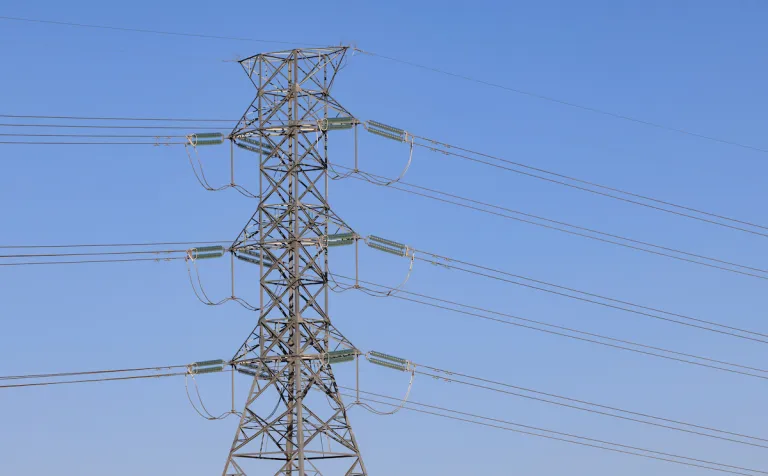
The PUCT - after taking several rounds of comments - has now released a new proposal that would fundamentally shift how we pay for transmission costs. The proposal - released in Project 58000 - is a good one. As it stands, it would change the 4CP method which has always favored large industrial users.
Under the new PUCT proposal:
- Change the current methodology to a 12 CP 30-minute methodology. This chance should allocate the cost across all 12 months of the year and on a longer time basis.
- All large loads that are required to pay for their interconnection under another provision of SB 6 will be charged a demand charge based on their non-coincident peak demand that under the proposal, would last for 20 years;
- These same large loads will also have to pay for any upgrades that are required because of their interconnection, interconnection fees and financial security (through another rule). While the financial security can be returned to the company if they operate and pay other costs, it can also be forfeited if they don’t end up operating.
- Require Transmission Companies to lower rates on other users by the amount of the interconnection fees and forfeited financial security
- Require a separate tariff for large load customers.
Sierra Club's Role: Getting Texans Involved At the PUCT
The Sierra Club is supportive of the rule, although we had suggested that transmission costs be allocated on a combination of energy use (25% of the total) and 12CP (75% of the total).
We are extremely supportive of the idea that all large loads (those under the proposed rule would be 75 MWs or greater) would be charged a separate demand charge regardless of 12CP and that transmission and distribution companies would be required to consider them separately including through a separate tariff. That being said, we have consistently asked the Commission to apply these standards to any large load that is 25 MWs or greater, which would be more protective of residential consumers.
The deadline to file comments in the above-described project is August 11, 2026, and the Sierra Club plans to file comments, but we need your help in telling the Commission we need this proposed rule and even more to protect Texas ratepayers.
How the Governor Plans to Work With the Texas Legislature
The governor’s letter also states he will work with the legislature on a number of actions during the next session (beginning in January, 2027).
Those suggested actions include the calls to:
- Codify the PUC's actions to require data centers to pay for their own electric infrastructure costs, resulting in lower residential ratepayer costs; and
- Ensure data centers add to Texas' electric capacity, not just its electric demand; and
- Require that all new data centers be built with water-efficient technologies such as closed- loop cooling systems; and
- Require large data centers to annually report electricity and water usage data to the PUC;
- Repeal sales tax exemptions and other outdated or unnecessary incentives for data centers;
- Require data centers to reduce impacts on local communities by implementing best practices such as setbacks, noise-reduction technology, and other measures that take into account the concerns of neighbors.
In its original response to the Governor, the PUCT states that three statutory changes would be helpful.
First, it asks for specific authorization to: "Clarify the PUCT's authority to adopt reliability requirements for all market participants." This would give the Commission greater legal authority to require data centers to do things like reduce their electricity use during periods of high demand or comply with additional regulations and reliability standards.
Second, the PUCT suggests giving it the authority to require large loads to register with the Commission. This would allow it to collect data and "help ensure the accuracy of the information ERCOT needs to assess the reliability impacts of new large load facilities and to reliably operate and plan the ERCOT power grid."
Finally, the PUCT suggests that large computational loads should be required to comply with the Lone Star Infrastructure Protection Act, which prohibits agreements that would give certain foreign-linked companies direct or remote access to, or control over, Texas critical infrastructure, including the electric grid. Texas has already enacted similar provisions for transmission and generation facilities, and the PUCT argues that comparable requirements should apply to large computational loads.
While the list includes many proposals the Sierra Club would support, it is incomplete. It ignores air pollution, the need for greater county authority, and several other important issues. Still, it is apparent that these are issues the Governor is pledging to address next session... assuming he is reelected. Recently, the Sierra Club submitted comments on the Governor's letter, outlining additional steps the PUCT and the Legislature could take to better protect Texans from the impacts of data centers and other large loads.
Join the Sierra Club and Our Allies To Call for A Special Session
It would certainly be inconvenient to hold another 30-day special session right before a major election. But many Texans and organizations - including the Sierra Club - have been calling on the Governor to address the very issues (and more) that he says he wants to tackle in his letter.
The reality is that data centers are actively seeking to interconnect to the Texas grid, and many have already received approval. Because the next regular legislative session is scheduled to begin on January 12 and end on May 31, 2027, and because new laws generally do not take effect until 90 days after they are passed, any new restrictions on hyperscale data centers and AI facilities likely would not take effect until next fall - assuming they pass at all.
Want to join us in calling on the Legislature and Governor to act now?
The Sierra Club is part of a coalition of organizations calling for action now - not next January - on data centers and other large loads. Next week, from July 26 through July 31, we'll be participating in a week of action alongside partner organizations to urge state leaders to address these issues before the next regular legislative session. You can learn more about the week of action here.
Participating in Senate Committee Meetings
Not only will we be asking our legislators to sign onto a letter calling for a special session, but we will be showing up at two hearings being held by Committees in the Senate. First, on July 27, we will be calling on the Senate Committee on Finance to phase out incentives for data centers, and in particular, a sales tax exemption on their inputs that could cost the state up to $3 billion in lost revenues. You can testify in person, turn in written testimony, or even call and/or email committee members asking them to eliminate all state and local tax incentives for data centers. You can read our comments here.
For guidance on how you can participate in Senate Committee meetings, even if you're not in Austin, click here. Talking points for this particular hearing can be found here.
Second, on Wednesday July 29, the Senate Committee on Business and Commerce will be meeting to discuss the grid, large loads and the transmission build-out. Testify at the Senate Business and Commerce Committee hearing at the Texas Capitol, or turn in written testimony and/or email committee members about the impact of data centers on electric demand and electric transmission. You can read our comments here.
Talking points for this hearing can be found here.