There are also a lot of Texans that are really angry about data centers - and rightly so! There’s a ton of proposed electrical infrastructure that might power them - from new gas plants to massive transmission lines. The bodies overseeing this process, such as ERCOT, the Electric Reliability Council of Texas (ERCOT), and the Public Utility Commission of Texas (PUCT) are hard to engage with and finding information on new and current proposals can be really difficult.
It’s no wonder people are so frustrated. Still there have been some interesting developments in recent weeks.
Are the Rich Getting Richer?
Energy affordability is on everyone’s mind these days. From rising electricity costs - a recent study by TEPRI found that average residential electricity prices in ERCOT’s deregulated market rose by about 30 percent between 2020 and 2025 - to high gas and diesel prices - Texans are feeling the pinch.
This is probably why we saw such a strong reaction to a plan submitted in broad daylight that the ERCOT Board of Directors was planning to give their CEO - Pablo Vega - a significant raise in 2027, and also consider a nice addition for themselves.
ERCOT CEO Salary Scandal
On September 14th and 15th, the ERCOT Board of Directors met at their headquarters in South Austin and noted that Vega’s current contract runs out next year and offered a new six-year deal that - when bonuses, health care and other benefits are considered - that could have raised ERCOT CEO Pablo Vegas' pay to $6.4 million by 2027.
They also initially approved a potential increase in their own base salaries - with additional money for “retention.” In all, for example, the new Board retention policy could have meant that Board President Flores would be paid $200,000 base salary in 2027 plus a retainer worth another $50,000 per year. The new retention policy would also apply for time previously served, representing something of a golden egg for ERCOT board members depending on the time served. All were appointed after the trauma of the 2021 Winter Storm Uri.
After initially approving both items, a whirlwind of criticism from Lt Governor Dan Patrick, who claimed to have lost his faith in Vega and Board Chair Bill Flores, and State Representative Gina Hinojosa, who took to social media and the press to slam the decision led to a reversal.
Despite Patrick’s opposition to the high executive salaries, just last legislative session he prevented a bill that would have created a statewide payment assistance program for struggling Texans to get a hearing in the senate after HB 1359 passed the House with bipartisan support.
As a result of the backlash, a few hours after initially approving the contract extension, the ERCOT Board of Director Chair Bill Flores quietly announced that they were withdrawing their previous approval to further refine the contract, a decision that the PUCT quickly supported.
Where the Money Comes From
The ERCOT Board and staff are paid through an administrative fee that all electricity users in Texas’s ERCOT pay. For 2026 and 2027, the ERCOT budget has already been approved by the PUCT, and the current administrative fee is 61 cents for every megawatt hour of energy used. The fee is not scheduled to go up in 2027, whatever the salary of the ERCOT CEO is, but the optics don’t look good while Texans struggle to pay their bills.
It’s worth noting that while $6.4 million seems like a lot of money to most of us, in the private utility sector, CEOs of Oncor, and Centerpoint Energy are earning much greater salaries, earned mainly through the high electric bills we are all paying.
Transmission Debates Will Continue In November
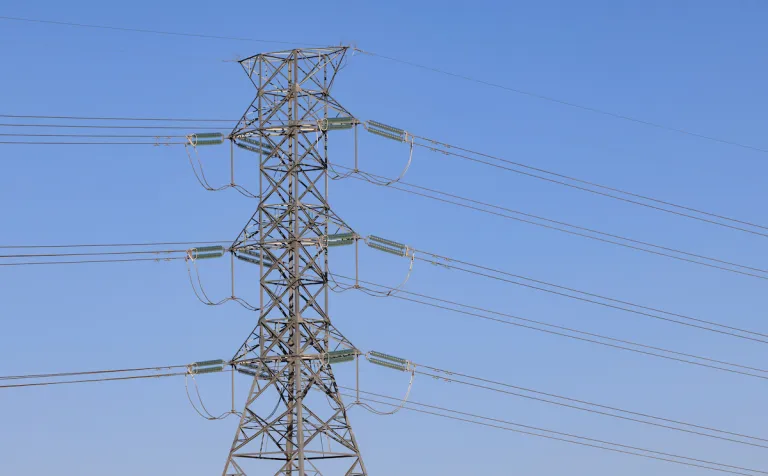
The Permian Basin Reliability Plan required by 2023 legislation led to a massive proposal approved by ERCOT and the PUCT to build a series of huge 765 kV transmission lines (and associated equipment) through Central Texas to West Texas. As we told you recently, a number of high-profile politicians have derided this decision, as recently the PUCT approved the routes for three of the five proposed segments. The final two segments are being reconsidered by the State Office of Administrative Hearings with parties offering opinions on two issues related to need and cost savings with a decision expected in November.
This final line - running from Bell County out to West Texas - is perhaps the most controversial of the major lines since it crosses over the Hill Country, many river crossings and near some major state parks. On September 30th, the Senate Committee on Business and Commerce will hold a major interim hearing on transmission alternatives and distributed energy resources, and many Texans are likely to express their opposition to large transmission lines. Sierra Club will be there to give our perspective! You can find our written comments here.
We’ll be there, and you can stay informed on all of our legislative work by signing up for email alerts below.
Governor Abbott On Data Centers
Governor Greg Abbott, after years of ignoring community concerns about data centers, has recently taken a series of quasi-executive actions to “regulate” the AI boom. These actions have not quite been executive orders; more like directives to various state agencies.
In August, the Governor directed ERCOT and the PUCT to assure that electricity and transmission costs caused by data center development would be covered by those developers and not residential consumers and even suggested COSTS should go down which is difficult to do through a letter. Still, the directive did make the PUCT look more closely at ongoing rulemaking involving transmission and interconnection costs. A recent update provided by the PUCT on the status of the various rules including the recently adopted interconnection standards can be found here.
Later that month, Abbott went a bit further ‘indicating that the PUCT and ERCOT should pause interconnections of large computational loads altogether until an audit walk, and additional information collected on a whole series of issues including noise, water use, electricity use and other community impacts. In response, ERCOT and the PUCT paused an ERCOT process which would have begun the interconnection process for dozens of data centers as part of the “Batch Zero Study” and ordered an audit and Request for Information to all newer computational loads that are at least 25 MWs in size.
Responses are due in mid-October, and the PUCT and ERCOT are expected to have all the information in presentable form by December 10th, with a discussion slated at the PUCT on December 17th. Again, all of this discussion would occur after the election.
In September, the Governor then ordered the Texas Water Development Board to take more forceful action against existing data centers that have not responded to a required annual water use survey from the TWDB, including potentially enforcement action (presumably by referring to theAttorney General since TWDB does not in fact have enforcement authority). TWDB was told to respond to the Governor by October 19th on how it will proceed with his directive.
Finally, the Governor ordered the Texas Commission on Environmental Quality to pause action on all permits - water and air - connected to data centers and the infrastructure that runs them. Because a data center can not operate without some sort of a wastewater discharge permit or air quality permit, this latest directive does put a temporary chill on data center operations for those entities that have not received their final authorization. TCEQ was also directed to indicate by October 19th how they will comply with the Governor’s directive.
What the Governor’s Directives Actually Do and Don’t Do
The letters are not the equivalent of a moratorium on all data centers because data centers that already have received permits from TCEQ and already have an approved interconnection agreement could presumably proceed with construction and operation. It is also unclear what happens if a data center is being constructed to be “off-grid”, meaning it builds its own generation, although again if it doesn’t have permits for the off-grid generation they could not operate.
Moreover, the Governor’s actions are aimed at facilities within ERCOT, meaning that some data centers outside of ERCOT (think El Paso or Amarillo) could proceed.
Finally, there is no specific final date attached to the directives of when the PUCT and ERCOT could move forward with its study to interconnect data centers to the grid, although presumably sometime around December 17th there would be a roadmap to implement the “Batch Zero” process. ERCOT and PUCT are still proceeding with developing other rules and protocols, and most recently, the PUCT did adopt new interconnection standards for all large loads that are at least 75 MWs in size, requiring substantial financial requirements for studies and infrastructure. ERCOT has begun discussions about what will happen after the Batch Zero process and is actively holding workshops on Batch One +, which would presumably occur sometime in late 2027 after the Batch Zero study and process is complete.
The Governor’s letters do in the least create some pause in data center development though it doesn’t mean developers can’t purchase or lease land, seek tax abatements or even begin some construction and leveling activities. That’s still happening, but the actual interconnection and operation are pushed off most likely until at least until early 2027. For many communities engaged in fights over data centers and the dozens of proposed gas plants, the TCEQ pause is a welcome relief to at least take a moment to strategize on permit fights in the future.
Power our work at the upcoming Legislative Session —>
Sierra Club is also active, continuing to file comments at ERCOT and the PUCT. Most recently, with our friends at Public Citizen and the Environmental Integrity Project, we sued two data centers and associated gas plants owned by Vanguard in San Antonio. Our claim? These behemoth sites illegally sought “minor permits” from TCEQ rather than major permits for dozens of back-up diesel generators and onsite gas generation. Those minor permits meant they escaped required pollution control equipment, cleaner operations, and public scrutiny.