Every one of us can make a difference in the ongoing habitat
and wildlife loss by planting native plants!
Do you have a yard that celebrates real Florida? One filled with native plants that support pollinators, birds, and biodiversity?
Each month, the Sierra Club Northeast Florida Group highlights a local yard that’s putting native plants to work in beautiful and impactful ways through our Planting with a Purpose: Yard of the Month series. This isn’t about “Florida Friendly” — it’s about Florida native. We’re looking for native landscapes of all shapes and sizes — whether you’re just getting started or already deep into your planting journey. Experts like Dr. Doug Tallamy recommend aiming for around 70% native plants in the long run — that’s the tipping point where your yard begins to truly support local wildlife and restore ecosystem health.
🌻 Native plants aren't just beautiful — they’re essential.
If your yard fits the bill, we want to hear from you! SUBMIT a few photos and a short narrative describing your landscape and how you’re helping wildlife thrive.
Together, we can grow a network of native gardens that truly make a difference!
July 2026 Yard of the Month- Congratulations!
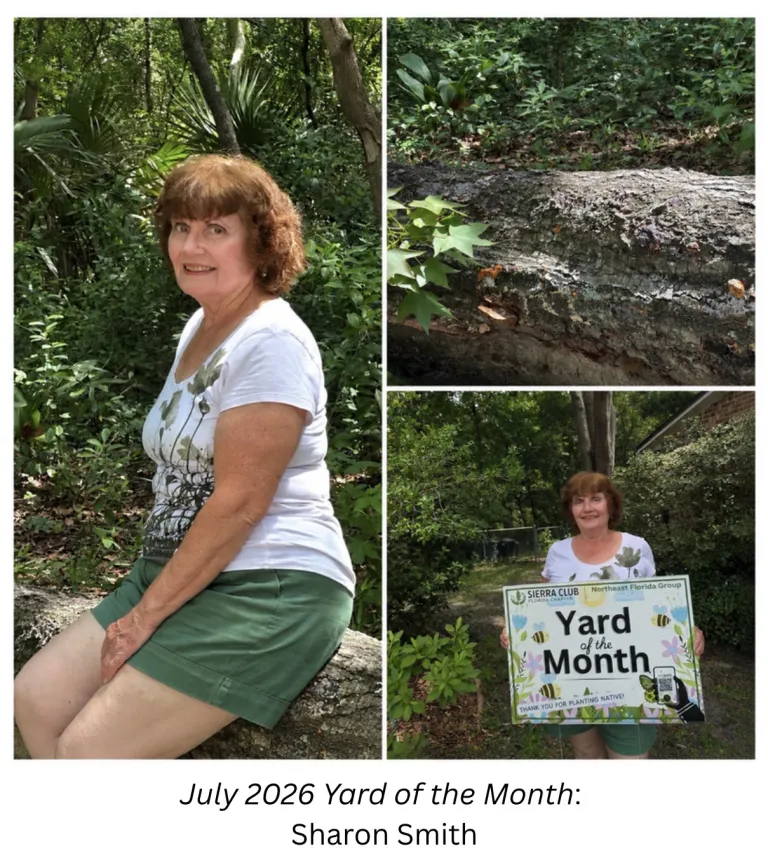
Sharon Smith’s Very Friendly Yard of the Month
Since Sharon’s retirement in July 2017, she has been engaged in removing invasive plants. She learned through Timucuan Parks Foundation (FPF) and Sierra Club about the nefarious nature of invasive plants so has been helping uproot the coral ardisia, chinese tallow, air potato vine, elephant ears and sword fern from park areas. TPF even helped Sharon remove the invasives from her own large yard recently. Through working with these nonprofits, Sharon has gained a wealth of knowledge about how invasive plants crowd out the important native plants. Native plants are virtually the only way for animals and birds to thrive, ensuring continuation of habitat services like pollination and the food chain that we all depend upon.
While Sharon has made the effort to leave a forest of large native, shade trees in her yard along with native understory plants, she has also left the dead stuff there as well. Snags for woodpeckers, bluebirds, Carolina wrens, owls and other cavity nesting birds abound while she also leaves the leaves, dead trees or brush on the ground when she can. This provides a buffet of insects which is why so many birds live in her yard. The logs add an attractive decorative element to her yard too.
She has numerous water features, so between the water, food and cover, her forest is fueling butterflies, birds, bees, raccoons, armadillos, opossums and even a gopher tortoise living under her deck. Owls have been a definite presence over the years, and she loves their calls to one another. They can sit for hours in one place, scoping out their prey by turning their heads 180 degrees without moving their bodies. She says their wingspan is something to behold. While she also offers bird feeders, the emphasis is on her friendly native plants and habitat.
Sharon says it has been a joy to live here with all her wildlife friends. In these rough times she knows it’s a privilege to be able to relax and have a plethora of sensory- heightening experiences right in her backyard. She admits that she is lucky to have all this land to nurture and provide habitat, but she wants everyone to know the joy you too can have experiencing the wonder of nature whether you have a single pot or a plot of land like hers.
All it takes is native plants.
June 2026
A Native Forest Landscape in Your Yard Helps Wildlife Thrive
By: Lisa Williams
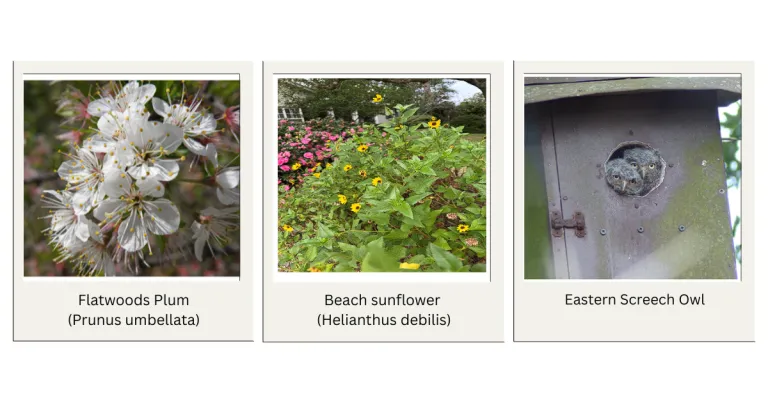
These are the native plant species, otherwise known as keystone native plants, which are essential to local food webs because they support 90% of caterpillar species, a primary food source for birds, and a high percentage of native, specialist bees.
To get the most benefit from your yard, utilize every part of your yard from the ground up, by creating a native forest landscape and adding these keystones to each layer of the forest.
Canopy- Plant an oak tree in your yard. Oaks are the #1 plant for providing the most food for the most species. Oaks host over 500 butterflies and moths which makes them indispensable to our birds and other wildlife!
If you have a smaller yard don’t give up on the benefits of oaks. There’s still an oak for you:
Sand Live Oak (Quercus geminata) resembles a small live oak but only reaches 20’-30’. drought tolerant too.
Turkey Oak (Quercus laevis) is another smaller oak reaching only 15’-30’. This oak turns a lovely red in the fall and is also drought tolerant.
Understory- Don’t forget the understory layer. These are the small trees that like living under the shade of a canopy tree and provide beautiful blooms in spring. Look for the prunus genus, the #2 plant for providing the most food for the most species. This hosts over 450 different species of butterflies and moths!
Flatwoods Plum, Chickasaw plum and Cherry Laurels boast beautiful spring blooms and numerous fruit.
Shrub- Anchor your trees with a large bed and keystone shrubs like blueberries (vaccinium). Blueberry species host more than 250 species of butterflies and moths and give us berries to boot! Be sure and add these gems to your yard.
Sparkleberry- Vaccinium arboreum- Blueberries require 2 different blueberry species to produce berries so combine this and another blueberry species like Vaccinium darrowii for yummy berries.
Ground Cover- Leave the leaves under your shade trees and add some lovely, yet helpful ground covers like:
Sunflowers -Helianthus-host over 70 species of butterfly and moth caterpillars and 50 + specialist, native bee species),
Asters -host over 100 species of caterpillars and 33 specialist native bees
Goldenrod -Solidago - host over 100 species of caterpillars and 40 specialist native bees).
What if you have a balcony? Even a balcony, high above the ground, can host our bees and butterflies. Add these native keystone shrubs and ground covers to those pots and enjoy the fun. ALL your neighbors will thank you!
*Every month, you can find "Planting with a Purpose" in our Sierra Sentry Newsletter.
Check out this step-by-step guide from the Sierra Club Magazine:
"How to Create a Garden for Pollinators"
Support Our Local Native Plant Nurseries:
1. Wacca Pilatka LLC (design and installation available)
904-859-4033
Waccapilatka.com
keepingfloridawild@gmail.com
2. Native & Uncommon Plants
904-388-9851
Goingnativejax@gmail.com
http://www.nativeanduncommonplants.com/
3. Chiappini Farm Native Nursery
352-475-5413
https://chiappinifarm.com/
4. Native Plant Consulting (design and installation available)
904-671-2880
nativeplantconsulting.com
5. Garden For Wildlife
www.GardenforWildlife.com
6. Mail Order Natives (online only)
www.mailordernatives.com
mailordernatives@gmail.com
Use code SIERRACLUB10 for $10 off for any purchase (One-time only; No expiration)
7. Bella Jardins Boutique
Order online and she delivers.
https://bellajardins.boutique/
8. Lark Native Plants
https://larknativeplants.com/index.html
9. Audubon's website Plants for Birds
https://www.audubon.org/plantsforbirds
10. Green Isle Gardens
https://www.greenislegardens.com/retail.html#/
11. Plant Place Nursery
https://www.plantplacenursery.com/
12. Amelia's Native Wildflowers
https://www.anwfl.com/
Other Great Links
Homegrown National Park - Join Doug Tallamy’s quest to turn half of all turf grass into native plantings. Register your yard here: https://homegrownnationalpark.org/
Florida Native Plant Society - For all kinds of info on native plants including Finding Plants Based on Your Location and Needs: https://www.fnps.org/plants
IXIA Native Plant Society - For info on our local native plant society: https://ixia.fnpschapters.org/