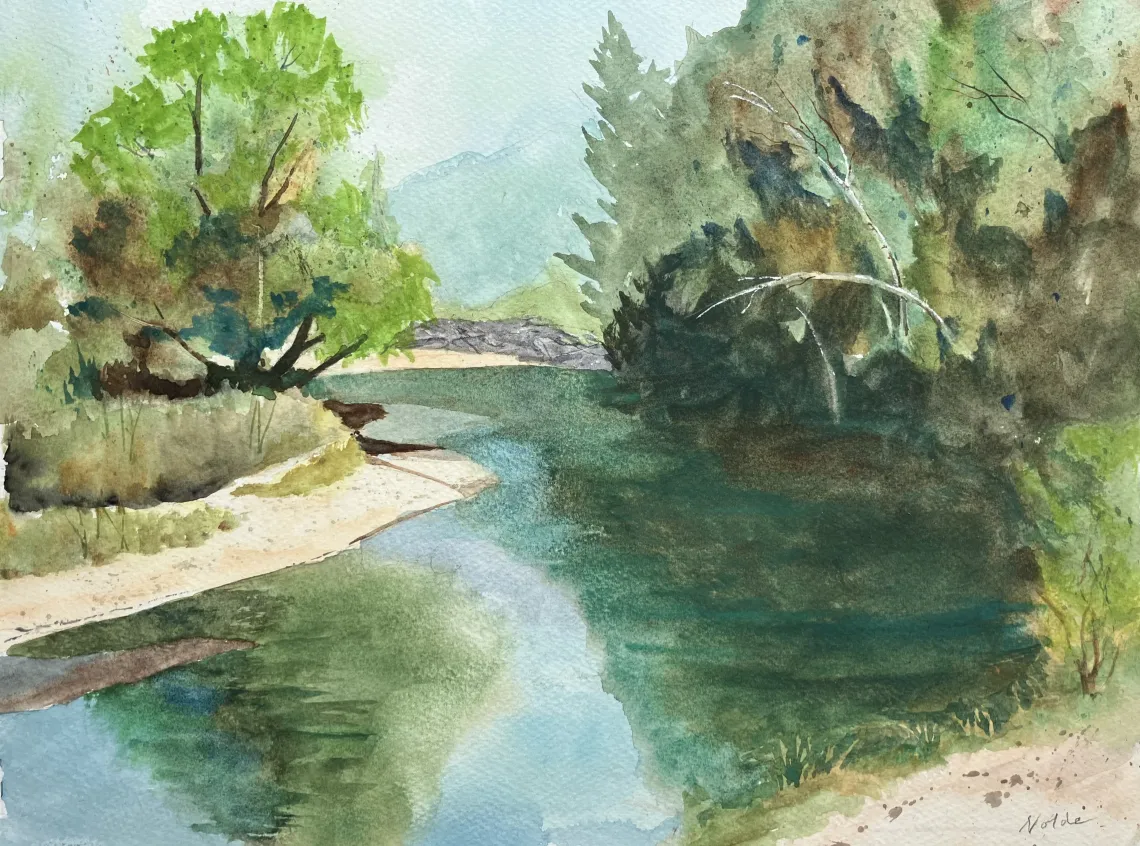
Artwork by Ed Nolde, Sierra Club Maine Volunteer
July 2026
In this issue:
- T4ME: Maine's New Transportation Coalition
- The MidCoast Maine Sustainability Guide
- Plastic Free July
- Join the 2026 Maine Coastal Cleanup
- The Story of Stuff: Reuse Changemaker Bootcamp
- Sustainable Business Highlight: GoGo Refill
- Epic Trails & Epic Fails Recap
- MCAN's Vote for Climate Justice Toolkit
- Right Whale Documentary Screening
- Green Tip of the Month
- The Month Ahead
- Volunteer With Sierra Club Maine

T4ME: Maine's New Transportation Coalition
By Matt Cannon
Sierra Club Maine is now officially a member of Transportation for Maine (T4ME), a new statewide coalition calling for investment in a transportation system that supports walking, cycling, rolling, shared rides, and public transportation in communities throughout the state, has officially launched! The coalition brings together members from a wide range of sectors and geographies, organized around a common set of guiding principles for Maine’s transportation future.
For many years, Sierra Club Maine (with Matt Cannon as our representative) has been on the steering committee/leadership team of what is now T4ME. It has been a long road, with many hard conversations and a few iterations of a Steering Committee, but the public facing coalition is live, with adopted Guiding Principles and Policy Priorities. With a diverse membership base, this coalition will be moving quickly, bringing in as many individuals and organizations as possible who share our vision, and will be a force moving into a new Legislative session with a new Governor.
T4ME is organized around a shared vision, that All people in Maine have safe, accessible, affordable, relevant, and reliable ways to get around. T4ME will advocate for a system that is:
Accessible to people of all ages, incomes, abilities, and regions;
Affordable for households increasingly burdened by transportation costs;
Safe for everyone, regardless of how they travel;
Relevant to the diverse needs of Maine communities;
Reliable year-round in all parts of the state;
Flexible enough to provide real transportation choices; and
Beneficial to communities, public health, and the environment.
Maine’s current transportation system leaves too many people without dependable ways to access work, healthcare, education, and community life — especially older adults, young people, low-income households, and people who cannot or choose not to drive. Non-drivers make up 30% of the population, while less than 25% of state transportation funding goes to driving alternatives including transit, ports, ferries, passenger rail, freight rail, aviation, walking, biking, and rolling. The coalition’s long-term vision is a transportation system that helps create resilient, connected, healthy, and thriving communities across Maine
T4ME invites groups and individuals to endorse the vision and join as members. Explore more at t4me.org.
The MidCoast Maine Sustainability Guide
By Corrine Kucirka-Adamowicz
Do you live in MidCoast Maine? If so, have you ever wondered how to spend your money at businesses focused on sustainability? Do you want to know where the closest farmer’s market is located? Perhaps you would like information about public transportation to lower your carbon footprint. Well, look no further!
Find answers to all of this and more in the latest edition of the Earth Day Every Day Resource Guide for Sustainable Living here. You will be amazed at all of the resources gathered in one place! This guide is published by Sustainable Practice. Learn more here.
Plastic Free July
By Corrine Kucirka-Adamowicz
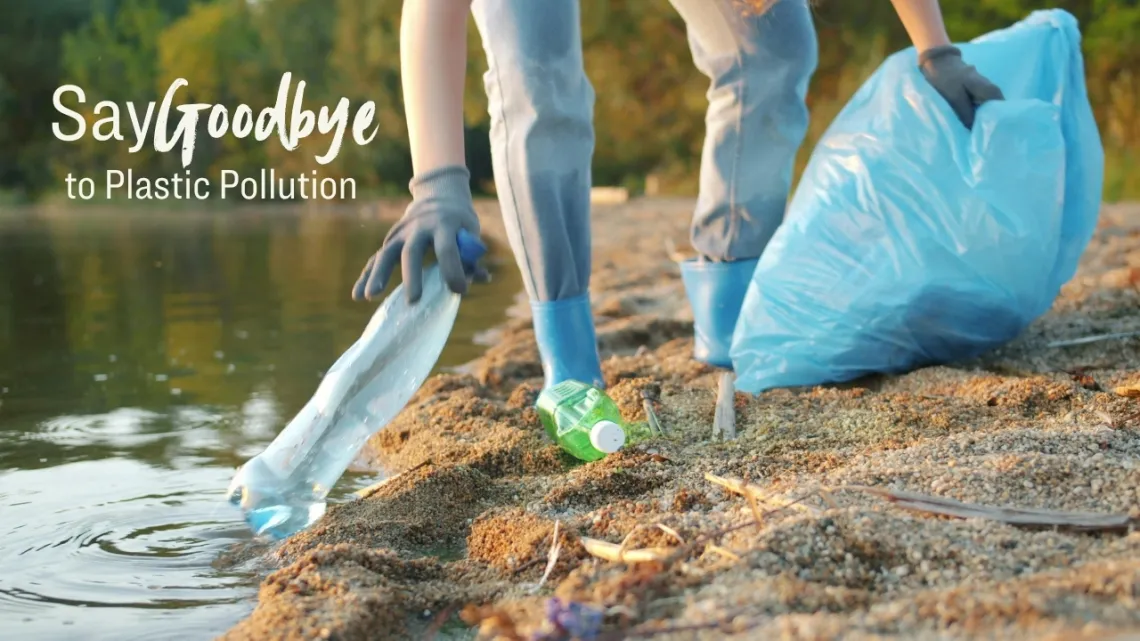
We’re hearing more and more about how plastic pollution affects oceans, rivers, wildlife, and ecosystems around the world, while disposable plastic products often end up in landfills and break into microplastics that persist in the environment and harm nature and humans.
A small team in the local government in Western Australia started Plastic Free July in 2011 to combat the overuse of plastic in our everyday lives as a way to tackle this world-wide problem.
What started as a local initiative has grown into a global movement. Hundreds of millions of people across more than 190 countries have participated, making it an influential effort to address the growing problem of plastic pollution. This July it’s your chance to participate if you haven’t already taken the challenge!
Sign up here to take the challenge and receive tips and tricks each week in July to keep you motivated.
Want to do more? Take the Pesky Plastics Quiz Tool, to help you discover all the plastics that ‘sneak’ into your shopping and measure your Plastic Free July success.
Learn more about the Plastic Free Foundation and Plastic Free July here.
Join the 2026 Maine Coastal Cleanup!
By Corrine Kucirka-Adamowicz
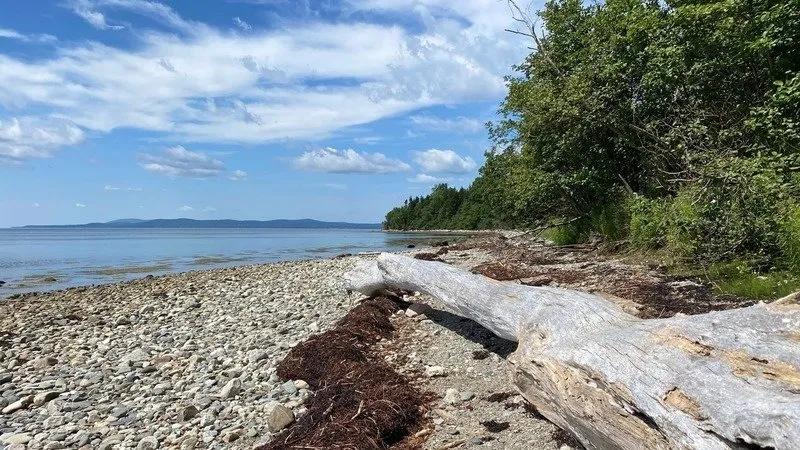
The Maine Coastal Cleanup is an annual volunteer-driven initiative organized by the Maine Coastal Program to clean debris from Maine’s coastal shores. It is part of the International Coastal Cleanup, which the non-profit Ocean Conservancy established over 40 years ago to address the problem of ocean and coastal trash.
The 2026 Maine Coastal Cleanup will take place September 5-19. Registration is now open through August 21st! Sign up for a site on the Maine Coastal Cleanup webpage.
Once a registration has been received, the chosen location will be removed from the available sites. If a coordinator indicates on the registration form that they are seeking volunteers, the site and their contact information will be listed on the 2026 Maine Coastal Cleanup webpage so interested volunteers can sign up.
Prior to the date of each cleanup, coordinators will be sent a package containing resources to collect and record trash. Volunteers are encouraged to bring gloves, hats, sunscreen and water to stay hydrated.
REGISTER HERE FOR THE MAINE COASTAL CLEANUP
The Story of Stuff: Reuse Changemaker Bootcamp
By Corrine Kucirka-Adamowicz
The Story of Stuff organization is training hundreds of advocates to take action in their communities and tackle the plastics crisis by focusing on reuse as a solution to pollution. Whether you’re new to organizing or already leading efforts in your community, this bootcamp will help you:
Understand the plastics and waste crisis
Explore how reuse systems can transform communities
Learn organizing skills to build local campaigns and drive change
Connect with a growing network of reuse Changemakers working for a future beyond the throwaway culture
In order to tackle the environmental crisis we are facing, we need to get out there, mobilize, and pass policies that shift us from a linear system of take-make-waste to a circular system of reuse.
How the training works:
The online Basic Training is two hours long - we offer two sessions for schedule flexibility. You only need to attend one session!
Where: Virtually on Zoom
When: July 7at 6pm ET or
July 9 at 7pm ET
Register: Here!
There is an optional additional Leadership Training on a separate date for participants ready to deepen their advocacy skills and take on bigger organizing roles. The leadership training offerings will be July 13 at 6pm ET and July 14 at 6pm ET
Learn More and Register HERE. If you missed us this time, don't worry! You can watch the recorded concert here, or support the national program and ensure Sierra Session Celebrations are accessible for years to come.

Sustainable Business Highlight: GoGo Refill
By Lauren Strohmeier
How GoGo Refill Spreads Joy Through Low-Waste Living
Featuring: Laura Marston, Owner
In this interview, Laura Marston reveals how everyday choices can create a powerful environmental impact. Through GoGo Refill’s innovative refill model, customers reuse their own containers for household and personal care products, dramatically reducing the demand for single-use plastic packaging. The company’s commitment extends beyond waste reduction, supporting climate-focused nonprofits through its 1% for the Planet pledge and promoting accessible, low-waste living for communities across Maine. By making sustainable shopping simple, welcoming, and practical, GoGo Refill empowers people to turn environmental responsibility into a daily habit. Together with its customers, the business has helped prevent hundreds of thousands of plastic packages from entering the waste stream, demonstrating that collective action—one refill at a time—can help build a cleaner, healthier future for our planet.
How does sustainability influence your company’s mission and decision-making?
Unlike some other businesses, sustainability is our business. GoGo Refill is Maine’s first plastic free refill shop. Our goal is to help people ditch single-use plastic. Our mission is to help spread the joy of low-waste living. We believe that with joy, we can bring as many people as possible along with us on this low-waste and plastic-free journey.
There’s no difference between what we’re trying to achieve and sustainability. Waste is the lens through which we’ve chosen to address the problem of climate change. The goal is to have a sustainable business that achieves our mission, helps people start a low-waste journey, and spreads that mission throughout the community, so that it grows into a broader movement.
We want to harness the power of individuals to fight the tide of single-use plastic and disposability. That goal transcends everything else. When considering the hierarchy by which we make our decisions, waste is the top of the triangle. Other sustainability measures are in the triangle too, but that’s how we make all our choices.
What long-term sustainability vision guides your company?
The long-term sustainability vision is to harness the power of collective individual action. Individual action encompasses people coming into our shop and making sustainable choices, changing their habits, and moving away from disposable items and single-use plastic towards refillables & reusables.
That advocacy for low-waste living we’re sharing with individuals every day, paired with our advocacy for policy and regulation at the local and state levels, are both necessary pathways in the fight against climate change.
Are you investing in renewable energy or other sustainable technologies?
This question may apply more to larger companies. We may come across as a big company, but we are a pretty small. Additionally, GoGo Refill is a brick & mortar retail store. In terms of technology, we are fairly analog - we don’t own our own building and we aren’t manufacturing anything. We do participate in community solar, which is a great option for businesses who lease.
What actions are you taking to reduce your company’s carbon footprint?
We always consider our carbon footprint when making decisions regarding our transportation, products, and shipping. We trust our customers to make the right choices when they buy from us. But these factors are small potatoes when faced with the amount of petroleum that’s used when producing single-used plastic. That’s the Big Goliath we’re trying to address. We’re actually thinking about our community’s carbon footprint as a whole - that’s why we’re here, trying to get us all to use less plastic!
As cars have become more efficient, and electric cars have become more attainable, the oil and gas industry is betting on plastics, especially single-use plastics, to make up the difference in their bottom lines.
I saw a statistic yesterday that plastic production is set to double by 2060. We can’t let that happen. There are stores like GoGo Refill all over the world that are working on a community level to educate and provide effective, affordable solutions for everyday products for people to use.
Are your products designed for durability or recyclability?
Absolutely, all of GoGo Refill’s products are designed for durability, recyclability, and compostability.
I’ll describe what our store is for people who may not know. GoGo Refill is a plastic-free refill shop. We offer plastic-free home and body essentials. Some items are refillable. The significant part of what we do here is refills; that’s why it’s in our name.
I’ll explain how refills work. We believe there are plenty of containers in circulation already. The example I like to use is your laundry detergent container. It’s big, bright, and durable. When it’s empty, instead of going into the recycling bin, we want you to wash it out and bring it to us where we can refill it with non-toxic, biodegradable, highly effective, and affordable laundry detergent. Thus, we can keep that container out of the waste stream. Every time you reuse a container, you are reducing its carbon footprint by half.
We sell products such as laundry detergent, hand soap, dish soap, all-purpose cleaner, shampoo, conditioner, body lotion, and many other items. We also offer many durable, reusable alternatives to disposables in your home.
Our product line is completely designed around durability and refills. The goal is to move all that you need for your home and body away from the disposable and toxic stuff that is bought in grocery stores or at big box stores.
How do you track and report progress toward sustainability goals?
We track the number of refills we complete each year. This enables us to evaluate the impact that our community and we have.
We have refused over 380,000 plastic packages since we opened seven years ago. We’re proud of that number. We also track a variety of metrics such as number of laundry detergent refills, loads of laundry, number of hair washes, and a lot more. In this way, we track what our customers have achieved by living the low-waste lifestyle and participating in our movement.
That’s how we make a real difference. When people walk out our door with a new habit or product, and they’re excited about it, that impact spreads beyond our walls and out into the community.
We’re also a part of a network of other shops like ours in the U.S., with whom we communicate and collaborate, so the impact spreads beyond just our store and our customers.
I know we’re talking about our footprints, but there’s also this concept of the handprint. The way I like to think of the handprint is that when you pass along a good idea to someone else, you put a metaphorical handprint on them. They then share the idea with someone else. Those handprints go out into the world and spread far beyond the one touch that you’ve made.
That’s the way I think about GoGo Refill spreading the low waste mission. Sometimes, when people get bogged down thinking about the negative impact of human existence on the planet, I like to remember that we’re also out there making positive handprints and watching them spread as well.
What new technologies or practices are you exploring to improve sustainability?
We’re constantly seeking new innovative products and practices for our customers that are going to make low-waste and sustainable habits easier, more effective, more affordable, and easier to adopt. For example, that may come in the form of a new sponge that has a better scrubber, a fancy razor that pushes the envelope on technology for shaving in a zero-waste way, and much more.
We also are always exploring with our partners ways to get products that are more sustainable with less waste. So, we are also pushing our mission up our supply chain to ensure we receive our products in a low-waste way.
How does your company support environmental advocacy or conservation efforts?
GoGo Refill supports environmental advocacy and conservation efforts in so many ways. Advocacy has always been a significant part of what I want to accomplish with GoGo Refill.
Since day one, we've been collaborating with many various groups. Right now, I’m working with a group called Reuse Maine. We’re a group of volunteers who are striving to bring reuse systems to Maine.
Currently, we support a University of Maine pilot program that’s taking place in South Portland, Bath, and Bar Harbor. This pilot program offers reusable takeout containers at many restaurants, so you can get your takeout in a reusable container and return it to the restaurant. It’s going well. We’re working on ways to make it last beyond the pilot. It’s exciting to see tangible reuse systems happening.
Through Reuse Maine, we’ve worked on a few various laws. Specifically, our goal is to make reuse systems easier and make it more explicit in the food code that reuse is allowable. We use GoGo Refill to advocate for policies.
For example, we were very vocal and used our social media following to encourage people to advocate for Maine’s Extended Producer Responsibility (EPR) for Packaging law, which we did pass.
Additionally, we are a 1% for the Planet member. We donate one percent of our revenue each year to environmental nonprofits. Most organizations we support are local to Maine. We support some national nonprofits as well. We select environmental nonprofits that closely align with our mission, are highly effective, and have shown they are moving the needle on climate policy. That is why we support the Sierra Club’s Maine Chapter.
How does your company engage with and give back to your local community?
We engage with and give back to our local community in so many ways. One of the most rewarding parts of owning a small business is how quickly you become connected to your local community.
GoGo Refill is in Knightville in South Portland, which is an awesome neighborhood. There’s great shopping, delicious food, and lovely people. We have many connections with local business owners there.
We support so many local events and businesses. For example, we’re about to sponsor Handmade Pride, which is a Pride event that takes place in Mill Creek Park in South Portland. We support many local events like this all year long.
Additionally, we co-run an organization called Rubbish Project. Through this organization, we organize community trash cleanups all over Portland, from April to September. If anyone’s interested, they can find us on Instagram at Rubbish_Project. They can also find us through GoGo Refill’s Instagram. We’re always posting about it.
These community trash cleanups are a lot of fun. Many times, they’re located at breweries during happy hour or at coffee shops on Saturday mornings. We mostly host in-town trash cleanups and try to talk a little bit about waste during them. However, we won’t overload participants with education; we try to make it fun. We meet each other, pick up a lot of litter, clean up our neighborhoods, have fun, talk a little bit about trash, and have a big giveaway from local businesses that support our cause. We’ve been hosting these cleanups for six years. That’s a significant community engagement activity to which we are really committed.
What is GoGo Refill doing differently than other businesses?
I believe we’re having a lot of fun. Joy is in our mission statement.
We know we’re asking customers to take an extra step. Specifically, we’re asking them to make another stop on their journey. We know our customers are busy, so we want to make sure that visiting us is delightful. We bring joy to our interactions with our customers. I believe our customer delight is what sets us apart.
We’re also all friends at GoGo Refill, and we all have a great time together. That sense of camaraderie also shines through our customer experience. We all believe in our mission. It’s more fun to have fun, and we bring that joy to our business.
Epic Trails & Epic Fails Recap
By Ashley Nye
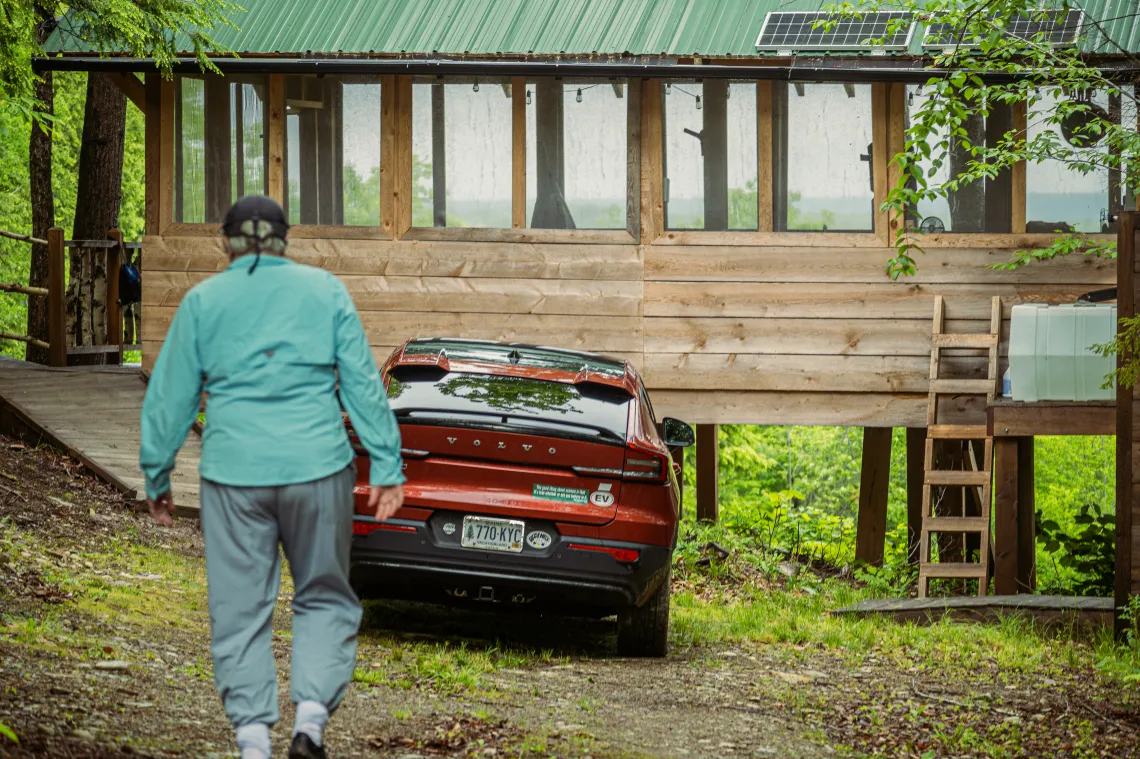
Did you know that Katahdin Woods and Waters National Monument brought in $3.4 million tourism dollars to the region in 2024? This stunning area of Maine is a wealth of cultural heritage and natural beauty, but despite it's value, remains difficult to access, limiting opportunity to the local economy, and those who might otherwise visit. On June 12th, we challenged ourselves to explore the monument solely through clean or public transportation. Our volunteers arrived by way of bus, biofuels, and electric cars to highlight the importance of having accessible transportation options when it comes to outdoor equality and inclusion. The trip proved to be a learning experience, with some bumps along the way (and not just from the road!) We learned about forestry practices and issues in the North Woods, the ecological significance of dark skies, Wabanaki cultural ties to the rivers, forests, and mountains, and that the electric car chargers in Millinocket only work sometimes.
While the outing itself was a part of the national Transit to Trails campaign, under the umbrella of Outdoors for All, for our chapter, this project is much larger. We are thrilled to be partnering with the Katahdin Collaborative to work on expanding access to this beautiful, wild, special region in the heart of Maine. Mount Katahdin and the North Woods hold so much of our treasured history and identity in this state, and every Mainer should be able to experience the awe instilled by the jagged peaks, rushing waters, and seemingly endless forest.
We hope you'll follow along as we continue to highlight the importance of this region, and platform our work with the Katahdin Collaborative and Transportation for Maine as we advocate for a more equitable, more sustainable future in Maine.
MCAN's Vote for Climate Justice Toolkit
By Sierra Club Maine
Our coalition partners at Maine Climate Action NOW! have put together an excellent voting guide to breakdown and highlight the platforms of candidates that are ready to fight hard for our environment. With resources such as a candidate questionnaire, a how to write letters to the editor guide and more, you can help climate-conscious candidates win in the November mid term elections. Check out their toolkit today and take action on advocating for leaders who will vote to protect our health, communities, and lands.
Right Whale Documentary Screening in Lubec
By Spindrift Images
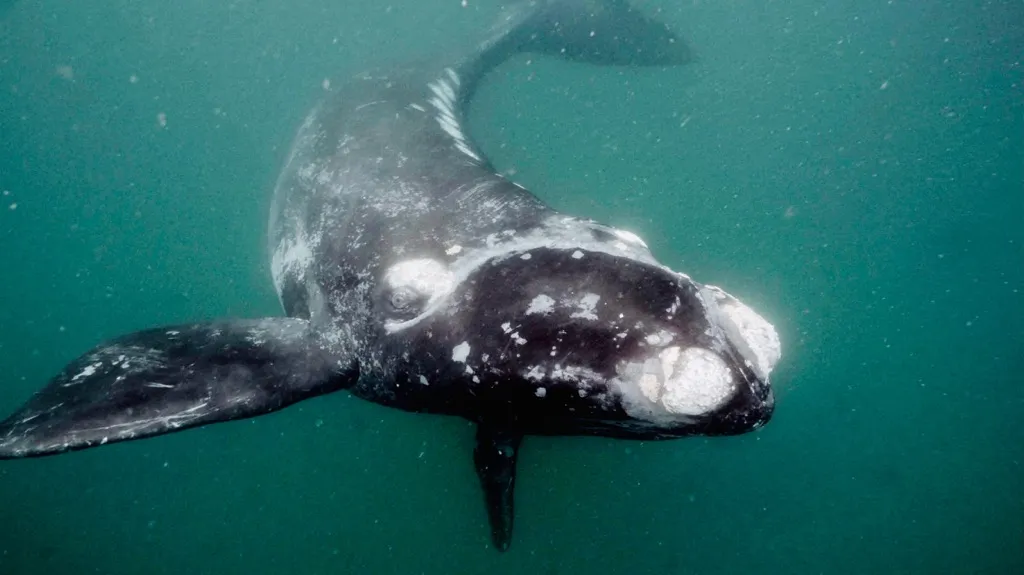
The Right Whale: Tales of Resilience and Hope is an intimate and visually stunning documentary that follows the dramatic lives of right whales across the globe—from the icy waters of New Zealand and Argentina to the busy coastlines of North America. Through groundbreaking science and emotional storytelling, we meet individual whales like Bill, who swims from New Zealand to Antarctica and back, and Ruffian, rescued from deadly fishing gear.
While Southern right whales show signs of recovery, their Northern cousins face mounting threats from ship strikes, entanglement, and industrial noise. Filmed in collaboration with scientists, The Right Whale: Tales of Resilience and Hope is both a celebration of resilience and a powerful call to action—revealing the intelligence, grace, and vulnerability of these magnificent creatures, and the urgent need to protect them.
Supported by Patagonia Action Works, a special screening of the film will be held at the Lubec Memorial Library on July 25th at 6pm. Register here to join the filmmakers and a panelist of experts to learn more about Right Whale conservation!
Green Tip of the Month
Do you have a green tip that you would like to have included in a future newsletter? Please share it with us here
The Month Ahead
Here are some of the meetings and events we have coming up. Hope to see you soon!
Events Team Meetings - All events are listed on the main page of our Chapter website; please scroll down to see the Events Calendar. Help us organize events to educate and engage Mainers across the state.
- 7/2 at 12pm
- 7/16 at 12pm
- 7/30 at 12pm
- 7/29 Club Chat
- An opportunity for you to get updates from our Chapter staff team, to have your questions answered, and to offer your feedback and ideas.
VOLUNTEER OPPORTUNITIES
Interested in helping to protect Maine's environment? Join us at our next volunteer orientation! No matter your background, we have a role for you--no experience necessary.
SUBMISSIONS
Submit a photo, article, or event for us to include in our next newsletter!