By Evgenia Spears
What if the water used to extract oil and gas could be cleaned and reused? At first glance, it might sound like a practical solution, especially in a state like Texas, where water supplies are increasingly strained. But the deeper you look, the more complicated the answer becomes.
To understand why, it helps to start with the scale of oil and gas production itself. Texas leads the nation in energy production, accounting for about 43% of all U.S. crude oil output. Much of that production relies on hydraulic fracturing, or fracking – a process where large volumes of water mixed with chemicals are injected deep underground to break apart rock and release oil and gas.
What comes back up isn’t the same water as was injected. Instead, it returns as a complex mixture called produced water that includes not only the originally injected chemicals, but also salts and minerals from deep geological formations, oil residues, heavy metals, and a wide range of other constituents. Some of the chemicals used by oil and gas companies operating in Texas are proprietary, meaning their exact composition isn’t publicly disclosed, which makes it difficult to fully understand what “ingredients” are found in produced water.
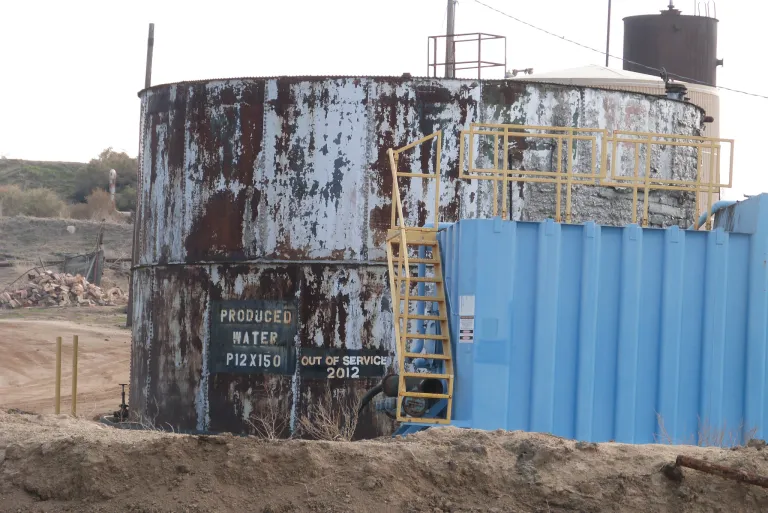
Texas generates roughly 20-25 million barrels of produced water each day, mostly in the Permian Basin. For decades, the solution has been simple: dispose of this wastewater by injecting it deep underground. However, recently, this practice has been linked to increased earthquakes. At the same time, the state is facing a growing water crisis driven by population growth, changing climate, and increasing industrial demand, with one of Texas' coastal towns projected to run out of water within the next few months. This combination of pressures has led to a new and increasingly urgent question: What if this waste could become water that we can use?
On paper, the idea is appealing. If produced water could be treated, it might supplement water supplies for agriculture, industry, or even help maintain flows in rivers and streams in dry regions of the state. Some discussions even extend to potential municipal uses in the future.
But this is where we need to slow down. If we rush ahead, we may risk catastrophic consequences for the environment, human health, and the safety of our water supplies.
Recognizing both the potential and the uncertainty, 87th Texas Legislature passed SB 601 establishing the Texas Produced Water Consortium (TxPWC) to study whether and how produced water could be safely reused. The Consortium brings together scientists, engineers, regulators, nonprofits, and industry representatives to evaluate treatment technologies, environmental and health risks, economic feasibility, and approaches to policy.
This ongoing work reflects a broader understanding that science must guide any decisions about reuse. And while scientists at TxPWC are making progress, important questions remain. For example, we know that treatment of produced water is costly and energy-intensive, but it’s still unclear who would bear those costs or whether large-scale reuse is economically viable. It’s also important to remember that because Texas doesn’t require oil and gas companies to disclose chemicals that they use in fracking, scientists are essentially working with incomplete information, trying to understand treatment of produced water without fully knowing what’s in it.
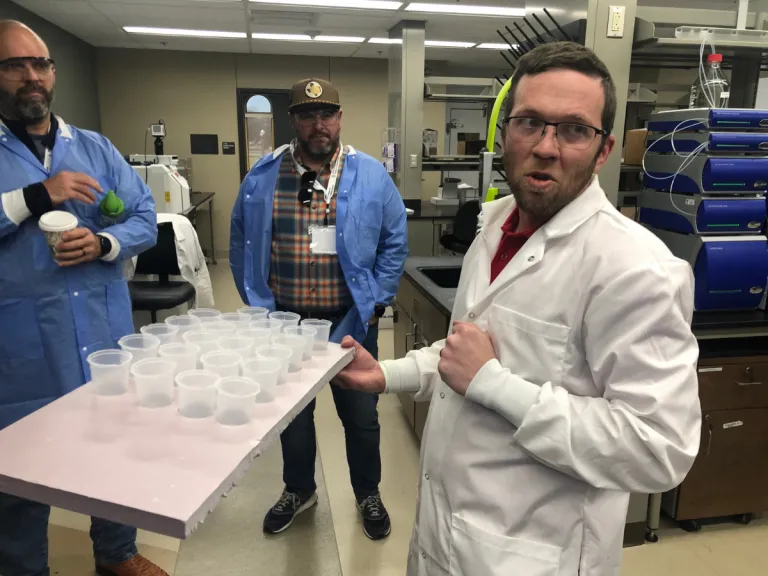
The Sierra Club Lone Star Chapter participates directly in the TxPWC conversations as an active member of the Consortium and a council member of the TxPWC Stakeholder Advisory Council. We regularly engage in meetings, technical discussions, and TxPWC conferences to ensure that environmental and community considerations are reflected in this process.

Produced Water at the Texas Commission on Environmental Quality
Texas Commission on Environmental Quality (TCEQ) is currently reviewing at least five applications to allow treated produced water to be discharged into waterways in the Pecos River watershed. The idea behind this approach is to supplement flows in a region where water is scarce. These applications are expected to be reviewed on a first-come, first-served basis, and so far, no permits have been approved.
At the same time, TCEQ has indicated that it’s still in the early stages of compiling a database of the toxic constituents found in produced water. In other words, the agency doesn’t yet have a complete understanding of what it has to deal with. Even so, TCEQ continues to review applications to discharge treated produced water into the environment while openly acknowledging that important scientific and regulatory questions remain unanswered, with no clear water quality standards on the horizon.
Pending applications to discharge treated produced water in the environment (under TCEQ review)
Produced Water at the Texas Legislature
Despite these regulatory uncertainties, policy to deploy reuse of produced water in Texas is advancing. In 2025, Texas passed SB 1145 (Birdwell), which transferred authority over management of produced water from the Texas Railroad Commission (RRC) to TCEQ and authorized reuse of produced water for land application. Sierra Club expressed cautious support for this bill by submitting written testimony and providing comments at the hearing. At this moment, TCEQ is working on a memorandum of understanding for the transfer of authority and on the rulemaking for the implementation of SB 1145. According to the agency, both of these documents are anticipated to be released for public comment sometime next month.
Another key development during the 89th Legislature was the passage of HB 49, a bill that expands liability protections for companies involved in the treatment, transport, and reuse of produced water. In practice, the law shields oil and gas operators, treatment companies, landowners, and other relevant parties from being held liable for damages that may arise from the use of treated produced water, so long as they are not found grossly negligent or in violation of the rules. Supporters argued that these protections are necessary to encourage investment and scale up reuse. But for many environmental and public interest groups, including the Sierra Club, the bill raised serious concerns about accountability, especially at a time when so many critical questions about safety of produced water remain unaddressed. We submitted detailed written comments outlining these concerns and provided testimony during the hearing, as well.
Finally, to their credit, the 89th Legislature did increase funding for the RRC, including authorizing support of a request by the RRC for more than $7.7 million in additional monies and 2 FTEs (full-time equivalent) to create a produced water and Injection data reporting system. The RRC is currently exploring rulemaking to fully create this new reporting system, including:
- Amending Statewide Rule 58 to require operators to report monthly volumes of generated produced water;
- Amending Statewide Rules 9 and 46 regarding injection volume reporting and other updates to require monthly reporting.
At the Legislature, produced water has increasingly been discussed in terms of a new water supply for Texas. Projects related to treatment and reuse of produce water are eligible for state funding through the New Water Supply for Texas Fund, a program within the Texas Water Fund, which was significantly expanded by the 89th Legislature, with the historic funding approved by voters through Proposition 4 last fall.
Sierra Club’s Work On Produced Water
In just a short time, produced water has moved from a concept to something Texas is actively working to scale through legislation, funding, and regulatory changes. But we’re moving faster than science, and it’s concerning. There are still too many unknowns. And this is where our work becomes especially important.
At the Sierra Club Lone Star Chapter, we are working across multiple fronts. We engage with legislators to advocate for policies that prioritize public health and environmental protection. We participate in regulatory processes at TCEQ, submitting comments and helping shape discussions around rulemaking and surface water quality standards. We contribute to the work of the TxPWC as a stakeholder voice, bringing attention to environmental impacts and community concerns. And we work to educate and mobilize the public through efforts like the Water for People & the Environment Committee and make complex water issues more accessible and actionable.
Produced water may eventually play a role in Texas’ water future. But today, significant gaps remain: unknown contaminants, uncertain treatment costs, limited data, and a lack of a strong regulatory framework to make sure that our ecosystems and communities are protected. Moving ahead without those answers is a serious risk. And when it comes to something as essential as water, we can’t afford to get it wrong.