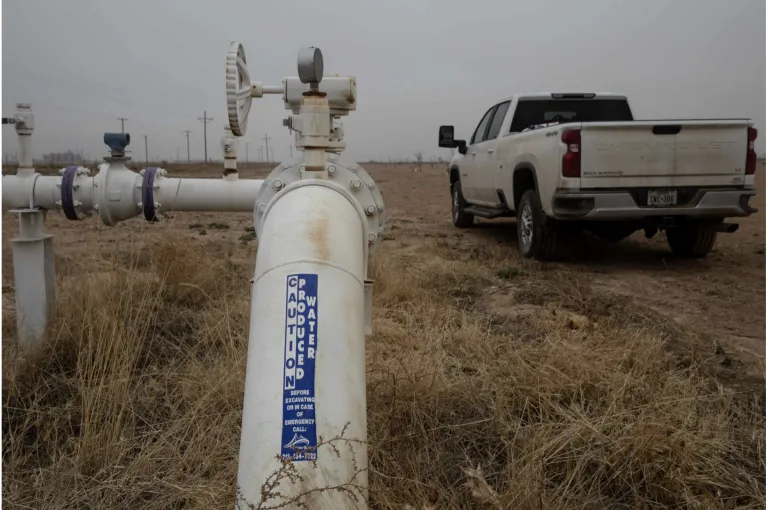
Produced water is wastewater generated during oil and gas operations. Texas leads the nation in oil and gas production, with an estimated 20-25 million barrels (up to 1 billion gallons) of produced water generated daily in the Permian Basin. Produced water contains a complex mixture of contaminants, including salts, hydrocarbons, heavy metals, PFAS, fracking chemicals, and even radioactive materials.
Wastewater Disposal and Management
However, the large volumes of this wastewater being generated have raised concerns about disposal capacity and increased earthquakes associated with underground injections, prompting discussions about alternative ways to manage it. One such alternative proposes to treat produced water to be reused for irrigation, land restoration, discharge into waterways, and potentially even as a source of water for a variety of other uses, including not only data centers but even municipal drinking systems.
For a deeper dive into what produced water is, check out our recent blog on the topic before continuing.
Wastewater Challenges
Interest in reuse is growing as Texas faces increasing water challenges and considers whether treated produced water could become part of the state's future water supply. However, research is still ongoing, important information remains shielded from the public and regulators by trade secrets, and protective and enforceable regulations have yet to be fully developed.
Incomplete Research
The Texas Produced Water Consortium was created by the Texas Legislature in 2021 to study the treatment and reuse of produced water. The consortium conducts research and pilot projects and regularly publishes reports on treatment technologies, water quality, and potential reuse applications. According to the most recent report released in April of this year, researchers have made progress, but there is not yet enough evidence to conclude that Texas can safely begin reusing produced water outside the oil and gas field. Additional research is needed to determine what level of treatment is necessary, what water quality standards should apply, and how treated produced water may affect soil, groundwater, surface water, wildlife habitat, and public health over the long term. (As a member of the Consortium, the Lone Star Chapter continues to participate in these discussions.)
Trade Secret Exemptions
Research is further complicated by the fact that some chemicals used in oil and gas production that may be found in produced water are legally protected as trade secrets and withheld from public disclosure. As a result, researchers have to work with an incomplete list of the substances that could be present in produced water, which makes it more challenging to evaluate treatment effectiveness and potential risks. While they can test for certain constituents that they believe could be present in the water, without access to full disclosure, they are studying an issue with one hand tied behind their back.
Regulations Are Not In Place
Texas has not established specific wastewater discharge standards for produced water, and there is no comprehensive publicly accessible inventory of the chemicals that may be present in it. These regulatory gaps make it difficult to know whether treated produced water is safe for Texans and the places that they depend on and cherish – from rivers and aquifers that supply water to communities, to farms, ranches, and wildlife habitat.
Push for Reuse at the Legislature
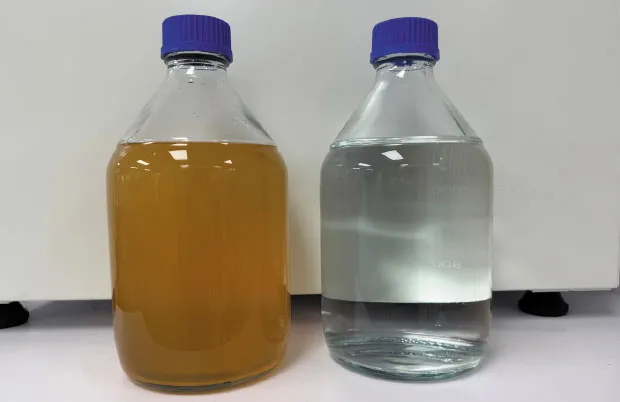
During the 2025 legislative session, lawmakers passed Senate Bill 1145, which authorized the land application of treated produced water and transferred permitting authority from the Railroad Commission of Texas (RRC) to the Texas Commission on Environmental Quality (TCEQ). The RRC had developed some guidance on the use of treated produced water for land application and permitted a limited number of such projects as pilots, but had not yet fully implemented such a program.
SB 1145 came into effect last September, and TCEQ is now developing the rules that will guide implementation of this law. In theory, these rules will help determine when and how treated produced water may be used on land, what water quality requirements and monitoring standards will apply, what protections will be in place for nearby water resources, and how permits will be evaluated and enforced.
SB 1145 Rulemaking: How to Participate
Public Hearing Details
On June 15 at 10 a.m., TCEQ will have a virtual and in-person public hearing in Austin in Building E, Room 201S at the commission's central office located at 12100 Park 35 Circle.
This is a great opportunity to address TCEQ directly and express your concerns related to the proposed rulemaking:
- If you plan to attend in person and provide oral comments at the hearing, you will need to register on-site.
- If you plan to attend virtually and provide comments, you will need to register by June 11 by sending an email to Rules@tceq.texas.gov and including the following information: your name, your affiliation, your email address, your phone number, and whether or not you plan to provide oral comments during the hearing.
- If you would like to watch the hearing without providing comments, you may do so using this link which will activate on June 15.
Public Comment Submission
Written public comments are due by 11:59 p.m. on June 16, 2026.
Submit electronically via TCEQ portal (follow the link and click on the blue “Comment Now” button on the right; you’ll be able to attach a PDF of your comments).
Mail to Gwen Ricco, MC 205, Office of Legal Services, Texas Commission on Environmental Quality, P.O. Box 13087, Austin, Texas 78711-3087
Fax to fax4808@tceq.texas.gov
Preparing Your Comments
Whether you’re familiar with produced water or new to this issue, as you review the draft rules (available here) and prepare your comments, it may be helpful to ask what assumptions the rulemaking is making, and whether those assumptions have been supported by science, transparency, and regulations. In other words, you may ask: Is the rulemaking assuming that…
- …highly toxic produced water is safe for reuse and we know enough about potential impacts?
- …the same requirements are appropriate regardless of how close groundwater resources are to the land application site?
- …the same requirements are appropriate regardless of how treated produced water will be used, including for land restoration, crops used to feed livestock, or even crops that will be consumed by humans?
- …treatment technology is ready and available?
- …existing protections for the environment and public health are adequate?
- …monitoring and enforcement will catch problems before they affect Texas residents, water resources, and wildlife?
- …public has sufficient information to provide informed feedback?
Rulemaking Summary
To summarize this draft rulemaking, TCEQ proposes to regulate treated produced water under an existing wastewater management program that has traditionally been used for municipal wastewater and other industrial wastewater streams. However, produced water is not an ordinary wastewater stream because it can contain materials not present in other wastewater.
As a result of including produced water in an existing wastewater management program rather than developing a regulatory framework specifically for produced water, TCEQ’s proposed rule doesn’t establish discharge standards tailored to produced water and largely relies on existing monitoring and permitting requirements (a big red flag!).
The rule would also allow treated produced water to be applied as close as 100 feet from surface waters and 150 feet from private water wells.
Additional concerns include incomplete research, trade secret protections and lacking transparency, and the limited opportunity for the public to review and comment on a rulemaking that could have significant implications for Texas water resources and public health.
We have compiled several suggested talking points below that you may wish to incorporate into your comments.
Suggested Topics for Public Comment
Request for a 30-day extension of the public comment period. The proposed rules address a complex issue with potentially significant implications for Texas water resources and communities. The public needs more time to better understand the proposed rules to participate in the process in a more meaningful and informed way. (At a minimum, consider requesting an extension of the public comment period so Texans have more time to understand and weigh in on this issue.)
Adding produced water to an existing wastewater management program is concerning. Produced water isn’t an ordinary industrial wastewater stream. It can contain contaminants that may not be present in other wastewater, including naturally occurring radioactive materials. The rule should include standards and monitoring requirements that specifically address the unique characteristics and risks associated with reuse of produced water.
Discharge standards specifically designed for treated produced water haven’t been developed by TCEQ despite being explicitly directed by the Legislature. SB 1145 language specifically required TCEQ to “adopt standards for the land application…, including standards that prevent the pollution of surface and subsurface water,” which was restated in the bill author’s statement of intent. The proposed rule doesn’t establish such standards and instead proposes addressing this issue on a case-by-case basis during the permitting process. As a result, it remains unclear how TCEQ will determine whether treated produced water is safe to apply on land and whether nearby groundwater, surface water, wildlife, and communities will be protected from harm.
Produced water should not be applied too close to water resources and drinking water supplies. The proposed rule would allow treated produced water to be applied as close as 100 feet from surface waters and 150 feet from private water wells. Given the unique contaminants that may be present in produced water, TCEQ should explain how these distances were determined and how they were deemed sufficient to protect nearby surface waters, groundwater resources, and private drinking wells.
Writing the regulations before robust research can inform them is unreasonable. Research on produced water treatment and reuse is still underway, yet TCEQ is developing rules that could allow treated produced water to be applied on land. There’s no sufficient scientific evidence that treatment and reuse of produced water is safe for the environment and public health. Until those gaps are addressed and safety can be demonstrated, TCEQ should not move forward with these rules.
The rulemaking should be based on a complete understanding of what may be present in produced water. Some chemicals used in the oil and gas industry operating in Texas are protected as trade secrets, which limits the information available to regulators, researchers, and the public. If we don't know everything that may be present in produced water, we can't be confident that the proposed regulations address all potential risks.
TCEQ should consider different standards depending on the purpose of the land application. Land application of treated produced water on disturbed or damaged land is fundamentally different from putting produced water on crops that could be consumed by livestock or people, or for native habitats.