Hike the Sangre de Cristo Wilderness and Great Sand Dunes
Wed., Sept. 2 through Sun., Sept. 6
Leader: Mark Stein, mark@steinplanning.com, 214-789-4596
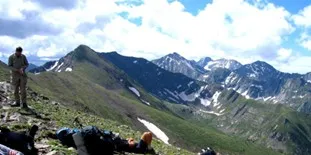
Overview: Drive to Mosca Pass, a saddle on the border of the Sangre de Cristo Wilderness Area and Great Sand Dunes National Park. Leaving cars and most gear at the pass, hike downhill to the Great Sand Dunes Visitor Center. Hike back to Mosca Pass to make camp. Next morning, drive north to backpack the twelve-mile Comanche-Venable loop through two deep and beautiful glacial valleys, over two alpine passes, and across the amazing Phantom Terrace before returning home.
Trip days: 5, including travel to and from Colorado; 3 full days of hiking and backpacking.
Trail miles: 19, 7 with just day packs from Mosca Pass to the GSD Visitor Center and back, then 12 miles around the Comanche-Venable loop in two days, with regular backpacks. .
Trail elevations: 9,700’ at Mosca Pass, 8,100’ by the dunes; 9,100’ at the Comanche-Venable Trailhead, 12,800’ at Comanche Pass
Daily itinerary:
Day 1, Wed., Sep. 2: Drive or carpool to Trinidad, Colorado, Assemble at the Quality Inn in the evening. Continuing to Mosca Pass early enough to make camp before dark is impractical, hence the stay in Trinidad.
Day 2, Thurs., Sept. 3: After breakfast in Trinidad, continue to Mosca Pass, two hours northwest. Leaving all but water, lunch, and essentials in cars, day hike 3.5 miles and 1,600’ downhill on the Mosca Pass Trail to the Visitor Center at Great Sand Dunes National Park. Time, energy, and temperature allowing, make a brief and optional foray into the dunes, then retrace to Mosca Pass to make camp for the night.
Day 3, Fri., Sept. 4: Drive or carpool to the Comanche-Venable Trailhead. Begin the loop hike with 4.1 miles and 2,000’ of altitude gain on the Comanche Trail to camp at Comanche Lake.
Day 4, Sat., Sept. 5: Ascent to Comanche Pass, high point on the trail at 12,800’ on the spine of the Sangre de Cristo mountain range. Admire views into the deep valleys on both sides of the pass. Pursue a nearly level trail that parallels the spine of the Sangres to Venable Pass, then descend to the Venable Valley via the Phantom Terrace—a hidden groove across a massive rock face that appears impassable from some angles. Below the Phantom Terrace are the Venable Lakes, a log cabin ruin, and Venable Falls—a series of cascades where columbines bloom.. Reach the starting trailhead between 3:00 and 5:00, 7.9 miles for the day, mostly downhill. The outing ends at the trailhead.
Lodging options in the direction of Dallas on Saturday night include Trinidad, Raton, Clayton, Dalhart, and Amarillo, depending on how far you want to travel. This is Labor Day weekend, so seriously consider reserving a room or campsite for Saturday night. I’ve booked two rooms for four people in my carpool at the Raton Pass Inn in Raton, NM for Saturday night. Contact me if you or your carpool want advice on finding or booking hotel rooms for either Sept. 2 or 5.
Day 5, Sun., Sept. 6: Continue to home. Alternatively, you (and your carpool?) might choose to linger in Colorado or New Mexico, delaying the drive home until Monday.
Carpools: Carpools are encouraged. They reduce toxic emissions, offer companionship, and reduce the cost of travel. Sierra Club outing leaders are not allowed to assign people to carpools but can share names and contacts of people seeking riders or rides. A popular practice for outings is to sum actual fuel costs and an allowance of $0.15 or $0.20 per mile for vehicle maintenance and wear, then share those expenses equally among car occupants, including the driver. Occupants should agree on a cost-sharing formula before committing to a carpool.
To Register: After reading this trip description, check for availability of spots on the outing by emailing or calling mark@steinplanning.com, 214-789-4596. If you’ve not backpacked with Dallas Sierra Club recently, I want to talk with you to learn whether this outing seems appropriate. If no answer to a call, please leave a voice message so I won’t think your call was spam and block your number. Then, if approved and you want to register for the outing, register in Campfire Events here.
Cost: The $100 registration fee for this outing primarily funds the Dallas Sierra Club’s expenses for periodic Wilderness First Aid training for Outings Leaders. The fee is non-refundable. It doesn’t cover hotel expenses on the way to or from Colorado, likely $50-$75 per night with double occupancy.
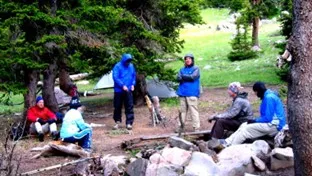
Weather: Expect early September temps at Mosca Pass from low 40s to 60s, high 70s at the Dunes Visitor Center, and 90s or significantly hotter on the dunes. Temps on the Comanche-Venable loop might be 60s by day but expect 30s or low 40s at night. Rain is possible in the Sangre de Cristo Wilderness. Bring rain gear!
Gear: Because a prior backpacking experience is warranted for this outing, I assume general awareness of what to bring and not to bring but I’ll be plesed to answer questions if you contact me. Each hiker is responsible for bringing gear and food. If your loaded pack exceeds 25 pounds before you add water (2.2 pounds per liter), lighten your load!
Tent, sleeping bag, sleep pad: A backpacker needs a lightweight tent, a sleeping bag, and an air mattress or sleep pad. The primary function of the air mattress is to insulate you from cold ground.
Backpack: Consider adding a lightweight rucksack for water, a sack lunch, and essentials on the day hike to Great Sand Dunes.
Clothing: Layers will be key for core temperature management. Avoid denim Wear recently tested boots or trail runners. Two sock layers (thin sock inside) are generally helpful for precluding blisters. Bring gloves. Sleep with a sock cap. Don’t forget a hat, sunglasses and sunscreen for UV protection.
Food: The food you carry depends on your daily itinerary and personal taste. Most backpackers will prepare an evening hot meal, typically dehydrated food requiring only boiling water and a short wait for hydration. Good and less expensive meal alternatives are available from grocery stores. Bring no-cook lunches. Some of us will eat a quickly cooked breakfast, others a no-cook breakfast. Fires are prohibited on this outing. We recommend cooking with tiny, butane-isopropane stoves that make no smoke or embers.
Water: To avoid spills, don’t bring water from home in your pack. I’ll provide bottled water at the trailheads. Two or three liters is generally enough to carry at the start of each day. Supplemental water from lakes and streams will require treatment.
More: Don’t omit a headlamp and personal health and first aid items. If you ever use trek poles, I think you’ll appreciate them here. Bring or share a lightweight trowel and tissues for personal waste management tand a zip-lock bag for used tissues. That’s right—pack out your paper!
Bears: Yes, there are bears in the Sangre de Cristo Wilderness but odds of an encounter are low. Food and other scented items should be stored in a car or bear-resistant container when unattended. The only time when food won’t be in a car or attended will be Friday after dinner and before Saturday breakfast. Perhaps we cn consolidate all food for Saturday breakfast and lunch in one or two containers overnight.
Maps: National Geographic Trails Illustrated map 138 covers the Sangre de Cristo Wilderness Area and Great Sand Dunes National Park and Preserve. CoTrex (www.Trails.Colorado.gov) is an excellent free source for viewing topogrphy and trails anywhere in Colorado.
Leave No Trace: Leave-no-trace wilderness ethics are expected of all participants. All trash must be packed out; human waste buried and used toilet paper packed out. (Bring a zip-lock bag.) Pets, firearms, and smoking are not allowed.
Medical Emergencies: Sierra Club Outings Leaders leaders have trained for wilderness first aid, but twe are not medical professionals. Participants are encouraged to bring first aid supplies for personal use and to inform leaders about medical conditions such as diabetes, heart problems, or allergic reactions that could require emergency treatment. Tell your leaders where you store vital medications you could need. Medical information you provide may be shared with medical professionals who treat you in case of injury or sickness.
Group = Safety: Participants who choose to leave the led group will be asked to sign out of the trip and no longer be part of the outing. If you leave the outing, don’t hike alone and always hike on a trail. Most deaths in wilderness occur when a solo hiker becomes incapacitated before being found. When leaving camp, especially at night, take care to stay oriented.
California Seller of Travel Law: The Sierra Club is a nonprofit corporation, incorporated in California. A California "Seller of Travel" law requires us to post this notice: “CST 2087766-40. Registration as a seller of travel does not constitute approval by the State of California.”