The recently released results of the Conservation Congress Spring Hearing showed Wisconsinites throughout the state support protections for drinking water, solutions for farmer-wildlife conflict, and protections for our land and waters.
“The results are in line with what Wisconsinites continue to ask for- address PFAS pollution, safeguard our waters and wildlife while supporting Wisconsin’s farmers. Certainly, every Wisconsinite deserves the assurance that the assurance they can drink water from their tap without fear of it being contaminated with agricultural run-off or PFAS pollution. We also support efforts to keep our wildlife safe while supporting Wisconsin’s farmers. Governor Evers proposed a budget that includes the programs Conservation Congress voters want. We hope to see the Legislature support these programs and protections, ” said Elizabeth Ward, Chapter Director with the Sierra Club Wisconsin Chapter.
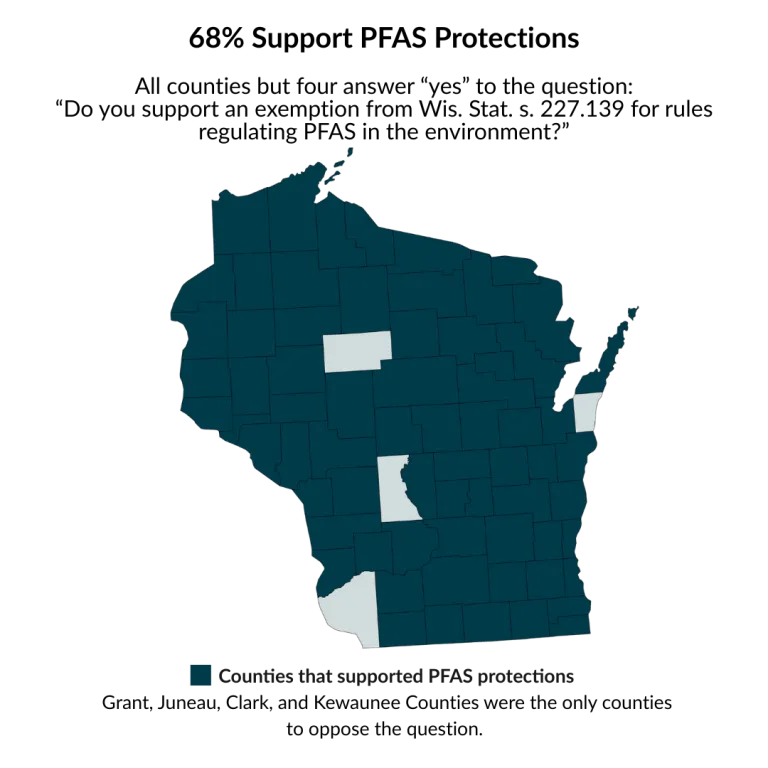
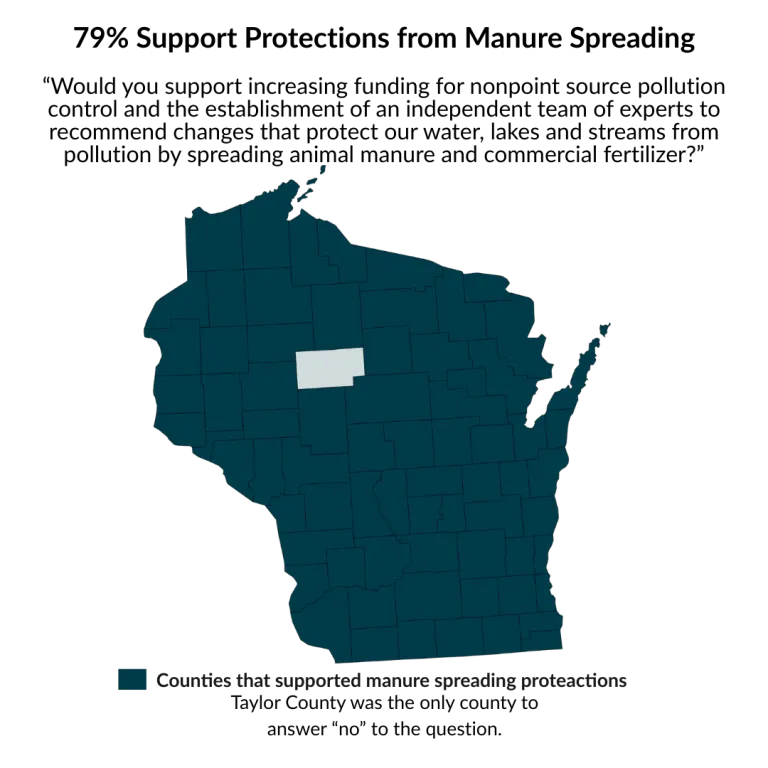
Clean water was overwhelmingly supported by voters, with over 68% of voters supporting PFAS safeguards and 79% supporting funding for nonpoint source pollution control and safeguards:
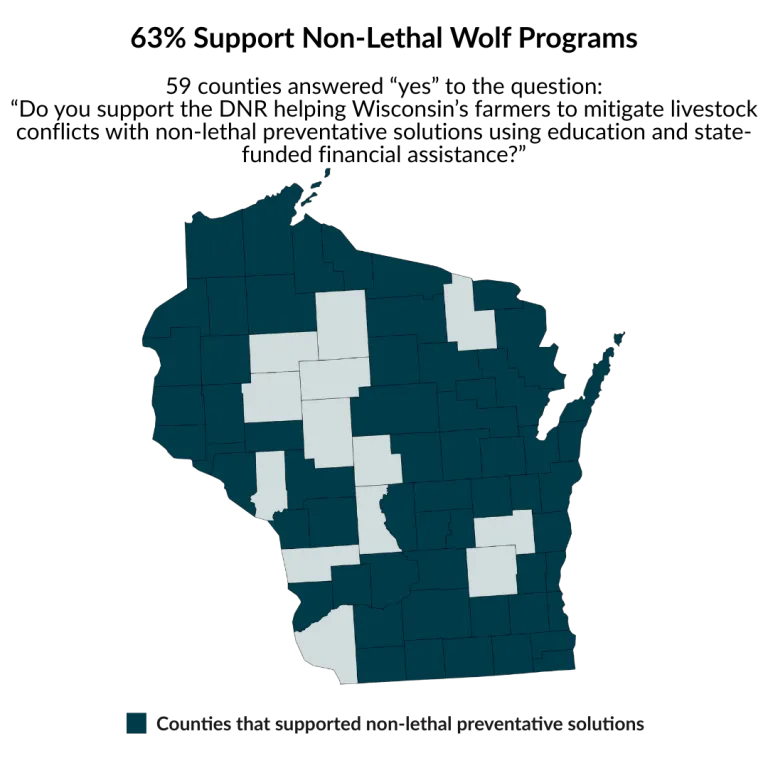
Voters also supported programs that help farmers facing damage from wildlife. Common sense solutions like fencing, lights, and fladry have been proven to reduce, and sometimes eliminate, wolf-livestock conflicts. This allows wolves to continue their ecosystem functions and reduces livestock loss for farmers. 63% of voters supported financial assistance for farmers to move forward with these non-lethal solutions.
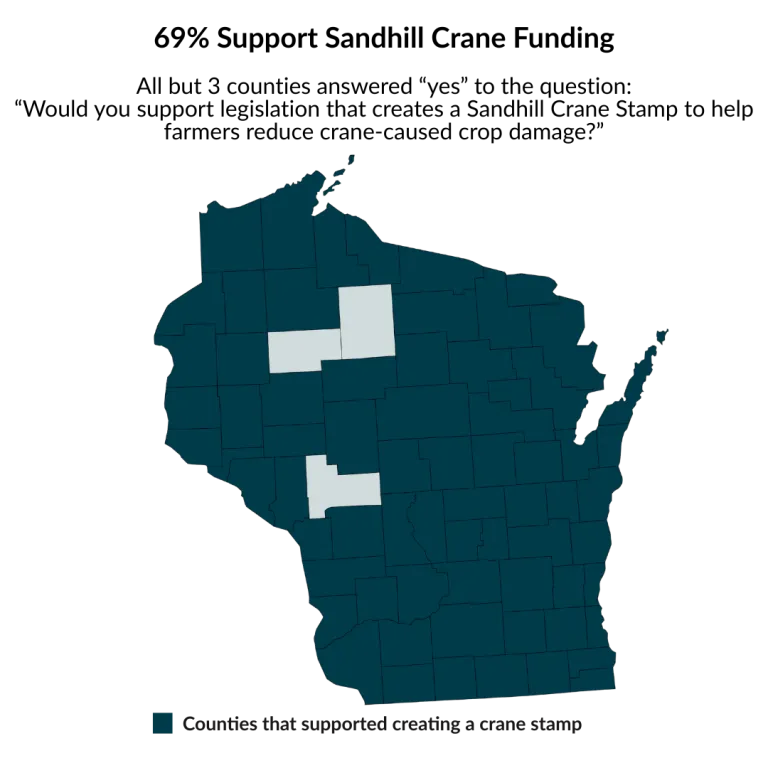
Similarly, 69% of voters supported creating a Sandhill Crane Stamp to help farmers reduce crane-caused crop damage. Programs for seed treatment to prevent crop loss from sandhill crane and for non-lethal wolf-livestock conflicts were included in the state budget.
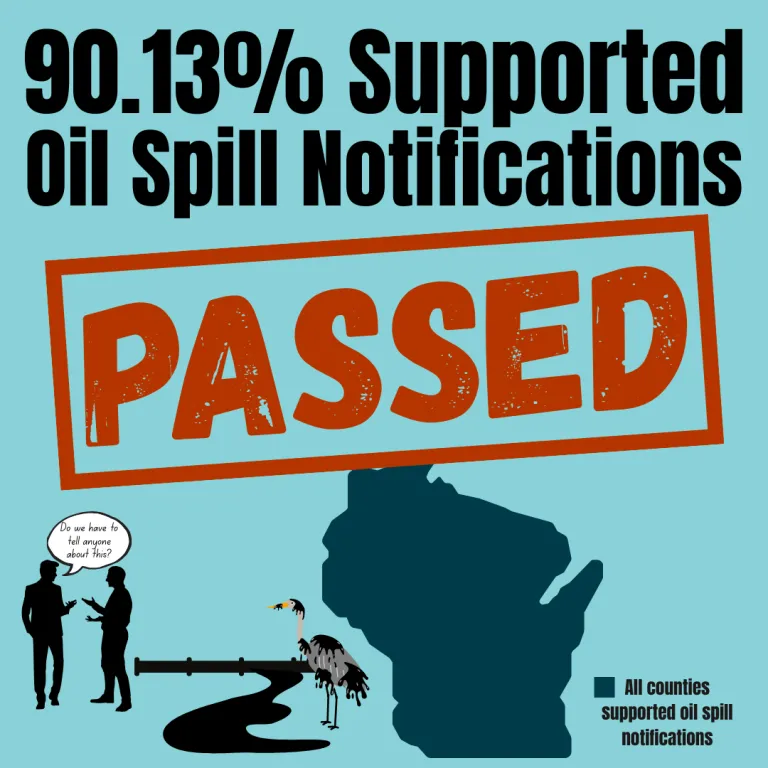
Finally, voters supported efforts to protect our lands, waters, and wildlife from pollution. Voters in every single county and 90% of voters statewide supported a requirement that pipeline companies provide more information about spills. This is likely in response to the Jefferson County Enbridge oil spill in 2024. Initially, Enbridge reported it was only a 2-gallon spill, but it turned out to be the largest oil spill in Wisconsin’s history at 69,300 gallons measured.
57% of voters also supported phasing out the use of lead ammunition and fishing tackle, so it is not left behind in the environment. Once in the environment, lead persists for hundreds of years. Often, bald eagles and other species will pick up pieces of toxic lead fragments left behind from bullets or fishing gear. And just like humans, these creatures can face dire health consequences from lead exposure. Each year in the United States, 10-20 million animals and birds die from lead poisoning.

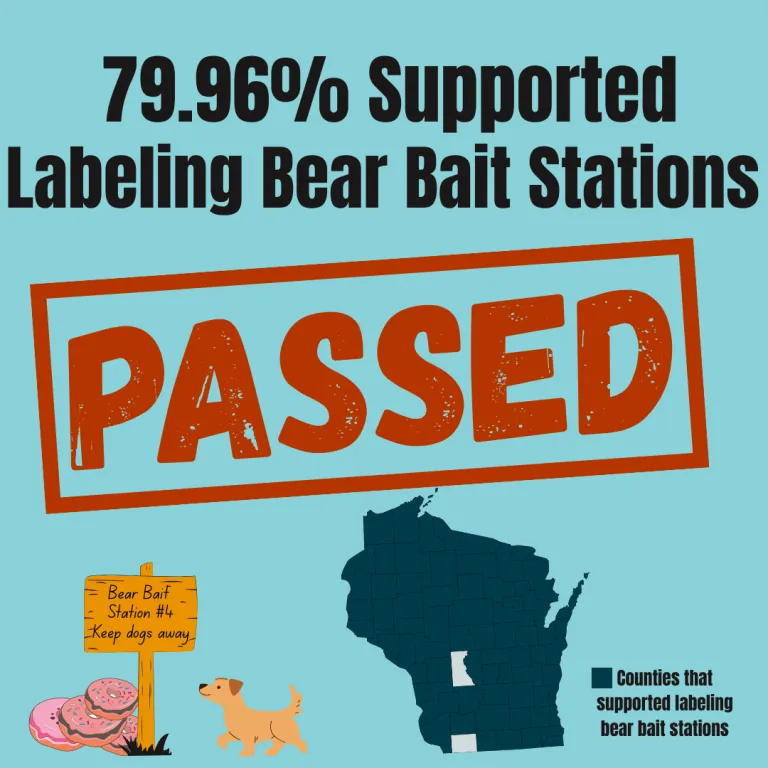
Finally, 77% of voters in all but two counties favored requirements that all active bear baits on Wisconsin public lands - federal, state, and county - be labeled with the owner's name. This will help conservation wardens in situations when they need to quickly contact bear bait owners, ensuring a quick remedy to any issues with bait stations on public lands.
These Spring Hearing results will be referenced by Wisconsin state legislators and other conservation leaders as a gauge of public attitudes. However, only those questions supported by the Wisconsin Conservation Congress are advanced to the Wisconsin DNR for further policy consideration.
It is disappointing to see the Wisconsin Conservation Congress reject critical questions that were widely supported by our citizens, including the banning of lead in hunting ammunition and fishing tackle, helping farmers with non-lethal livestock conflict reduction, and the creation of a Sandhill Crane stamp to reduce agricultural crop losses.