Thank you to everyone who participated in Public Lands Month. We’ve been celebrating our Public Lands on National Public Lands Day (September 27) for other thirty years. Since it started in 1994, the ways we celebrate has grown and expanded. This year, highlighting and celebrating our Public Lands was more important than ever, with the tremendous threats they are facing.
This year, to honor our lands, showcase how important they are, and to protect them for future generations, we had a month of activities to enjoy and celebrate our lands, actions to stand up for them, and new tools to help you advocate for them. Read on for the highlights of the month, along with recordings and links if you missed them and want to check them out or use them for continued advocacy for our public lands.
🌟Highlights
- Over 350 people signed up for Public Lands events throughout the month
- In response to public outcry, the Democrats in the Wisconsin State Legislature introduced a new, major bill that would reauthorize funding for the Knowles-Nelson Stewardship Fund, just in time for Public Lands Month
- Thanks to our advocacy, the Every Kid Outdoors Bill, legislation that would allow 4th Graders and their families to enjoy state parks for free, unanimously passed the Assembly Committee on Assembly Committee on Forestry, Parks and Outdoor Recreation.
- In less than a week, over 100 people accessed the new Wisconsin Life and Lands Dashboard to learn about the important features of their favorite places and what they can do to protect them
- We launched a new Get the Lead Out! Program and already 40 people volunteered to host lead tackle and ammo disposal sites in their communities, keeping lead out of our lands and waters.
🛶 Enjoyed the Outdoors

Exploring our Public Lands
People across the state found joy and connection on the land and water. They got outside and appreciated our public lands (and the weather cooperated beautifully). Sierrans also joined together to enjoy:
- The Chippewa Valley Group paddled the Chippewa River, celebrating one of Wisconsin’s iconic waterways.
- The Great Waters Group partnered on an exploration of the Forest Beach Migratory Preserve, connecting people with a unique coastal habitat.
- The Coulee Region Group hosted a Transit to Trails event around the Coon Valley watershed, showing how sustainable transportation expands outdoor access.
- In the Fox Valley, members gathered for a reflective walk at Navarino Nature Center, blending mindfulness with time on the land.
Caring for Our Lands and Waters
Volunteers also rolled up their sleeves to restore and protect public spaces.
- The Four Lakes Group helped plant nearly 30 trees and shrubs in Madison and Fitchburg, including at a food pantry
- The Great Waters Group helped clean up Lincoln Creek
- The Four Lakes Group hosted a highway clean-up near the Rock River
🏋️Using our Collective Power
Fighting for the Roadless Rule
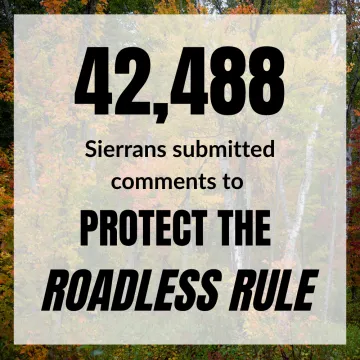
One of the key highlights of Public Lands Month was our work to protect the Roadless Rule and raise awareness about why it matters. The Roadless Rule is a cornerstone of conservation policy — protecting millions of acres of forests, supporting biodiversity, and preserving quiet, wild spaces on our public lands. Watch this short video about the rule to learn more.
During Public Lands Month, the Trump Administration attempted to roll back this popular safeguard, opening a rushed public comment period. In response, 42,488 Sierrans submitted comments nationwide, and volunteers wrote more than 100 letters-to-the-editor — including a powerful piece by Wildlife Team Member Dana Herman. Together, we made it clear that people across the country value and want to protect our roadless forests.
Supporting the Knowles-Nelson Stewardship Fund
Kicking off Public Lands Month, new legislation was introduced to continue funding for the Knowles-Nelson Stewardship Fund. This program, created in 1989 with strong bipartisan support, has been the backbone of land and water protection in Wisconsin for more than three decades. It has provided over $1.4 billion to conserve forests, protect wildlife habitat, safeguard clean water, and create trails, parks, and public access across the state.
Unfortunately, funding for the program was left out of this year’s budget, and without action, it could end next year. Losing Knowles-Nelson would mean losing the state’s most important tool for protecting natural areas and expanding outdoor opportunities for communities.
Throughout Public Lands Month, people enjoyed hikes, paddles, and events on lands that were made possible by the Knowles-Nelson program. We even highlighted many of these special places at our recent fundraiser, celebrating the way this program has shaped Wisconsin’s outdoor legacy and underscoring why it’s so critical to keep it alive for future generations.
Showing up to court to Shut Down Line 5
Another major focus of Public Lands Month was the Line 5 contested case hearing, a legal proceeding where an administrative law judge hears evidence and arguments before making a recommendation on whether a project should move forward. This hearing examined Enbridge’s proposal to reroute its aging Line 5 pipeline around the Bad River Reservation, a plan that still poses serious risks to clean water, public lands, and local communities.
Community members showed up powerfully: many attended the hearing in person or online, volunteers took notes to keep the process transparent, and together they demonstrated support for the Bad River Band and our legal team. Their presence underscored the dangers of the Line 5 reroute and the growing call to shut down the pipeline once and for all.

📑Tools to Help with Ongoing Advocacy
Public Lands Month wasn’t just about celebrating together; it was also about learning and building momentum for the work ahead. From expert panels to community conversations, we gathered powerful insights that will shape our advocacy in the months and years to come. If you missed them, don’t worry: you can catch the recordings and resources here and join in the movement to protect Wisconsin’s lands and waters.
Wisconsin Life and Lands Dashboard
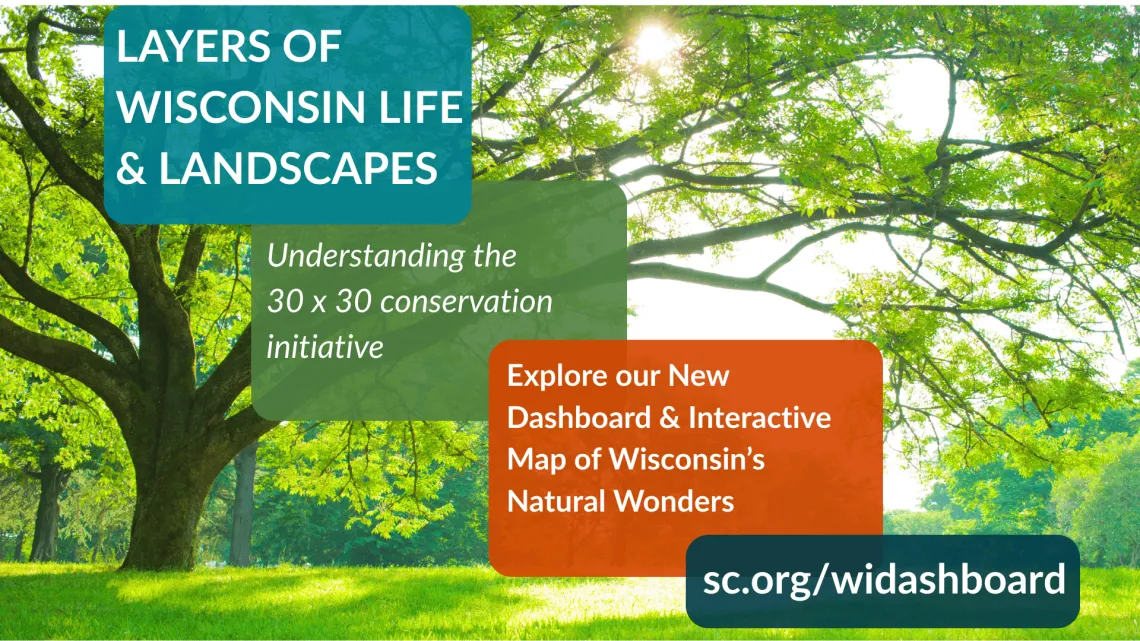
We’re thrilled to launch our new dashboard and interactive map, a powerful tool to explore Wisconsin’s lands and waters through the lens of the global 30x30 initiative—the ambitious goal to protect 30% of lands and waters by 2030. From forests and wetlands to prairies and culturally important sites, this tool lets you see the diversity of habitats across the state, understand their crucial roles in climate mitigation, biodiversity, and human well-being, and even discover what’s thriving right in your own backyard.
Learn about keystone species like beavers, wolves, and rusty-patched bumblebees, explore old-growth forests and prairie remnants, and see how protected lands—from state parks to land trust preserves—contribute to healthy ecosystems, clean water, and carbon storage. You can also explore areas of cultural significance, including tribal lands, wild rice habitats, effigy mounds, and historic settlements, honoring the deep connections between people and the land.
This interactive dashboard makes it easy to explore, learn, and get inspired to protect Wisconsin’s natural heritage for future generations. Explore the dashboard here.
New Toolkit: Get the Lead Out!
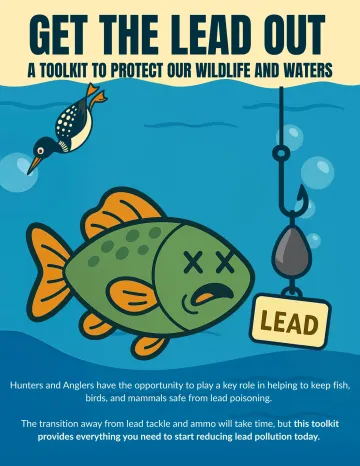
When you sign up for the Get the Lead Out Toolkit, you’ll receive everything you need to start protecting wildlife and waters from harmful lead pollution. The kit includes a step-by-step guide on how to safely dispose of lead tackle, instructions for building a collection container, and ideas for spreading awareness in your community. You’ll also get a poster and sticker to help label your container and share the message with others. Together, these resources make it easy to take action and keep loons, eagles, turtles, and other wildlife safe. Get the toolkit here.
Webinars that highlight our Public Lands, Forests, and More!
The insights shared during Public Lands Month will guide and strengthen our advocacy to protect Wisconsin’s lands for years to come. If you missed any of the webinars, you can catch the recordings here.
Protecting the Midwest's Wild Forests
Former Chief of the Forest Service, Mike Dombeck, joined others in a conversation about midwest forests hosted by Sierra Club, ELPC, and partners around the region. The Roadless Rule is one of the most important conservation policies in the history of our public lands. It safeguards nearly 60 million acres of national forests -- including more than 700,000 acres of roadless areas in the Midwest, such as parts of Wisconsin’s Chequamegon-Nicolet National Forest and Minnesota’s Superior National Forest. The webinar wasn’t recorded, but you can learn more about the Roadless Rule here.
The Other Public Lands
Edgewood University’s Professor Steve Davis will present how for most Americans, state lands are a readily accessible type of public land. However, despite being widespread, many are largely unknown. His book, The Other Public Lands, offers a broad view of state public lands and the political dynamics that underlie their management. His talk will focus on how states prioritize competing claims related to conservation, resource development, tourism, recreation and finances, and how much of their value is missed by policymakers. Watch the recording here.
Solar and Lands Lunch and Learn
Clean Wisconsin's Solar Co-benefits report describes some of the co-benefits of solar farms on water quality, soil health, wildlife habitat, and health, in addition to reducing greenhouse gas emissions contributing to climate change. The research has shown that when solar farms replace conventionally-farmed row crops, like corn, it can reduce sediment and phosphorus pollution runoff into nearby lakes, rivers, and streams by 75-95% and reduce groundwater contamination from nitrates. View the recording here.
What’s Next? Protecting Public Lands
earn more about the federal, state and local threats to public lands and explore the recently released Layers of Wisconsin Life and Landscapes dashboard. Watch the recording here.
🙏Thank you!
Thank you to everyone who participated in Public Lands Month. Whether you attended a webinar, switched to lead-free tackle, submitted a comment in support of the Roadless Rule, or just got outside and appreciated our lands.
⏭️ What’s next?
The call to protect our public lands is gaining momentum. At the same time, the attacks to our public lands are not slowing down. Being a champion for public lands is as important as ever.
Support our National Parks
The National Park Service (NPS) has opened a 30-day public comment period and is asking for input on how to improve visitor services so that everyone can have meaningful, enjoyable experiences in our parks. This is a big opportunity to make our voices heard. Visitor services touch nearly every part of the park experience, from how people get around to how they learn about history, culture, and nature. By submitting a comment, you can help shape the future of our shared parks and ensure they remain accessible, sustainable, and welcoming for generations to come. Submit a comment here.
RSVP for Wolf Awareness Week

As a keystone species, wolves are incredibly important for our forest health and ecology. In 1990, Wisconsin Governor Tommy Thompson signed the proclamation of Wisconsin Wolf Awareness Week, a time to celebrate these important animals, by highlighting the threats to their survival, spread the word about what you can do to help wolves stay protected, and help humans learn to live alongside them.
Every year we have daily, fun and informative activities to learn about and appreciate wolves in Wisconsin. RSVP for the week to get your exclusive 2025 Wolf Awareness Week sticker! RSVP here.