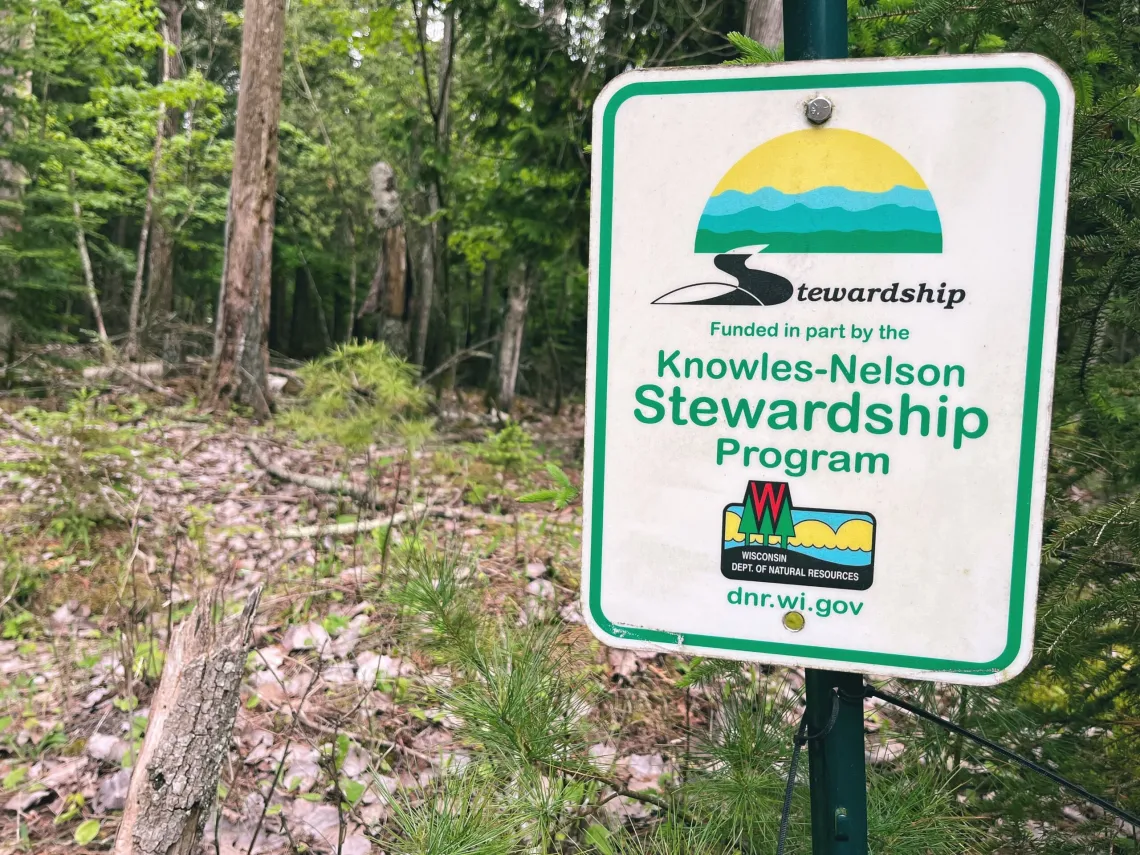
This year, Earth Month was a whirlwind. While the Trump Administration and Congress continued attacks on foundational environmental protections at the federal level, the Wisconsin State Legislature wrapped up its session without making meaningful progress on water pollution, climate action, or protecting our lands and wildlife. Lawmakers also failed to restore funding for the Knowles-Nelson Stewardship Program — one of Wisconsin’s most important tools for conservation and outdoor recreation.
But even amid these setbacks, our Earth Month was packed with energy, action, and important wins. From inspiring events and educational programs to major victories protecting Wisconsinites from subsidizing massive data centers, supporters across the state showed up in a big way for people and the planet.
There was so much happening this month that we’re breaking our Earth Month recap into three parts:
- Earth Month Round-Up Across the Chapter (this blog) — highlights and victories from across our work
- Earth Month Round-Up: Wildlife Team — a special look at the incredible work and momentum from our Wildlife Team
- Earth Month: What’s Next — how we’re building on this momentum heading into summer, because we’re not slowing down anytime soon
Read on for a look back at all the events, actions, advocacy, and victories that made this Earth Month so impactful! Thank you to everyone who made all of this possible.
Pushback on Data Centers

New Analysis and Election results show that Wisconsinites are Concerned about data centers
Dozens of Sierra Club volunteers read the comments in two Public Service Commission (PSC) dockets relating to data centers and if Wisconsinites should subsidize their energy costs. In April, we released these analyses and drew connections between them and the election results in a webinar.
Key findings include:
- 98.5% of comments disapproved of WEC’s tariff structures on data centers as currently proposed.
- 93% of verbal comments and 85% of written public comments in the Alliant Energy customer contract for a Beaver Dam data center case said that data centers should pay for 100% of their costs.
- Recent polling by Wisconsin Conservation Voters found that 93% of Wisconsinites think that data centers should be required to pay for all of their own energy use and 84% expressed concern about the cost of electricity.
- In many local elections this April, candidates who ran on platforms opposing data centers won by significant margins.
The full analysis is available here, and the webinar can be found here. Read our press release here.
Big Wins will ensure Data Centers Pay 100% of their costs
Following the release of our analyses, the Public Service Commission took significant measures to protect Wisconsin customers from the energy and infrastructure costs associated with data centers. The Commission is following through on its duty to ensure affordable utility service, protect consumers, and require data centers to pay the full costs to supply their electricity.
As Commissioner Nieto underscored:
“Wisconsin customers should not pay a single cent to subsidize the service of data centers or very large customers – not now and not decades from now. Those [VLC] customers must bear the full cost of the infrastructure required to serve them – generation, transmission, distribution – and that those costs must be fully and transparently assigned. When we leave here today, we should be able to say clearly and unequivocally, there are no discounts here and no shifting of risks.”
The Commission is taking several important steps to protect customers, including enforcing the requirement that data centers pay for 100% of the costs for their electricity generation and not spread the costs and fuel risk to other customers.
In addition, the Commissioners ordered:
- Extending the service contract length to 15 years
- Lowering the megawatt threshold to 100 MW and making the tariff mandatory for customers over that threshold
- Eliminating the capacity-only option that would have required non-participating customers to pay 25% of construction costs and all future fuel costs
- Acting within its state jurisdiction to reduce the risk of non-participating customers covering billions of dollars in data center-related transmission costs, while recognizing the critical role the Federal Energy Regulatory Commission (FERC) will play in safeguarding Wisconsin customers.
- Clarifying that the utility should consider all cost-effective resource options, including demand response, flexible load and aggregated demand solutions in meeting data center energy requirements.
Learn more about the “Very Large Customer Tariff” here.
Community Members Speak Out Against Vantage Data Center Air Permit
The Department of Natural Resources (DNR) held an open comment period and a hearing on the air permit for the Vantage Data Center, which is proposed to be one of the largest data centers in the country. Vantage has proposed having 45 diesel engines for backup power. If all 45 generators were running at the same time for one hour, they would emit as much NOx as 5,249,040 vehicle miles traveled, according to data from the Bureau of Transportation Statistics. Throughout April, over 500 Sierrans submitted comments. At the hearing, 100% of the 27 commenters, many of whom will be impacted by the diesel generators, agreed with our positions and offered detailed fixes to the permit.
Pushing back on the Line 5 Reroute
This Spring, the Bad River Band of Lake Superior Chippewa and environmental groups, including Sierra Club and our partners at the Midwest Environmental Advocates, Clean Wisconsin, 350 Wisconsin, and the League of Women Voters of Wisconsin, asked a Wisconsin circuit court to consider whether state permits for the Line 5 reroute were appropriately granted. In doing so, we also asked the judge to pause construction while he considers the case. Our petition clearly shows significant risks to wetlands, water quality, and treaty-protected resources, and that the permitting process did not meet state environmental laws. Enbridge is desperately asking the court to allow construction to move forward.
The Fight to Shut Down Line 5 Continues in Court
In April 16, there was a hearing in the challenge of DNR permits for the Line 5 reroute, where the Bad River Band and environmental parties, including the Sierra Club, represented by Midwest Environmental Advocates, presented their arguments for why a judge should grant a stay on construction while considering the merits of the challenge to permits. The local community and tribal communities showed up for the in-person hearing, packing the 50-person-capacity room and reserving a nearby park for associated activities. Read this article from the Ashland Daily Press about the hearing.
Enbridge applies for permits they are ineligible for
While the court case proceeds, Enbridge has also applied for four additional permits for work at stream crossings along the proposed reroute. The projects Enbridge proposes are permanent stream bank stabilization structures and the proposed reroute cannot be finished without them. Enbridge is not eligible for some of the work they’ve proposed on land that they do not own, but only have easements with landowners for. Because of this, Enbridge reapplied for four permits, “co-applying” with landowners to try and resolve this issue. If these permits are approved they will violate the rights of nearby riparian zones and the public, and facilitate the continued operation of Line 5, putting the people, land, and waters of northern Wisconsin at risk for decades to come.
The DNR hosted a hearing on whether to give Enbridge these permits. 100% of the commenters opposed giving Enbridge those permits. Read coverage of the hearing here. When this comment period closed we had collected almost 1,000 comments that were sent to the DNR opposing these additional permits for Enbridge, and our organizations submitted extensive, written comments calling on DNR to oppose these comments.
UW La Crosse Line 5 collaging event
A UWL student, Elli, participated in a mini-internship with us this semester as part of a course she took. Her main project was to plan and host a collaging event on campus, where she gave a presentation on Line 5 and the most recent updates, and led a collaging activity to inspire people to consider why they care about climate change work and what they want to protect.
Monitoring Enbridge’s Line 5 Reroute Construction
Since Enbridge began construction on the Line 5 reroute community members have been keeping track of their activity. Uplifting what’s happening has been very important in keeping the spotlight on the damage that has already occurred and the importance of preventing the damage we worry may come. You can check out the observations that have been recorded and learn how to monitor yourself (often just by snapping a quick picture!) at this website.
Clean Transportation
West High Equity Symposium Presentation focuses on traffic violence
The Chapter, Wisconsin Bicycle Federation, and 1000 Friends of Wisconsin joined together to take part in the West High Equity Symposium at the West High School in Madison. Students watched a presentation about traffic violence and equity issues. We then had students look at areas near the school and where they live and mark up opportunities to make the streets more pedestrian- and bike-friendly. Check out some of their ideas here.
New report shows that Wisconsin is moving forward, but not fast enough, with electric vehicles
Wisconsin made meaningful progress on rolling out federal EV charging dollars in 2025, but the vast majority of funding remains unspent, according to a new Sierra Club report.
In February 2025, the Trump administration illegally froze the National Electric Vehicle Infrastructure (NEVI) program. Sierra Club, the state of Wisconsin, and other states and nonprofit partners challenged that action in federal court and successfully lifted the freeze. NEVI funds were unavailable to Wisconsin for nearly five months in 2025 and only fully secured after a final court order in January 2026. Despite these months-long obstructions, 2025 was still the most productive year in the program’s four-year history.
To speed up the rollout of federal EV charging funds, the report recommends Wisconsin and other states use their attorney general offices to address issues with access to funds, engage with utility regulators and public service commissions to stretch funding, set targets and timelines for rolling out funds, and maximize coordination between state agencies, project applicants, and electric utilities.
Growing support for Regional Transit Authorities
Regional Transit Authorities (RTAs) are a key opportunity to improve transit systems in Wisconsin. They are currently not allowable by law, but there is growing support for enabling RTAs in the state. These can help transit systems plan and operate more regionally instead of ending at municipal lines. Members of the Chapter Transportation Team have been meeting with legislators, riders, transit operators and local government leaders to garner support for RTAs.
Protecting Wisconsin’s Lands and Waters
PFAS Clean-Up Funding signed by Governor Evers
After years of work from impacted communities and partner groups legislation passed this session releasing $132 million in funding to support PFAS monitoring and treatment. Early this Earth Month Governor Evers officially signed this set of bills into law marking a win and setting the stage for the future. This was a massive effort and just the first step in the prevention and remediation work we need to see across the state.
Sierrans Weigh in on Conservation Congress, show support for public lands, water, wildlife
The Wisconsin Conservation Congress (WCC) is a unique entity that collects public input focused on the state's natural resources and gives that input to the Natural Resources Board.
The majority of citizen input is gathered in the WCC Spring Hearing Survey, which collects public opinions on various issues, from hunting and fishing regulations to environmental protection measures. Participation is straightforward and can be done online or in-person. By participating in the WCC, citizens can directly influence decisions and provide guidance to the Natural Resource Board on topics that can be highly political (e.g., creating a sandhill crane hunt, PFAS in our water, and the use of lead in ammunition and fishing tackle).
For this year’s Conservation Congress, we created a Voter Guide and volunteers texted all Sierra Club contacts. In 72 hours, thousands voted in the Conservation Congress. The results showed that, with one exception, 100% of our recommendations were adopted. One of the Sierra Club’s priorities, reauthorizing the Knowles-Nelson Stewardship Fund, was supported with over 90% of the vote and in every county in the state.
Earth Month Events Across the State
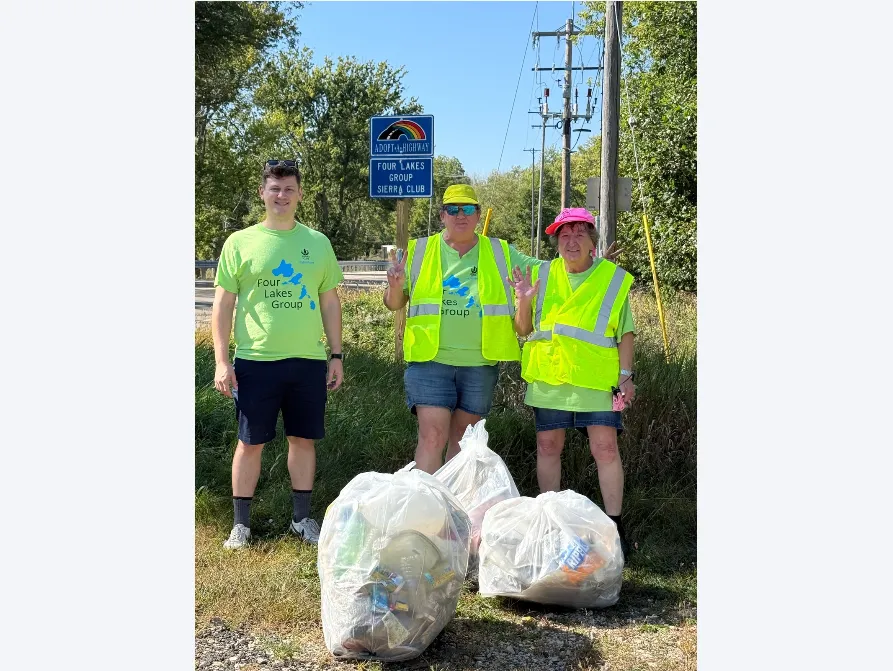
Sierra Club Groups and Teams hosted events across the state. These include outings, educational events and forums, social gatherings, and more. Volunteers attended dozens of events educating people about our work and giving them a way to take action.
Here are a few highlights:
Fox Valley Group Environmental Town Hall with Sen Dassler-Alfheim and Rep Snodgrass
The Fox Valley Group of Sierra Club hosted a legislative town hall featuring Rep. Snodgrass and Senator Dassler-Alfheim. The town hall was well attended, with 30-40 people packing the room and asking good questions about all of our legislative priorities, including transit, lands, wildlife, energy, and water.
Chippewa Valley Group Gaylord Nelson Earth Green Award Event
The Chippewa Valley Group hosted an inspiring reception and dinner and honored area environmental champion, Jane Mohler. Jane is a retired professor of Public Health, a member of the County Water Advisory Board, and the lead of the JONAH Environmental Task Force Biodiversity Policy effort. The evening will feature a short program, appetizers, beverages, and a buffet dinner.
Coulee Region Group Grant Announcements
The Coulee Region Group celebrated Earth Month by investing in the next generation of environmental leaders. Through five new environmental education grants, local schools and organizations across the La Crosse area received support for hands-on projects connecting students to nature — from school clean-ups and community science programs to Earth Week activities, native plantings, and fruit tree gardens. Alongside the group’s annual High School Environmental Stewardship Award, these grants reflect a strong commitment to environmental education, community involvement, and inspiring future conservationists.
Four Lakes Group Tabling across the region
The Four Lakes Group spent Earth Month out in the community, tabling at events and engaging people on issues ranging from data centers and climate change to wildlife protection and clean energy. Their dedication was on full display all month long — with one group leader attending six events in Earth Week alone!
Southeast Gateway Group showcases Electric Vehicles
The Southeast Gateway Group celebrated Earth Month by connecting with community members at Gateway Technical College’s Earth Day Celebration in Kenosha. The group hosted an informational table highlighting the Sierra Club’s work across the region and helped organize a Drive Electric Earth Day event and electric vehicle showcase, giving attendees a chance to learn more about clean transportation, local environmental campaigns, and ways to get involved.
Great Waters Group helps break world record
The Great Waters Group celebrated Earth Week by rolling up their sleeves for the 31st annual Milwaukee Riverkeeper Spring Cleanup along Lincoln Creek, joining thousands of volunteers working to keep local waterways clean. Group members helped clean sites alongside Nearby Nature before heading to Rock the Green, Milwaukee’s zero-waste sustainability festival, to connect with even more community members about environmental action. This year’s Riverkeeper cleanup was especially historic — more than 2,000 volunteers removed over 100,000 pounds of waste across 120 locations, setting a Guinness World Record for the largest multi-river cleanup ever held.