by Maev Douglas
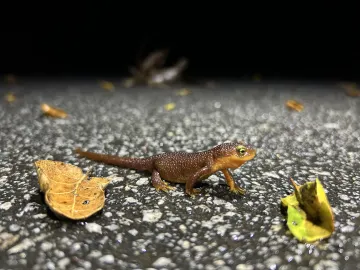
Unbeknownst to many Californians, our state is a treasure trove of amphibian biodiversity. San Luis Obispo County alone is home to a wide array of amphibians, including numerous species of salamanders and frogs. For example, SLO County supports five different species of slender salamanders (Batrachoseps), including the lesser slender salamander (Batrachoseps minor), a critically endangered species found nowhere else in the world. This is just one example of the lesser-known amphibian residents of our county. Furthermore, SLO County is well-regarded for its outdoor recreation and open space, both of which provide naturalists, outdoor enthusiasts, and nature lovers the opportunity to observe the unique and beautiful biodiversity our home has to offer. That being said, many people may never encounter some of our more elusive amphibians without first knowing how and where to look. With enough time and a keen eye, however, one might witness something that completely changes their perspective of the place they thought they knew. That is exactly what happened to me.
In early February of this year, I observed dozens of California newts (Taricha torosa) crushed by cars. California newts prefer their habitats to be in wet or moist places near slow-moving water features, such as ponds, streams, or lakes. They also inhabit terrestrial areas like surrounding woodlands, forests, grasslands, and chaparral, especially when these environments contain moist environmental features. During adulthood and the juvenile stage of the California newts’ life, they become terrestrial, migrating away from their hatching grounds, which are typically located in slow-moving bodies of water. Because of this, the newts often have to return to their watery breeding grounds between the months of November and March. Traditionally, this return of the newts to their breeding ground wouldn’t have posed a major threat to their safety as they are lacking in natural predators. But now they face a new predator: us. Cars, bikes, and other tire-based human creations pose a serious threat to the slow- moving California newt population. As they cross back over roads to return to their breeding grounds, the newts are often killed by cars and bikes, which is why I’d like to bring Cerro Alto Rd. to your attention.
Cerro Alto Rd. stems off of Highway 41, and leads into the Cerro Alto Camping grounds as well as Los Padres National Forest. This road is visited by campers and day-visitors to hike Cerro Alto Peak as well as spend time in the beautiful valley at its base. Cerro Alto is also home to Morro Creek, which happens to be a slow-moving body of water that California newts call their home and breeding ground. Because of this, during the breeding season when the California newts frequently migrate across roads between their terrestrial habitat and their aquatic one, they can be killed by cars and bikes.
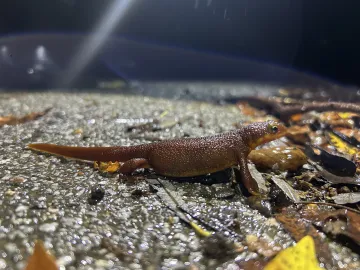
Following this discovery, I spent several months working with advocates and Cal Poly University to develop a research effort aimed at analyzing the impacts of vehicle traffic on California newts. However, the story does not end there. As part of the survey process, I visited Cerro Alto Road during and immediately after the first major rain event our county experienced in November. What I observed shifted my understanding of the issue entirely. In addition to more than a dozen California newts killed before their migratory season had fully begun, I also documented other amphibians such as arboreal salamanders (Aneides lugubris) and Monterey ensatinas (Ensatina eschscholtzii eschscholtzii) being struck by traffic.
What I initially believed to be an issue affecting only California newts revealed itself to be a broader threat impacting multiple amphibian species along this road. Despite this, I do not believe it is too late to act. Through ongoing observational research in partnership with Cal Poly University, I aim to determine the extent to which vehicular traffic on Cerro Alto Road impacts California newts and other amphibians. With this evidence, I hope to help justify conservation efforts that will protect these sensitive and ecologically important members of our community.