By Carole Mintzer
Earth Day was just four years old the first time I celebrated it in rural Michigan. I was a junior in high school and students could choose from a variety of activities, so, without any clue what it was, I joined a group and went riprapping. We spent the day tumbling rocks down a riverbank to keep the bank from eroding. I’m not sure anyone knew at the time that riprapping can cause more problems than it solves. For me, it was simply a pleasant day outdoors away from the classroom.
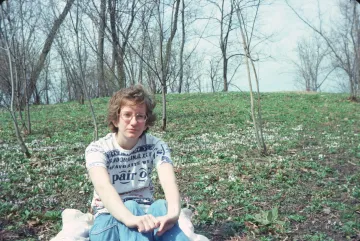
I’m not entirely sure when and how my awareness of environmental issues grew, but it was after the publication of Rachel Carson’s Silent Spring in 1962 (I read it in the 1970s) and the Population Bomb by Paul Ehrlich in 1968. Understandably, my initial concerns focused on pesticides and overpopulation, which explains a lot about why I don’t have children. Smog got my attention when I first visited southern California in 1977 to meet my future husband’s family. My eyes and nose stung from all the junk in the air. And let’s face it, the air was an incredibly ugly yellowish-brown.
It wasn’t until years later that climate change appeared on my radar. I heard about it, but the effects of it weren’t supposed to be felt during my lifetime. So what, me worry???
After my first Earth Day, the rest are a bit of a blur, but over time, environmental concerns morphed into lifestyle changes. As my husband likes to tell me about Valentine’s Day, every day is Earth Day! Our lives have been a steady progression toward more sustainable living. We started by combining errands to avoid excessive car trips, then eating less meat and using less plastic, and now driving an electric car. It’s a work in progress.
Over the years, there's been a lot of improvement - the air in southern California and other major cities is breathable. Cars use less gas and pollute less - the US started phasing out lead in gasoline in the 1970s. In the 1980s, alarm about the effects of chlorofluorocarbons (CFCs) on the ozone layer led to a worldwide ban on CFCs and recovery of the ozone layer. Solar panels, wind turbines, and batteries are cheaper and cleaner ways of producing energy than fossil fuels and have become much more prevalent.
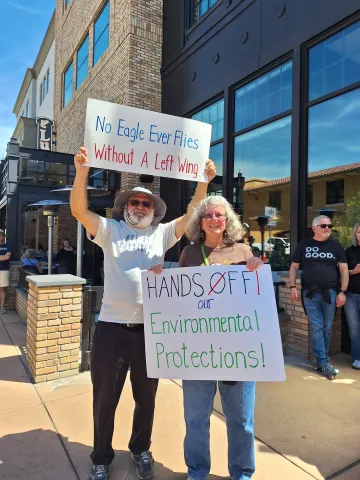
Despite the progress, it’s still hard not to get depressed about the state of our planet, especially considering all the missed opportunities. While the gas shortages in the 1970s led to lower speed limits for a while (remember 55 MPH on the freeways?), it took a long time and legislation before more fuel-efficient cars were the norm. President Jimmy Carter installed solar water heating panels on the White House in 1979 only to see them removed by President Ronald Reagan in 1986. Now we have a president who thinks climate change is a hoax and is trying to turn back the clock on renewable energy.
Facing the headwinds of climate denialism or, even worse, ambivalence, we cannot become complacent. We cannot give up. Our planet needs us. On this, the 56th Earth Day, let’s reflect on the planet that sustains our lives. Let’s take stock of how we are caring for it. Let’s recommit to educating and persuading our fellow humans to value and protect our biosphere and atmosphere for future generations. It’s the ultimate family value.