By Gianna Patchen and Andrew Christie
On February 12, the Chumash Heritage National Marine Sanctuary Advisory Council assembled in the San Luis Meeting Room at the Avila Lighthouse Suites for its first meeting.
Council members reviewed the marine sanctuary’s long-term management plan, which consists of action plans focused on issues such as climate change, offshore energy, water quality, blue economy, boundary adjustment, maritime heritage, and wildlife disturbance. This year, the advisory council’s primary focus will be on action plans for Indigenous cultural heritage, education and outreach, research and monitoring, and resource protection.
A Framework for Indigenous Collaborative Co-Stewardship will lead to the formation of an Indigenous Cultures Advisory Panel to provide for the meaningful involvement of representatives and partners from multiple local Tribes and Indigenous communities.
All the National Marine Sanctuary System’s 18 underwater parks have similar community-based advisory groups to provide advice and recommendations to each Sanctuary’s Superintendent and resource managers. CHNMS Advisory Council members and alternates represent Indigenous government, tourism and recreation, business, recreational and commercial fishing, education, research, conservation, ocean energy and telecommunications, ports and harbors, maritime activities, local government and the state of California.
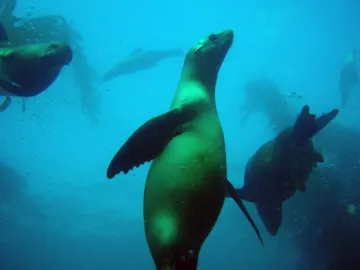
The National Oceanic and Atmospheric Administration (NOAA) announced the designation of the Chumash Heritage National Marine Sanctuary, the first Indigenous-led marine sanctuary in U.S. history, in the Federal Register on November 30, 2024. Today, on the CHNMS website, NOAA sums it up nicely: “America’s 17th national marine sanctuary…is one of the largest in the National Marine Sanctuary System. The sanctuary encompasses 4,543 square miles of Central California’s beautiful coastal and ocean waters, providing protection to nationally significant natural, cultural, and historical resources while bringing new opportunities for research, community engagement, and education and outreach activities.”
It also has considerable personal significance for the authors.
Starting in 2013, Andrew represented the Sierra Club as part of a small group that met once a month with Northern Chumash Tribal Council Chair Fred Collins in the Shell Beach home of David and Carol Georgi, who represented the local Surfrider chapter’s Marine Sanctuary Alliance. They took on the task of putting together the extremely detailed formal sanctuary nomination documents that had to pass muster with NOAA. (It took two years and two tries, and would not have been possible without the heroic work of current CHNMS Advisory Council member P.J. Webb and the contributions of former SLO County planner Karl Kempton, who wrote the County’s first marine sanctuary proposal in 1990, known as the "Proposal to Extend the Morro Bay Site Designation Candidacy.")
Andrew and SLO Surfrider Chapter President Brad Snook often accompanied Fred as he made the rounds of community organizations and local governments throughout San Luis Obispo and Santa Barbara Counties, seeking support for the marine sanctuary.
Fast forward to 2021, when Gianna was hired as a college intern at the Santa Lucia Chapter. Andrew, then Chapter Director, was her supervisor. Her job: Assist the Chumash in moving the sanctuary nomination toward designation. After she finished her internship, she went to work for the Northern Chumash Tribal Council as manager of the marine sanctuary campaign. She coordinated international outreach, testified before a state senate committee in Sacramento, and accompanied P.J. Webb and Violet Sage Walker, Fred’s daughter and his successor as Tribal Chair, to Washington, DC, to help win the support of federal legislators, agencies, and national environmental organizations. After that, and following Andrew’s retirement, the Sierra Club hired Gianna again, this time as Chapter Coordinator.
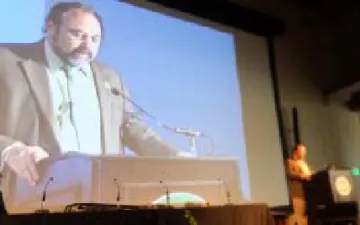
For years before and after NOAA deemed the nomination complete and qualified for designation in 2015, the Santa Lucia Chapter worked with local volunteers, circulating petitions, sending postcards and e-mail alerts, writing articles and letters to the editor, giving interviews to magazines, newspapers and radio and television outlets, tabling at local events, holding fundraisers and film screenings, going door to door to local businesses, working with documentary teams, and placing op-eds and full-page ads in the Tribune and New Times supporting designation of the marine sanctuary. Throughout the designation process, we were part of the universe of environmental groups that drove 110,000 supportive public comments submitted to the federal Register from across the country. (Fun fact: In 2015, Fred was having computer trouble on the day he submitted the nomination. After several days went by with no acknowledgement from NOAA, he realized his e-mail had malfunctioned. He called Andrew, who sent NOAA his copy, which they confirmed receiving, formally starting the designation process.)
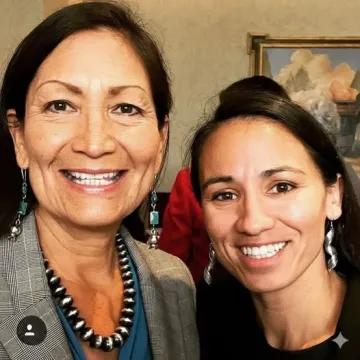
In other words, it took a village. And much of the effort expended was focused on correcting misinfor-mation and overcoming opposition, which was loud and persistent.
All our efforts produced a real-world result in November 2024, and that reality became part of life on the Central Coast on February 12, 2026, when volunteers sat down in a room in Avila Beach and began the process of guiding the future of the Chumash Heritage National Marine Sanctuary.
As they do so, we hope they will spare a thought for Fred Collins, the marine sanctuary’s nominator and primary lightning rod when it was just a spark and a hope. He was willing to go anywhere and speak to people who were often hostile to what he had to say. He climbed a mountain in a blizzard, raised a banner and planted a seed. In 2020, when the marine sanctuary nomination was set to expire at NOAA after five years of inaction, he filed the necessary formal request for renewal of the nomination as one of the final acts of his life. It was a last-minute save that made it possible for others to pick up the torch and run it over the finish line.
Godspeed and good luck, Chumash Heritage National Marine Sanctuary Advisory Council.