By Jill Stegman
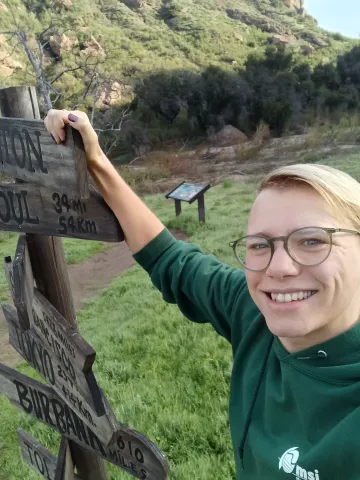
Jack DePuy can’t remember a time when they weren’t aware that the planet was in trouble. Environmental protection wasn’t a revelation that arrived in adulthood—it was a constant hum in the background of their childhood, a truth absorbed long before they had the language to articulate it. By sixteen, after learning about the environmental toll of the meat and dairy industries, they went vegan almost overnight.
In college at Portland State University, Jack stepped fully into environmental justice work, co-chairing Feminists for Environmental Justice and delivering a 2016 “Take Back the Night” address on the intertwined harms of factory farming, environmental degradation, and the mental health of agricultural workers.
Their activism deepened in Los Angeles, where they organized with Environment California on campaigns ranging from polystyrene bans to glyphosate restrictions—issues squarely at the intersection of environmental and social justice. They later co-authored a statewide database mapping environmental justice issues in California and documenting how communities advocate for themselves.
For Jack, environmental protection is not an abstract cause. “There are a thousand points of intersection between how we live and what we call ‘the environment,’” they say. “My passion comes from the fact that I live here—and so does everyone I love.”
A Childhood Wave That Never Let Go
One of Jack’s earliest and most formative memories is of being tumbled by a wave as a young child—dragged out, spun head over heels, and spit back onto the sand. It was the first time they felt utterly powerless against a force of nature. Instead of fear, they felt clarity. “I realized I could have drowned,” they recall. “And I thought, I’m going to give my life to this thing.”
That moment—salty, disorienting, and humbling—became a lifelong touchstone. It taught them to respect the power of natural systems and to recognize how deeply human lives are shaped by forces larger than ourselves.
Leadership Rooted in Listening
In their role with the Sierra Club’s Santa Lucia Chapter, Jack brings a deceptively simple but essential skill: they listen. Their master’s capstone at Scripps Institution of Oceanography—Cooperative Research for Climate Resilience—focused on how climate solutions succeed only when researchers and institutions genuinely collaborate with the communities they aim to serve.
“The strongest theme that emerged was the importance of transparency and engagement,” they explain. “Nothing should happen behind closed doors. No decisions should be made in the ivory tower alone.”
They credit Chapter Coordinator Gianna Patchen as a major influence—someone whose experience, warmth, and steadiness helped draw them deeper into the chapter’s work.
Regional Challenges, Interconnected Solutions
Asked about the most pressing environmental issue facing the Central Coast, Jack resists oversimplification. The region faces agricultural runoff, disproportionate heat impacts on communities of color, and ongoing struggles for Indigenous sovereignty and landback.
But these issues don’t exist in isolation. “Everything is deeply interconnected,” they say. “Regional challenges are often exacerbated by national and international decisions made by fossil fuel companies and governments that refuse to acknowledge the urgency of our climate situation.”
Community, Joy, and the Work Ahead
Jack is energized by local engagement and upcoming events—especially Beaver Fest on April 11, where they’ll be tabling and connecting with community members.
For members looking to deepen their involvement, their advice is simple: reach out. “We’d love to have you. We want to know what you’re interested in and how you’d like to be connected.”
Preventing burnout, they believe, starts with community. “Finding ways to have fun together matters,” they say. “Even when the work feels endless or the setbacks feel insurmountable, making change by degrees matters—and building community is how we sustain ourselves.”
A Vision for the Next Generation
Looking 10–20 years ahead, Jack hopes the environmental movement embraces boldness and interconnected thinking. “The environment is not some intangible thing,” they say. “It’s where we live, work, commute, play, grow food, and sleep.”
Their advice to future Sierra Club leaders and youth activists is both pragmatic and energizing: “Build the plane while it’s in the air. Listen to each other, take feedback, make time for conversations—but never stop moving.”