By Maev Douglas
CORRECTION: On May 5-6, 2026 the California Fish and Game Commission will accept public comment on MPA Petitions. The final vote won't be made at this meeting.
In response to climate change, global loss of biodiversity, and disappearing wilderness, the global 30x30 initiative was established. 30x30 aims to engage governments across the world in protecting 30% of Earth’s lands and oceans by 2030. This protection takes the form of designating various unique and important ecosystems as protected areas.
This 30x30 background is critical for understanding the context behind Marine Protected Areas (MPAs), one of many forms of ocean protection that contributes to the 30x30 initiative. MPAs are special areas of the ocean that are set aside for conservation. Depending on the level of protection in the four categories of MPAs, they restrict extractive activities, such as fishing, kelp harvesting, and oil and gas development. However, they do so while also allowing the public to continue recreational activities such as swimming, surfing, diving, kayaking, and other non-extractive activities.
In 2012, California established a groundbreaking network of 124 MPAs to protect the ecosystems that make California’s coast extraordinary. Doing so promoted a number of benefits such as supporting ecosystem health and biodiversity, increasing climate resilience, and replenishing ocean populations of sea life harvested for consumption as well as recreation. In addition to their environmental benefits, MPAs are also well supported by the public across California. An October 2025 poll confirms that nearly 80% of Californians strongly support Marine Protected Areas. This broad support is evident across multiple demographics, including age, gender, race, ethnicity, and political leaning. Additionally, more than two-thirds of California voters support adding new MPAs to the state’s network.
Every 10 years, California assesses its MPAs and the surrounding network for effectiveness. The California Fish and Game Commission, which is tasked with the approval of MPA petitions, votes to change, add, or remove regulations within California’s MPA network. The public also plays an important role in this designation. By showing support or disapproval for MPA petitions, the public can make their voices heard by the Fish and Game Commission to persuade them to support or deny particular MPA petitions.
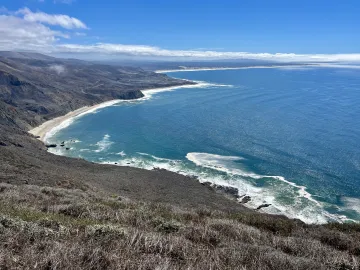
With that, I want to introduce you to the Point Sal State Marine Conservation Area (SMCA) petition. The proposed Point Sal SMCA (which is a type of MPA), located near Guadalupe, has a great deal of historical and cultural significance, in addition to its ecological importance. Starting with the historical background, Point Sal is part of the ancestral territory of the Chumash people. The proposal itself is co-sponsored by the Northern Chumash Tribal Council, and seeks to enhance Tribal co-stewardship. As for its ecological significance, Point Sal supports a diverse ocean ecosystem, including kelp beds, rocky reefs, tide pools, sandy beaches, a migratory whale corridor, a critical larval retention zone, and a seabird and sea lion rookery. Furthermore, Point Sal is an important area for baby fish and invertebrates in their earliest phase of life. Protecting it would help maintain these populations and boost ecosystem health.
The California Fish and Game Commission will accept public comment on MPA Petitions in San Luis Obispo County, Santa Barbara County, and the Northern Channel Islands between May 5-6, 2026. Before then, it is crucial to voice our support for the Point Sal SMCA. To show support, you can submit a public comment to the Fish and Game Commission by April 30th at fgc@fgc.ca.gov to ensure they hear our voices before the meeting on May 5th! Some potential talking points include expressing support for conserving critical habitats, biodiversity, ocean health, climate resilience, ecological connectivity, honoring Chumash Peoples’ stewardship, protecting recreation, and more. Regardless of what makes Point Sal important for you, the most important part is to tell the Fish and Game Commission why it matters!
Learn more at the Chapter's General Meeting on Wednesday, March 18. Sign up here.