By Ranel Porter, Santa Lucia Chapter Chair
Many of us first found our way to environmental work through a love of the natural world. It might have been a favorite trail, a stretch of coastline, a stand of oaks, a bird we learned to recognize by its call, or a wildflower we looked forward to seeing each spring. For some of us, that love began early. For others, it grew over time. However we arrived here, we share a deep concern for the living world around us.
That concern is at the heart of the Sierra Club Santa Lucia Chapter’s work.
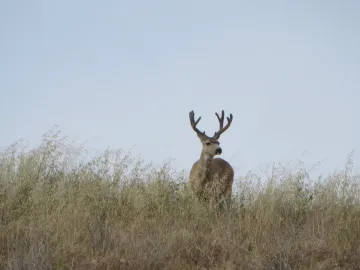
Wildlife protection is not a separate issue from climate action, conservation, land use, water policy, or environmental justice. It is woven through all of them. The choices we make about energy, development, transportation, habitat protection, and public lands all affect whether plants, animals, and human communities can survive and thrive in the years ahead.
That is why efforts like California’s 30x30 initiative matter. The goal of conserving 30 percent of our lands and coastal waters by 2030 is not just an abstract policy target. It is a recognition that habitat loss, climate change, and biodiversity decline are connected crises. Protecting land and water at that scale gives wildlife room to move, adapt, reproduce, and survive. It also protects the ecosystems that clean our air, filter our water, store carbon, and sustain life.
Here on the Central Coast, we are fortunate to live among places that remind us what is at stake: coastal dunes, oak woodlands, chaparral, creeks, grasslands, wetlands, and rare plant communities found almost nowhere else. These places are beautiful, but they are also vulnerable. Development pressure, pollution, invasive species, drought, wildfire, and a changing climate all put stress on the systems that wildlife depends on.
This is where the work of local volunteers becomes so important.
This is one of the reasons I am so grateful that this issue of the Santa Lucian includes a profile of longtime Santa Lucia Chapter activist and volunteer Lindi Doud. People like Lindi have spent years showing what it means to stay committed to the long, patient work of conservation. Her dedication to the Santa Lucia Chapter and to local environmental protection reflects the best of Sierra Club: showing up, learning the landscape, building relationships, speaking up, and continuing the work even when the victories are slow or incomplete.
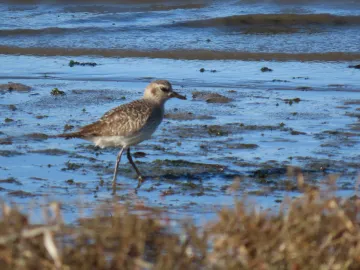
That kind of commitment matters because protecting wildlife is rarely simple. It is not just about loving animals or opposing development or supporting clean energy. It is about understanding that every decision has consequences, and that the natural world needs advocates who are willing to pay attention to the details.
As Sierra Club members, we have to hold two truths at once: climate action is urgent, and harm to wildlife, habitat, or frontline communities still matters.
A project is not automatically right simply because it is labeled clean energy. We still have to ask where it will be built, what habitat may be affected, what species may be placed at risk, and whether there are better alternatives. Can already-disturbed lands be used first? Can rooftops, parking lots, canals, brownfields, or other developed areas carry more of the burden? Can impacts be reduced, monitored, and mitigated? Are communities being consulted early and honestly? Are we protecting the places that most need protection?
At the same time, delay and inaction have consequences, too. Remaining dependent on coal, oil, and gas is not a harmless default. Fossil fuels pollute our air and water, accelerate climate change, destroy habitat, and harm countless living beings, including people. The climate crisis is already changing migration patterns, drying wetlands, heating streams, increasing wildfire risk, stressing forests, and pushing species beyond the conditions they evolved to survive.
So the answer cannot be to choose between climate action and wildlife protection. We need both.
The harder and more honest work is to move away from fossil fuels while demanding clean energy projects that are better sited, better designed, and more protective of ecosystems and communities. We need urgency, but not recklessness. We need caution, but not paralysis. We need solutions that meet the scale of the climate crisis while staying faithful to the living world we are trying to protect.
This is one reason Sierra Club’s work matters so much. Our role is not always to give a simple yes or no. Sometimes our role is to ask better questions. Sometimes it is to insist on stronger protections. Sometimes it is to support a needed transition while pushing that transition to be more just, more careful, and more ecologically responsible.

That work requires people who can see the whole picture. It requires people who care about a bird, a bat, a manzanita, a creek, a neighborhood, and the climate system they all depend on. It requires people who understand that protecting wildlife is not sentimental. It is practical, moral, and necessary.
The future we are working toward is not only one with cleaner energy. It is one with living rivers, connected habitats, healthy coastlines, resilient communities, and room for wild things to survive.
That is the promise of conservation. That is the urgency of climate action. And that is why we keep showing up.