By Vicki Hoover, Co-chair, California 30x30 Task Force
(See Jennifer Bauer's local update below)
California’s 30x30 program, launched in 2020 by Governor Newsom’s Executive Order N-82-20, aims to conserve 30 percent of California’s lands and coastal waters by 2030.
This focus on protecting nature and keeping more lands natural and undeveloped will help combat climate change effects and the biodiversity crisis. Natural lands can sequester vast amounts of carbon and provide the best wildlife habitat to avoid species extinctions.
But these lands offer the best habitat only if they are connected to other protected lands. If a park and a wilderness area are separate and isolated from each other—a protected wildlife corridor connecting them can greatly boost their habitat value.
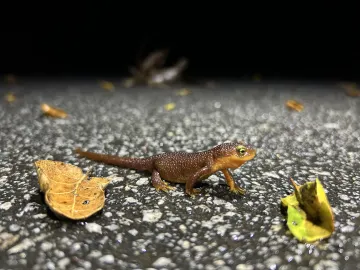
Therefore, the 30x30 program has put a strong emphasis on wildlife corridors and highway crossings that let creatures like deer, foxes, or even tiny salamanders, cross roads safely. Sierra Club supports a bill in the current state legislature, SB 1250, by Senator Dave Cortese, (District 15-Santa Clara County) that would support efforts to build wildlife crossings over highways. As Senator Cortese puts it:
“Every year across California, thousands of drivers experience dangerous wildlife-vehicle collisions on highways and local roadways. More than 7,000 wildlife-vehicle collisions are reported annually in California involving deer and other large animals—creating serious safety risks and costly damage for motorists.
“That is why I introduced Senate Bill 1250 to prioritize roadway safety. SB 1250 will help reduce wildlife-vehicle collisions by integrating wildlife crossings into highway planning and infrastructure improvements throughout California. By creating safer pathways for animals to cross roads and highways, we can better protect drivers, preserve wildlife habitats, and improve roadway safety for everyone.”
SB 1250 has been approved by the Senate and is now referred to the Assembly for further consideration. Tell Assemblymembers Dawn Addis and Gregg Hart to vote YES on SB 1250. Not sure who your representative is? Find your representative here.
Wildlife Corridors in Congress
California is not the only state to care about wildlife corridors. A Virginia Congressman, Don Beyer, (D-VA8) has several times introduced bills to give this country a national System of Wildlife Corridors, similar to our System of National Parks or our National Wilderness System. Starting in the 116th Congress, his initial bill, HR 2795, for which Sierra Club lobbied, went nowhere, and subsequent bills also saw no action.
This year on Earth Day, April 22, Beyer, along with Reps. Vern Buchanan (R-FL16), Zoe Lofgren (D-CA18), and Brian Fitzpatrick (R-PA1) introduced a bipartisan bill, HR 8438, the Wildlife Corridors and Habitat Connectivity Act. This legislation would support planning for and identification of natural species migration patterns to improve safe, free movement between habitats by establishing a National Wildlife Corridor System.
This is very much a 30x30 effort!
In the backward Congress we have now, this bill has no chance of passage. However, it is important to let our members of Congress know we strongly support this bill and its vital connectivity concept. If enough members of Congress keep on hearing about this, we can more easily advance this later. Urge them to support HR 8438—because it would protect and restore the pathways animals need to survive, while investing in wildlife crossings and habitat restoration. Contact your member of Congress through his or her website or call via the Capitol switchboard at (202)224-3121 to be connected directly to your Representative’s office.
Santa Lucia Chapter 30x30 update
By Jennifer Bauer, 30x30 Co-lead for the Santa Lucia Chapter
There is exciting news to share about California’s 30x30 initiative. California has successfully secured long-term environmental protections for 26.1% of its land and 21.9% of its coastal waters. According to the CA Pathway to 30x30 2025 Annual Progress Report, this year the state added 853,000 acres of conserved lands and 191,000 acres of protected coastal waters - an area equivalent in size to Glacier National Park.
Our chapter continues to work at a local level to bolster the 30x30 key objectives: to protect and restore biodiversity, expand access to nature, and mitigate and build resilience to climate change. Our key local 30x30 conservation priorities are:
- Rehabilitate the Oceano Dunes State Vehicular Recreation Area
- Preserve Diablo Canyon Lands
- Support the Point Sal MPA Nomination Proposal
- Support the passage of the Central Coast Heritage Protection Act - this act would designate nearly 250,000 acres of public land in the Los Padres National Forest and Carrizo Plain National Monument as wilderness, the highest form of federal protection available.
- Advocate for an increase in the boundaries of the Chumash Heritage National Marine Sanctuary - to match the initial 2015 proposal.
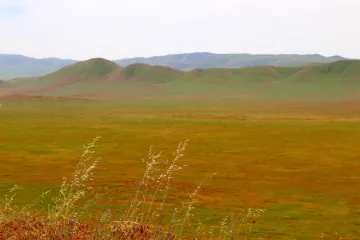
Jennifer Bauer and Lindi Doud, chapter representatives to the 30x30 Task Force, have been visiting our local conservation priority areas to get a hands-on perspective of these special places. In March, they visited the Carrizo Plain National Monument. Often called “California’s Serengeti,” the monument is the state’s largest remaining native grassland, a biodiversity stronghold, and home to sacred Native American cultural sites.
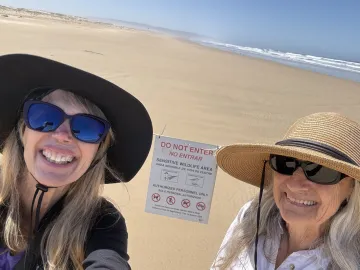
In May, they visited the Oceano Dunes State Vehicular Recreation Area. The park had been temporarily closed to cars in the area south of the Arroyo Grande Creek due to a federal court order that State Parks was violating the Endangered Species Act and harming the Western Snowy Plover. Lindi and Jennifer enjoyed the serenity of the beach without the noise of loud cars and the smell of exhaust. Unfortunately, State Parks reopened the beach to cars, camping, and OHV use on May 21st. Stay tuned for information on next steps for removing or limiting car use on this beautiful stretch of beach.
How can you be a 30X30 warrior?
- Do you have an interest in a particular local 30x30 priority area that you would like to work on?
- Do you want to be on an email list to write comment letters, letters to the editor, and/or to our local representatives on our priorities on an as-needed basis?
- Do you want to attend our key partner Power In Nature monthly meetings (the 4th Monday of the month at 3:00 pm on Zoom) and report back to the Conservation Committee?
If you’d like to get involved or have questions, contact Jennifer Bauer or Lindi Doud, Santa Lucia Chapter 30x30 co-leads, at slojen10@gmail.com or lindidoud@gmail.com.