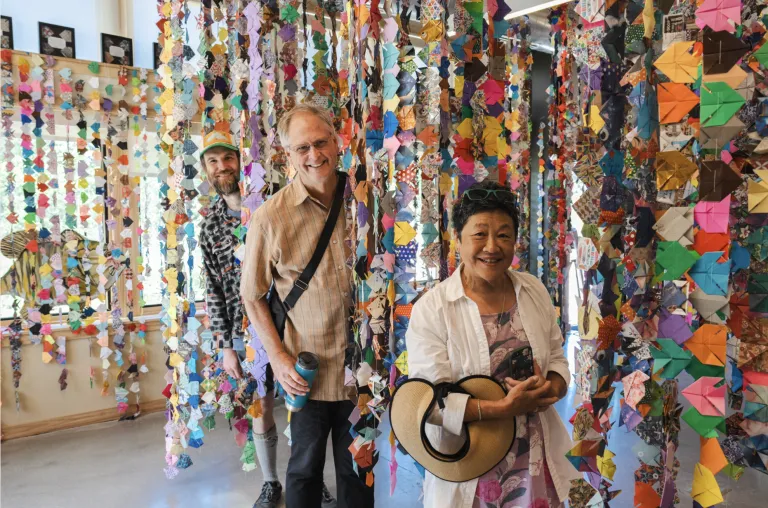
The environmental movement has a new world record—and it's not what you might expect. Last weekend, the "Fish for the Future" campaign officially broke the world record for the largest display of origami fish, collecting an astounding 86,262 paper swimmers from participants across the globe. But this isn't just a story about paper folding. It's a powerful demonstration of how joy, creativity, and community can drive meaningful environmental action.
Why This Matters: Beyond the Numbers
In our current political climate, environmental advocates often struggle with how to engage people who might tune out traditional messaging. The Fish for the Future campaign offers a compelling answer: meet people where they are, with activities that bring joy rather than fear. When 15,596 middle schoolers in Madison fold fish in science class, when scout groups and religious congregations across all 50 states participate, when families gather around kitchen tables to create art for a cause—that's the kind of broad-based movement that creates lasting change.
The target wasn't arbitrary. Each fish represented a voice calling on Michigan Governor Whitmer to deny permits for the Line 5 oil pipeline through the Straits of Mackinac. The previous world record of 18,303 fish, set in Japan, was within striking distance when Sierra Club chapters began mobilizing at our national gathering in Lebanon this spring. But the final count of 86,202 fish exceeded everyone's expectations.
A personal connection
I love celebrating our work here in Tennessee, but I'm excited to take a moment to share the story of my fellow midwesterner's joyous environmental action that brought national attention to protect the Great Lakes—waters that were and still are such a huge part of my life. When Sierra Club met in Lebanon in late April, Wisconsin Chapter Director Elizabeth Ward set up a fish folding station with the goal of getting all states and chapters involved in their mission.
I am no stranger to paper folding—during the early days of the pandemic my close friends and our children held a virtual paper plane contest with entries across the nation. Any time we can turn a dollar bill into a ring, create a newspaper boat or pirate hat, it's a great time to spend with my kids. But I'll admit, these fish were challenging. I'm grateful to Elizabeth for patiently guiding me through the process. I'm happy to say there are a number of Tennessee fish being displayed around the Great Lakes right now, with some touring the midwest and coming to my home state of Michigan to bring attention to the 15th anniversary of the Enbridge oil spill on the Kalamazoo River.
Interestingly, our members Sue and Keith Havens, who were affected by that spill, are now being affected by another pipeline after their move to Tennessee. Their story reminds us that environmental threats don't respect state boundaries—what affects the Great Lakes today could affect Tennessee tomorrow.
The Power of Creative Activism
This campaign demonstrates something crucial for environmental organizing: people like to have fun. Kids like to make things (adults too). And I for one love to walk into a space that has been taken over by art. For the most part, we are not going to win converts to our movement by preaching the environmental version of the Rapture.
In a world where we could easily stay focussed on negativity and anxiety around all of the horrible things happening, this is a story of community, creativity, and joy. So many people came together to bring attention to a critical issue through an activity that brought families together, engaged school children, and created something beautiful.
The Fish for the Future campaign included participants from religious organizations, scout groups, climate action organizations, and schools. Fish arrived from all 50 states, Washington D.C., Puerto Rico, Canada, and Mexico. When environmental action can cross political, geographical, and cultural boundaries like this, it suggests a model worth replicating.
What We Can Learn in Tennessee
As we face our own environmental challenges here in Tennessee—from water quality issues to solid waste management—the Fish for the Future campaign offers valuable lessons. Creative, joyful activism can engage people who might otherwise avoid environmental issues. When we make participation accessible and fun, we build the broad coalitions needed for lasting change.
Speaking of joyful action, we have our own opportunity to spread positivity right here in Tennessee. The Outdoors Alliance for Kids is collecting videos to thank the rangers and park staff who make outdoor experiences possible for kids across our state parks, national forests, and local green spaces. It's another example of how we can celebrate the people doing good work while building support for the programs and places we care about. If you're planning to visit any of Tennessee's beautiful parks this summer, consider recording a quick video with your kids or grandkids sharing what they love about these spaces and thanking the people who protect them.
The campaign also demonstrates the power of connecting local action to larger narratives. Those origami fish weren't just craft projects—they were voices calling for protection of irreplaceable natural resources. If you've never been to northern Michigan, it's just an incredibly unique place and a national treasure. Mackinac Island was where my family biked together (no cars allowed), my band played a monthly residency over multiple years, and the home of the famous Grand Hotel was where I learned to foxtrot with other awkward 7th graders on a class field trip.
This is the story that joyful Sierra Club needs right now. As far as the rest of the story (for Paul Harvey fans), I'll let the folks from Fish for the Future share their own story in words and beautiful pictures.
The Fish for the Future campaign was organized by Sierra Club Wisconsin, Michigan Climate Action Network, 350 Wisconsin, Clean Water Action, Earthjustice, and other partners. The display debuted at Milwaukee's Urban Ecology Center and continues to tour the Great Lakes region.
FOR IMMEDIATE RELEASE
Date: July 14, 2025
Contact: Megan Wittman, megan.wittman@sierraclub.org
Participants from Across the Globe Set a New World Record in Effort to Protect the Great Lakes and Stop Line 5
“Fish for the Future” has officially broken the world record for largest display of origami fish
MILWAUKEE, Wis. – In a massive collective effort to protect the Great Lakes and shut down Line 5, organizations and participants part of the Fish for the Future campaign broke the world record for the largest display of origami fish. The campaign collected a total of 86,262 fish. The collection debuted at the Urban Ecology Center this weekend.
Participants across the world mailed origami fish in thousands of fish to promote protecting our water and shutting down the Line 5 pipeline. The world record for largest display of origami fish was previously set at 18,303 origami fish by a group in Japan.
At the world record-breaking announcement, participants took action and contacted Governor Whitmer’s office to ask her to deny permits for the Line 5 tunnel in the Straits of Mackinac.
The new world record of 86,262 paper fish include:
Fish from all 50 states as well as Washington D.C., Puerto Rico, Canada, and Mexico
15,596 fish made by an Akira Toki Middle School science class in Madison, Wisconsin
Fish from over 70 groups across the Great Lakes region, including religious organizations and congregations, schools, scout groups, climate action organizations, and more
Couldn’t make the event? Check out the full photo gallery from this weekend.
Fish for the Future members released the following statements:
Elizabeth Ward, Chapter Director at Sierra Club Wisconsin: “We have been blown away by the support and enthusiasm for this project. People from across the world folded fish to be a part of this world record to protect our water and shut down Line 5. Line 5 continues to trespass on Tribal land and jeopardize the safety of our water, farmland, and natural landscapes. We’re proud to be a part of this project and take action with the thousands of participants who folded fish for this new world record.”
Erica Bouldin, Engagement Coordinator at Michigan Climate Action Network: “At a time of increasing division, the Fish for the Future campaign showed that no matter where you live, we all have a common need for clean water. Each unique fish that poured in from across the country was a reminder that advocacy can show up in many forms, and that we can have a little fun while making a big difference toward shutting down Line 5 once and for all.”
Annie Carrell, Healthy Climate Wisconsin member and nurse practitioner: “As a health professional, I oppose the Line 5 pipeline because it endangers the health of our communities—threatening clean water, increasing pollution, and exacerbating the climate crisis. We must prioritize long-term public health and environmental justice over short-term fossil fuel interests.”
Britnie Remer at 350 Wisconsin: “When 'Fish for the Future' launched, we knew it was going to take monumental effort–witnessing it has been nothing short of amazing. The collective action of thousands of people who all believe in a future where water is safe, clean, and protected, has been a shining example of what is possible when we come together. This immense accomplishment sends a clear message: Protecting the water now, and for generations to come, matters more than risky oil pipelines like Line 5.”
Debbie Chizewer, Managing Attorney for Earthjustice: “These folded fish are more than just scraps of paper. They are the voices of tens of thousands of people from all walks of life, joined together in defense of clean water and our shared future in the Great Lakes. It is time for leaders in Wisconsin and Michigan to listen to their constituents, stand up to foreign corporate pressure, and finally decommission the dangerous Line 5 pipeline.”
Jennifer Schlicht, Clean Water Action: “It was wonderful to see people across the country coming together to break this record. Our final fish were folded on Mackinac Island, beside the Straits that Line 5 crosses. As we approach the 15th anniversary of the Kalamazoo Oil Spill, this only reinforced how important it is to protect our freshwater future from Enbridge's dangerous Line 5. Unlike fossil fuels, our Great Lakes are a wonderful, irreplaceable resource.”