Around 1:00AM on Thursday, September 4th, the Texas Senate officially declared “Sine Die” - about an hour after the House had done the same. The Governor had put 18 issues on the call for the Second Special session, and added a few others along the way. In the end, many issues were left for either the 2027 Regular Session, or an additional special session should he choose to call another one.
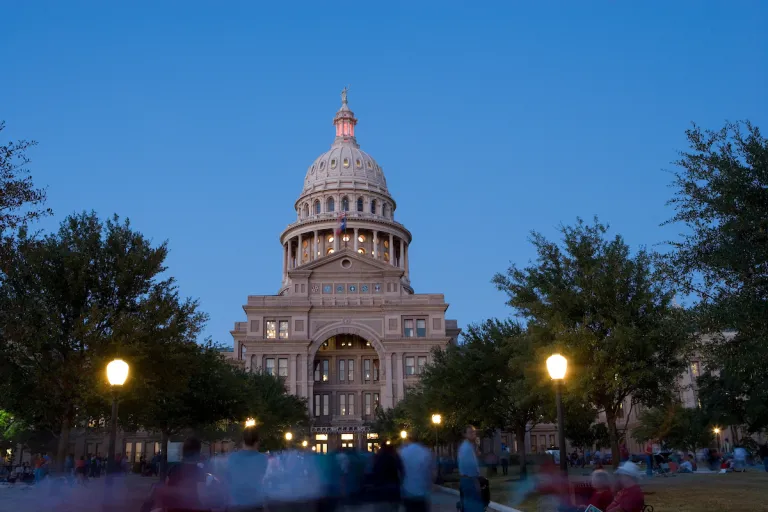
First, the Legislature prioritized gerrymandered, politically-fueled, and partisan Congressional maps that could flip the number of Republican congressional seats by five. Once the Democrats in the House returned from breaking quorum, there was little doubt that HB 4 would pass. They also passed some partisan bills related to gender, abortion, and expanded powers for the Attorney General.
They succeeded in making it more difficult to register to vote, and substantially increased the penalties and consequences for legislators who break quorum without an excused absence. A few other partisan issues, however, did not advance, including an effort by the Senate to ban THC, and, by extension, hemp production, an effort to lower property taxes even more than during the regular session, and an effort passed by the Senate but not by the House to ban political subdivisions like cities from hiring lobbyists.
On flood protection and response - the only legitimate reason for calling a special session - disagreements between the House and Senate unfortunately prevented some good bills from passing. You can read more about the specific pieces of legislation in our previous blog.
First, HB 3 - which would have created the Interoperability Council and provided grants to local governments to better communicate during disasters of any type, failed to even get a hearing in the Senate, and funding in the main appropriations bill - SB 5 - was stripped out in the final version.
Similarly, SB 2 - the main disaster preparedness and emergency response bill - did pass the Senate and House, but disagreements between the two chambers meant the bill never received final passage, as those disagreements weren’t ironed out. Still, the Legislature did pass two good bills on camp safety - HB 1 by Rep. Darby and SB 1 by Sen. Perry - which include important provisions to keep children out of harm’s way, and expand the powers of the Department of Health Safety to regulate camps and campgrounds. SB 3 passed - which provides a program and funding for early warning systems, while SB 5 includes $200 million for matching funds for flood and disaster relief, $50 million for the early warning systems, $28 million for improved hydrological and meteorological stations to better predict extreme weather, and money to implement the camp safety regulations.
Finally, in a bit of good news, both chambers approved a resolution to continue to investigate floods and flood relief. First the House created a five-member “general investigating committee on disaster response,” while the Senate created a five-member “General Investigating Committee on the July 2025 Flooding Events.” The members are expected to be announced soon and we can expect hearings over the interim.
Still, as HB 3 author Ken King noted on the House floor late Wednesday night, “Why is it that the legislature can find $300 million for Mathew McConaughey but not $50 million to protect our citizens during disasters?”
To be clear, the money to which King is referring does not go directly to McConaughey, but to the Governor’s office to provide grants to attract movie making to Texas. Still, the point is valid. While the total given to the film grants program was around $250 million, the Legislature also chose to give another $2.5 billion to gas power plant developers, $470 million to future nuclear power plant development, and $300 million to the Space Exploration and Aeronautics Research Fund to space companies (think SpaceX). Time and time again, the Texas Legislature favors corporations over protections for people.
It is quite possible that given the failure of SB 2 and HB 3 to be approved that the Governor could call another special session, or alternatively look to the new investigative committees to do some work and expand the issues that are addressed through legislation. The Sierra Club will remain engaged and continue to argue that we need to proactively address floods and extreme weather disasters. The climate crisis is here, and we cannot continue to allow our leaders to prioritize performative politics and polluting corporations over the safety of our communities.
Join the fight.