There are three big things you should know about if you lost track of what’s going on at the Texas Capitol:
- Electric utilities got what they want and are overcharging you again.
- Efforts to stop renewable energy were beaten.
- How to hold them accountable.
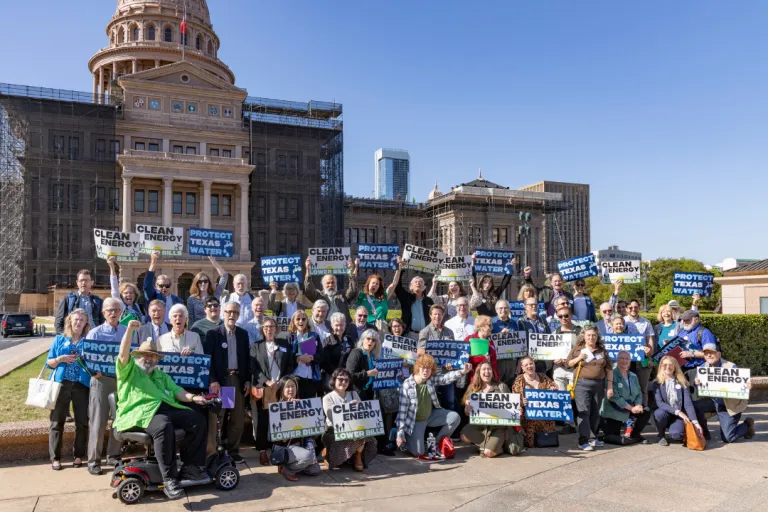
Electric utilities got what they want and are overcharging you again.
The Sierra Club has been working to address two connected problems: rising utility bills and the polluting practices of electric utility companies that drive them up. The bottom line is that, during the 2025 state legislative session, big utilities got exactly what they wanted, and what they wanted was to overcharge you, their customers, and get a handsome bonus for it (also paid by you).
Before we get to the Texas Legislature, we should share some facts about electric bills. According to data from the Energy Information Administration, electric rates are going up, with the average price per kilowatt used rising from 11.77 cents per kilowatt hour in September of 2020 to 15.36 cents per kilowatt hour this past summer. Of course, rates don’t equal bills, but generally, we pay more during the Summer and Winter because we use more electricity to cool or warm our homes. However, costs are still rising on top of that because of a variety of extra costs imposed on us, including some costs related to Winter Storm Uri, more reliability services, increases in the cost of gas, and more costs charged by transmission and distribution utilities.
To make ends meet, many Texas families use less electricity (energy conservation), which can be difficult if you’re trying to keep your home comfortable. Texas utilities could help with programs that help people weatherize their homes and make them more energy efficient. Some do, but the programs are pretty small relative to what utilities do in other states.
During the 2025 Regular Legislative Session, the Sierra Club pushed hard to pass bills that would increase the goal for utilities to invest more in these types of energy saving programs that would lower electric bills (which would also lower the need to run polluting power plants more often).
Utilities fought against them. They have actually fought against increasing investments in energy savings programs for many years, because their investors profit more if you use more electricity - whether it’s wasted energy through leaky windows or poor insulation or not.
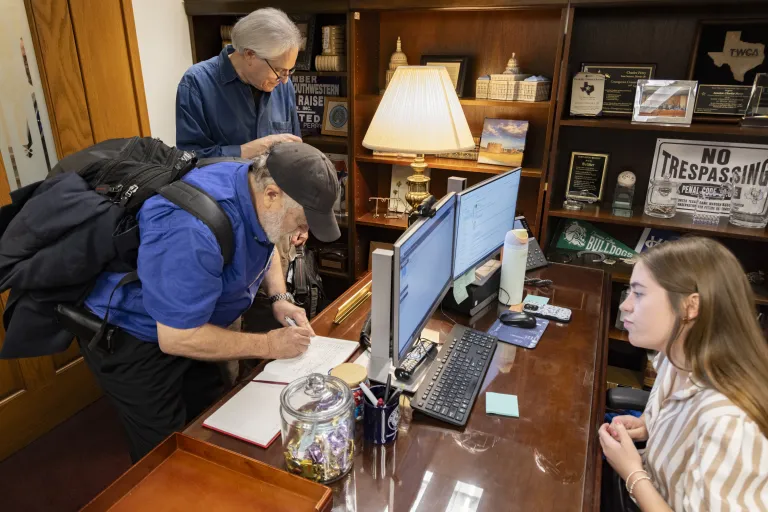
Their handiwork is hard to see because they often work behind the scenes at the Texas Capitol. Their lobbyists visit offices and persuade legislators not to push good energy efficiency bills. Sierra Club staff and volunteers (including constituents of these legislators) visit these offices, too, but the influence these wealthy companies have on our elected officials is significant.
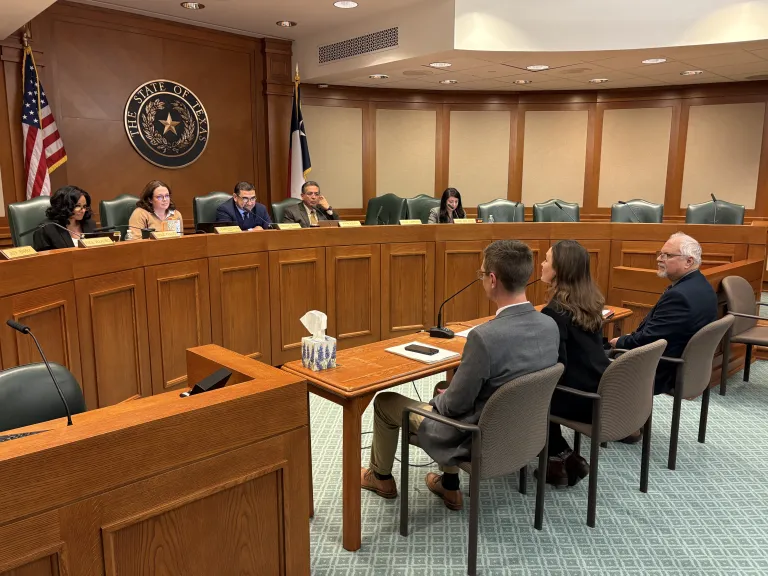
What passed, what didn't
SB 1915 (Eckhardt) - This was a bill that would have raised the statewide goal for energy savings programs that are run through utilities like Oncor, Centerpoint, and AEP Texas. It would have quadrupled the size of the programs, and finally jumpstarted the strategies that lower people’s electricity bills. It did not even get a hearing in committee.
SB 2994 (Johnson) - A much weaker version of SB 1915. The bill was actually the result of input from the utilities themselves, but in a spirit of compromise, the Sierra Club worked with Johnson’s office to strengthen the bill through the process. The Sierra Club was cautious about its passage because of concern it would lock-in very weak goals, preventing future efforts to expand energy savings, but we did work to improve the bill as it passed the Senate and important improvements were added to the bill. In the end, it didn’t matter because utility special interests stopped the bill in the House. In particular, utilities fought against efforts to limit their bonuses - or incentives they could achieve for exceeding modest goals.
HB 5323 (King, K) - This bill doesn’t do much to address high electricity bills, but it is a positive step. It creates the Texas Energy Waste Advisory Committee, whose objective will be to ensure that the various state agencies that have regulatory or financial programs that help reduce energy waste can collaborate and work with other stakeholders to expand access and use of energy waste reduction programs. Its success could be explained by it having minimal requirements, no fiscal note, and a Republican carrying the bill. Still, it’s an important step in bringing attention to energy waste and programs to reduce energy waste.
SB 783 (Menendez, J) - This bill is an important step forward because after years of inaction, it directs the State Energy Conservation Office to review the latest energy codes for new building construction developed by the International Code Council. Texas is currently on the 2015 version of the energy codes, but now it can update state minimum to the 2024 codes which will help reduce energy use and promote better technology. Because the legislation does not impact any current leaky homes or buildings it doesn’t actually help today, but it will in the future.
Of course, there are many other bills we could highlight, but these four paint the picture: electric utilities control the legislature when it comes to doing anything about high utility bills.
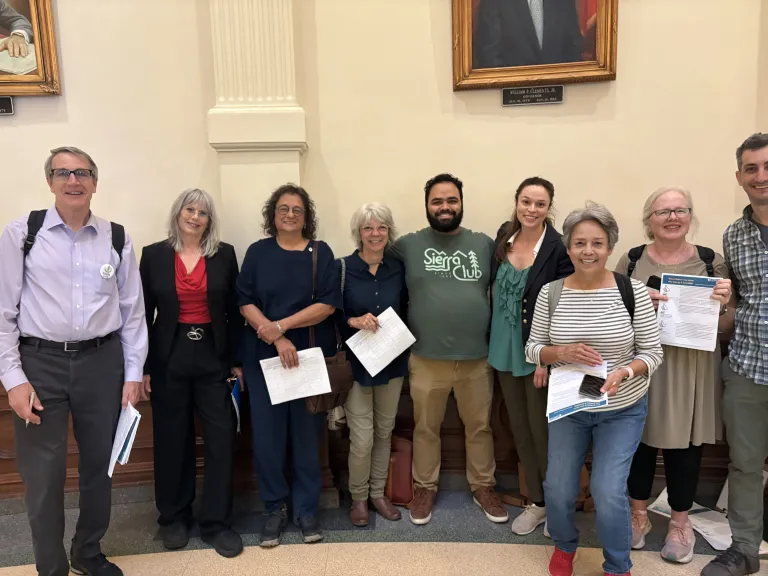
What happens now that the Legislature is done until 2027?
Utilities are headed back to the Public Utility Commission of Texas (PUCT), where not as many Texans show up to address the high bills they have to pay. There are rulemaking processes that could further entrench their profit-over-people motives. In fact, there is a current rulemaking underway to examine the same energy savings programs we sought to increase through legislation. Read more here if you want a deeper dive.
The chances of positive change happening through the PUCT, however, are minimal because the commissioners are appointed by Gov. Greg Abbott - who is just as beholden to utility special interests as most legislators. The Commissioners have not indicated they are willing to change policies for years, despite our continued efforts to raise these issues with commissioners..
Despite this, the Sierra Club will be there, shining a light on the process, pushing for change, and keeping receipts.
Efforts to stop renewable energy were beaten
It’s no secret that wind and solar energy in Texas are thriving. These renewable energy resources have delivered pollution-free electricity to millions of Texas homes for years, and done so at an affordable cost to we who pay the bills. Right now, there is approximately 40,000 MW of wind and 32,000 MW of solar online, and Texas set a record on June 21, 2025 when more than 47,000 MW of renewable energy were being used at one time. In fact, at one point back in March, renewables were providing 75% of the total energy needs due to sunny conditions and high winds. Battery storage is also setting new records and there is more in development despite federal rollbacks on clean energy incentives.
The perception of renewable energy at the Texas Legislature, however, has been skewed by fossil fuel special interests. This year’s regular session had more of the same. There were bills to add more bureaucratic red tape to solar and wind projects, bills to ban offshore wind, and even bills to add costs to projects that were already online delivering low-cost no-pollution energy to our homes.
It’s worth highlighting a few here:
SB 388 (King, P) - an anti-market energy bill that would have required that at least 50% of all new electric power supply in Texas be “dispatchable” going forward. It also, inexplicably, declared energy storage ineligible despite it being very dispatchable. The bill would have undermined our all-of-the-above energy market by giving a backdoor incentive to construct more gas power plants, even though it would increase our energy bills. With major investments in Texas largely consisting today of storage and solar, which are cheaper and faster to build than gas, the bill would have severely impacted reliability and affordability, and led to higher levels of pollution. SB 388 passed the Senate but did not move in the House.
SB 819 (Kolkhorst) - a draconian attempt to add extra regulations and costs to solar and wind energy. For example, the bill would have created setback (i.e. location) requirements which would have severely restricted wind development, while also creating new financial requirements and a requirement to get a permit from the Public Utility Commission of Texas before operating, essentially giving the state a veto power over wind and solar development that it does not have for other forms of electric generation. SB 819 would have placed a chilling effect on future development and undermined renewable energy growth. SB 819 suffered the same fate as SB 388. Once passed in the Senate, it did not move in the House.
SB 383 (Middleton) - a simple, but destructive, bill that would have banned offshore wind in Texas by saying that offshore wind can’t be built in state waters, and the PUCT cannot approve any transmission lines that go through state waters, essentially undermining any efforts to build offshore wind either in state or federal waters. While the development of Gulf Coast offshore wind is still many years away, banning an energy resource in statute with our growing electricity needs is bad public policy. SB 383 passed the Senate and passed out of the House State Affairs Committee, but did not make it to the House floor for a full vote.
Who are the defenders of renewable energy at the Texas Capitol?
We’d like to take a moment to acknowledge and thank a few who stood up, spent some political capital of their own, and helped stop these bad ideas from heading to the Governor’s desk.
Thank you, Rep. Todd Hunter (District 32)

There are several issues we disagree with Rep. Hunter on, and will not overlook his votes on things like the partisan gerrymandering of Congressional districts. But we must acknowledge his role in stopping anti-renewable legislation using his power as Chair of the House Calendars Committee - a committee that is in charge of putting legislation that has passed through committee on the House floor for consideration.
Thank you, Rep. Drew Darby (District 72)
While we were not always aligned with Rep. Darby, including his authorship of HB 49 which provided liability protections to oil and gas producers on fracked wastewater, Darby played a key role on the House Committee on State Affairs stopping many of the worst bills that passed the Senate by being a Republican who supported renewable development. Rep. Darby also helped improve the one bill on renewable siting that did pass related to wind projects along the coast.
Thank you, Rep. Ana Hernandez (District 143)

Thank you for continuing to advocate for our need to grow renewable energy to meet our energy needs. Hernandez was a consistent “no” vote on anti-renewable bills in the State Affairs Committee, and also sponsored important bills on building codes and low-income payment assistance programs.
How to hold them accountable
Texans deserve representatives that work for the people - not profit-driven corporations. The 2025 Legislative Session made one thing very clear: too many elected officials listen to lobbyists over their constituents when it comes to lowering energy bills and investing in clean, affordable power. But we also saw that persistent, informed public pressure works - bad bills can be stopped, and change can start with Texans demanding better.
That’s why the Sierra Club Lone Star Chapter will soon release our 2025 Legislative Scorecard, breaking down how state legislators voted on energy, climate, and environmental protection issues during the Legislative Session. Texans have the power and responsibility to hold our legislators accountable - and to remember who stood up for people and the planet, and who didn’t. Our Scorecard will make it easy to do so!
The fight for fair electric bills, stronger energy efficiency programs, and renewable energy doesn’t end when the Legislature adjourns. Between now and 2027, we’ll be building momentum - showing up at Public Utility Commission meetings, organizing in communities across the state, and keeping pressure on elected officials to do right by Texans.
You can help. Sign up for our email updates, follow the Sierra Club Lone Star Chapter on social media, and join local events happening in your community and online. Together, we can keep the spotlight on utility corruption, amplify the voices of everyday Texans, and build the momentum we’ll need to make the next legislative session a turning point for Texas energy.