
Enjoy the beauty of the Smoky Mountains with the Dallas Sierra Club
June 12 - 20
Leader: Mark Stein, mark@steinplanning.com, 214-789-4596
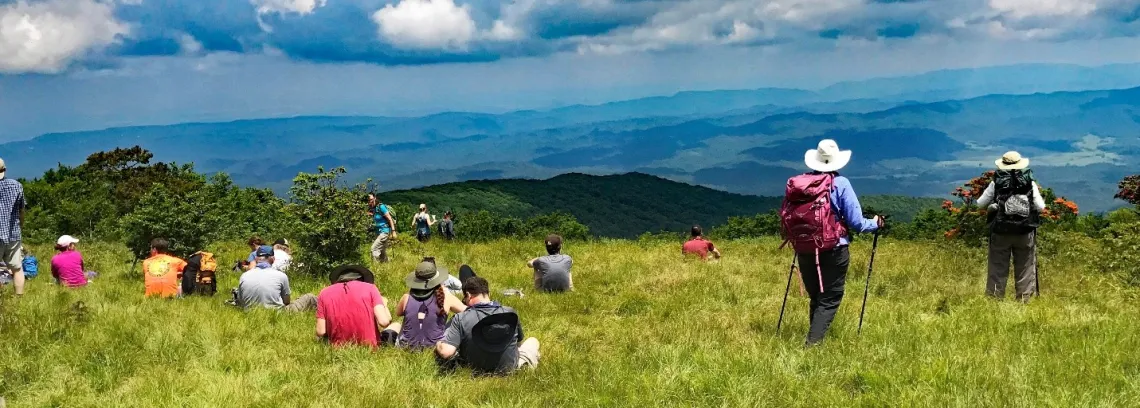
From Twenty-Mile Trailhead in North Carolina, on the southwest edge of the park, backpack to Gregory Bald on the Tennessee line, then loop downhill to the starting trailhead. Camp three nights at trail campsites. Move for two nights to Bryson City, NC (one at a hotel in that pleasant town, another at Deep Creek Campground), with day hikes to waterfalls, creeks, and scenic ridges. If we’re lucky, the Flame Azaleas may be blooming on Gregory Bald.
Trail miles: 19 on the backpacking loop (3, 5, 5, and 6 miles on successive days). These are easy to moderate daily distances. Day hike 2 to 10 relatively easy miles on loop trails in the Deep Creek area near Bryson City.
Trail elevations on loop hike to Gregory Bald: 1,300’ at Twenty Mile Trailhead, 4,949’ at Gregory Bald, our highest point, 3,649’ net gain and loss, with 2 days uphill and 2 down.
Maximum group size: Eight people per group is the maximum for backcountry campsites.
Outing Price: Dallas Sierra Club’s fee for this outing is $199. That pays National Park Service fees, a hotel night in Bryson City, NC after four trail days, and a contribution toward the cost to maintain wilderness first aid certifications for DSC Outings Leaders. Save $50 (making the fee $149) if you pay by April 10. The fee is nonrefundable unless your acceptance to the trip is denied or the outing is cancelled.
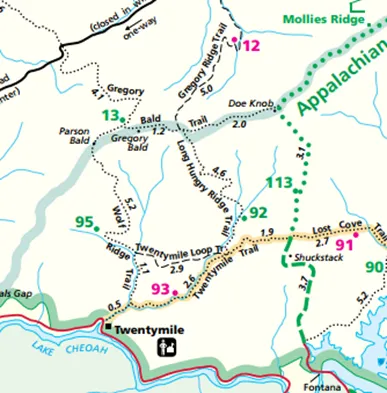
Daily itinerary: Backcountry campsite reservations are granted only 30 days before the first date in the sequence of camps. Only eight campers are allowed at two of our desired campsites. These rules require flexibility of plans for backcountry outings. It may be necessary to adjust planned campsites, the hike route, daily distances, camping dates, or even the number of campers. Your leader will try, however, to obtain backcountry campsite permits online the minute they become available. The map below shows trails and campsites (numbers in large type) mentioned in the itinerary as currently planned. Contact Mark for the detailed itinerary of the trip.
To Register: Contact Mark Stein at mark@steinplanning.com or 214-789-4596 prior to registering. After your conversation with Mark you can register here.
Weather: Average June highs at our trailhead elevation are 86º. lows are 58º. Expect temps at our highest elevation between 68º and 54º. The Smokies get about 6” of precipitation in June. Odds of some rain on any June day are 45%. Pack rain gear!
Gear: Because this trip is not intended for first-time backpackers, your leader will assume general awareness of what to bring and not to bring. Nonetheless, some tips or reminders about gear may be helpful. Each hiker is responsible for bringing personal gear and food. Call your leader if you have gear questions. If your loaded pack exceeds 25 to 30 pounds before you add water (2.2 pounds per liter), lighten your load!
Tent, sleeping bag, sleep pad: A backpacker needs a lightweight tent, a sleeping bag, and an air mattress or sleep pad. The primary function of the air mattress is to insulate you from cold ground.
Backpack: Consider adding a lightweight rucksack for water and essentials on day hikes. You won’t need a rucksack during the multi-day loop hike.
Clothing: Two or three torso layers may be all you’ll need for temperature management. Avoid denim, as it becomes chilly and heavy when wet. Wear recently tested boots or trail runners. Two sock layers (thin sock inside) are generally helpful for precluding blisters. Thin gloves and a sock cap will keep
your head warm at night and in the early morning. Don’t forget a hat, sunglasses and sunscreen for UV protection.Food: The food you carry depends on your daily itinerary and your taste. Most hikers prepare a hot meal in the early evening. Dehydrated foods requiring only boiling water and a short wait for rehydration are available at outing stores, but good and less expensive meal alternatives are available from grocery stores. Hikers generally eat a no-cook meal for lunch. Some will eat a quickly cooked breakfast, others a no-cook breakfast. Bring snacks for the trail. Backcountry fires are prohibited. We recommend cooking with tiny, canned fuel stoves because they don’t make smoke or embers.
Water: To avoid spills, don’t bring water from home in your pack. Our planned route is near a creek at least each morning and evening. On some days we’ll follow creeks. Water must be treated by tablets, filtration, or boiling.
Bears: Biologists estimate 1,900 Black Bears in GSMNP, about two for every square mile. Bears naturally avoid humans but they are powerful and can harm you or your camp if provoked. Don’t approach a bear or allow a bear to approach you. Observe the bear until it moves away from you or you calmly walk away. Every campsite in the backcountry is equipped with cables to hoist your bag of food and other scents out of bear reach. Your leader or companions will help you use the bear cables.
More: Don’t omit a headlamp or flashlight and personal health and first aid items. Bring or share a lightweight garden trowel and tissue for personal waste disposal plus a zip-lock bag for used tissues. That’s right—pack out your paper!
Maps: National Geographic Trails Illustrated map 229 shows roads, trails, and campsites in the entirety of GSMNP. You can view free maps on the National Park Service website for Great Smoky Mountains National Park.
Leave No Trace: Leave-no-trace wilderness ethics are expected of all participants. All trash must be packed out; human waste buried and used toilet paper packed out. (Bring a zip-lock bag.) Pets, firearms and smoking are not allowed.
Medical Emergencies: Sierra Club Outings Leaders leaders have trained for wilderness first aid, but they are not medical professionals. Participants are encouraged to bring first aid supplies for personal use and to inform leaders about medical conditions such as diabetes, heart problems, or allergic reactions that could require emergency treatment. Tell the leader where you store vital medications you could need. Medical information you provide may be shared with medical professionals who treat you in case of injury or sickness.
Group = Safety: Participants who leave the led group without leader consent will be asked to sign out of the trip and will no longer be part of the outing. If you leave the outing, don’t hike alone and always hike on a trail. Most deaths in wild areas occur when a solo hiker becomes incapacitated before being found. When leaving camp, especially at night, take special care to remain oriented.
Minors: Minors may participate with leader consent if always accompanied by their parent or legal guardian.
California Seller of Travel Law: Because the Sierra Club is a California nonprofit corporation and California has a "Seller of Travel" law; we are required to post this notice: “CST 2087766-40. Registration as a seller of travel does not constitute approval by the State of California.”