Backpack Trip on the Eagle Rock Loop in Arkansas
March 28 - March 30, 2025
Trip Coordinator: Christian Costello 972-591-1547 j.christian.costello@gmail.com
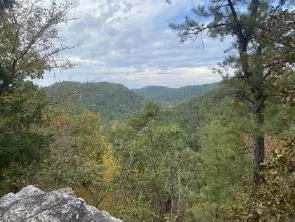
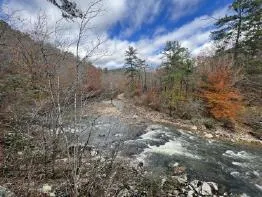
Trip Overview: The Ouachita National Forest covers 1.8 million acres in central Arkansas and southeastern Oklahoma. It is the oldest and largest National Forest in the Southern Region first established by President Theodore Roosevelt in 1907. The Eagle Rock Loop is the longest loop hike in Arkansas with 26.8 miles combining parts of the Viles Branch, Little Missouri, and Athens-Big Fork Trails. This is a strenuous hike for experienced backpackers only in good physical condition. We will hike the loop counter-clockwise starting at the Athens-Big Fork South Trail Head. In total, we will hike over nine mountains and cross the Little Missouri River nine times. This is a water trip, be prepared to get wet and leave your hiking boots at home, opting for a pair of trail runners instead.
Arrival Information: The trip officially starts Friday morning and does not provide transportation from and to Dallas. Take sensible precautions and leave valuables at home to minimize the chances of your car being broken into. The Athens-Big Fork South Trail Head (note: there is also a North TH you do not want) is approximately four hours from North Dallas. The turnoff from AR-246 will be a dirt road. The Google map location of the trailhead: https://goo.gl/maps/7Gf9wbHmz752. There is no room to camp at the TH and parking can be tight. If you wish to camp the night before, the closest campground to the TH at 22 miles is Shady Lake Recreational Area for $10-15 night.
Friday, March 28: Arrive to the Trail Head no later than 8:30a for check-in. The group will depart promptly at 9:00a. Hike East on the Viles Branch Horse Trail. Camp North of Albert Pike Recreation Area. The largest water crossing is on day one and may be waist deep depending on recent rainfall.
Saturday, March 29: Hike North on Little Missouri Trail. Camp West of Little Missouri Falls TH.
Sunday, March 30: Hike South on Athens Big Fork Trail to return to vehicles around 1:00p. This will be a hard day as we cross several mountains.
Return: The hike will end at the return to the vehicles. Participants are responsible for return travel home.
Level of Difficulty: This is a strenuous trip. You will need to be able to hike 8-12 hours (12+miles) up and down hills and across rivers and streams with your pack on. This trip is not for beginners. Besides the physical factors involved you may need to set up or break down camp in a hurry as weather and conditions require.
The U. S. Forest Service advises:
Water: There’s no treated water at the trailhead.
Weather: Rain is ALWAYS a possibility; don’t forget your rain gear.
Gear: Each person is responsible for bringing and carrying his or her own equipment and food. You’re encouraged to contact your trip leader before departure to resolve any questions about gear. Leaders may refuse to allow backpackers with inadequate or inappropriate gear to join the hike, leaving them at the trailhead. Veteran backpackers typically aim for loaded packs of 30 pounds or less, including at least two liters of water. It takes experience to balance having the essentials and keeping your pack light. The following list identifies essential gear:
Experience and Conditioning: Your prior experiences should include a multi-day trip where you’ve carried all your gear on your back. Please discuss your personal backpacking experiences and physical condition early with the trip leader if you’re uncertain about your preparedness. The trip leader reserves the right to determine whether a particular trip is suitable for a prospective participant, based on experience, health, equipment or other factors.
Bears: Although bear encounters are uncommon, hang smellable items in a bear bag nightly and follow these guidelines:
Bring food without strong aromas.
- Don’t store food or items with food spills in your tent.
- Prepare meals away from your sleeping area.
- Keep your camp clean. Store trash and scraps with food.
- Don’t pour oils onto the ground. Carry them out.
- Disperse cooking water over a wide area, away from camp.
- Pack out all leftover food, waste cooking oils or grease and trash. Don’t bury food or trash
Trip Guidelines: Low-impact wilderness ethics are expected of all participants. Trash and toilet paper must be packed out. Bring zip-lock bags for that purpose. Human waste may be buried. Plan to cook on a stove, as campfires are not allowed on Dallas Sierra Club trips in wilderness areas, absent extraordinary circumstances. Pets, radios, music players, firearms and smoking are not allowed, for both safety and consideration of others.
Carpools: Carpooling is encouraged. It will reduce your trip expenses, offer companionship, reduce trailhead congestion and is good for the environment. Note that Sierra Club leaders will not assign participants to a carpool. Assignment exposes the Club and its leaders to an unacceptable liability risk. The Sierra Club will, on request, provide information about rides offered and riders wanted, but does not guarantee riders or rides. It is smart to agree before committing to a carpool how travel expenses to and from home will be shared. Two possible expense sharing methods are:
- Riders (excluding the vehicle owner) to split fuel expenses
- All vehicle occupants (including the owner) to split fuel expenses and an allowance of ten to twenty cents per mile for vehicle wear and maintenance.
To Register:
Read all of the information on this web page. If you have questions, contact the trip organizer. Then, if you want to go on this trip, follow these steps:
- Fill Out Forms: Open this PDF. It has three forms, a general information form, a trip participation form and a medical form. You can print these forms and fill them out by hand, or you can fill them out on your computer and sign them electronically (with Adobe Acrobat or other suitable PDF software), or you can download the form, fill them out on your computer and save them. Photos of the forms are not acceptable.
- Send your forms: Email your form to j.christian.costello@gmail.com OR send them by mail (contact Christian for the address).
I, Christian Costello, will acknowledge receipt of the forms and confirm your place on the outing when all items have been received. Feel free to contact me with any inquiries. Because we expect no group expenses, there is no fee for this trip. Pre-trip registration and leader acknowledgement are needed for participation.
CST 2087766-40. Registration as a seller of travel does not constitute approval by the State of California.
(California has a law called the California "Seller of Travel" Law. Because the Sierra Club is a California nonprofit
corporation, we’re required to post this notice.