This year, Wisconsin is experiencing a warmer, wetter climate with more extreme weather events. Farm fields oscillate between flooding and drought. Wisconsinites struggle to enjoy the outdoors due to extreme heat, increased tick and mosquito populations, and extreme weather events. It’s unequivocal that we need to quickly move away from fossil fuels and stop the worst impacts of climate change.
Fortunately, at a recent climate change forum with 8 of the 9 gubernatorial candidates, there was support for clean energy, restrictions on water- and energy-hungry data centers, protections from Line 5, and more. The forum was hosted by 350 Wisconsin, Faith in Place, Healthy Climate Wisconsin, in partnership with the Clean Economy Coalition of Wisconsin, and included 8 of the 9 candidates for Governor, including Democrats Mandela Barnes, Joel Brennan, David Crowley, Francesca Hong, Missy Hughes, Sara Rodriguez and Kelda Roys, and Republican Andy Manske. U.S. Representative Tom Tiffany declined to attend. You can watch the forum recordings here and here.
Read on to see the statements by different candidates on these important issues. Candidate statements are in alphabetical order and are taken from the forum mentioned above, unless otherwise indicated.
Jump to a section: Data Centers | Climate Change and Fossil Fuels | Utility Oversight | Line 5 | Clean Transportation | Other
Data Centers

Former Lieutenant Governor Mandela Barnes
“My goal is for …100% renewable energy, we should expect the same thing from any industries, especially when it comes to hyperscale data centers. Now, if there are going to be data centers in Wisconsin, the reality is they have to be good neighbors until they reach that good neighbor standard, meaning that they contribute more than they take away. That includes a statewide framework that ensures that each data center can only be constructed if there is community buy-in, community input, and a community benefits agreement. And costs will not be passed on to Wisconsinites. There will be a standard for energy usage and a standard for water quality and air quality as well, where there will be zero pollution.”
Greater Milwaukee Committee President Joel Brennan
“I don't think we can afford to bury our head in the sand about it, but I also think that there are guardrails that absolutely need to be done in the legislature hasn't been able to do that. So you know there I have said that if I get elected governor, that we would look, we would call for a pause….As we look at some of the guardrails that are already out there, Democratic legislators who have proposed these. So one, making sure that nobody amongst us and people watching are paying for the construction operation, the transmission, the ultimate destruction of retirement of these data centers”
Milwaukee County Executive David Crowley
“Data centers should pay for the full cost of the infrastructure they require…companies… should also be responsible for bringing the new clean energy generation online….Utility costs should not be shifted onto any family here in the state of Wisconsin….Local governments should have the authority to approve or reject projects”
State Rep. Francesca Hong
“If a data center wants to operate in Wisconsin, it should be powered entirely with renewables. I think we have a plan. It's called control alt delete, and I've also introduced a bill that would put a moratorium on the construction of new AI data centers until we have more data on the impacts and how to actually mitigate them. And now Wisconsin has relatively loose and unfortunately weak regulatory laws when it comes to both enforcement and accountability. And so if we do not have this moratorium, we are at risk of having companies being able to build at scale with speed without accountability. And if data centers do want to operate in Wisconsin, it should absolutely be powered by by 100% new additional renewable energy. And there can be no tax exemptions that we have data centers right now that have sales and use tax exemptions that have cost the state upwards of $40 million. Wisconsin's natural resources are not for sale, and we should not be selling out our state to big tech. This is as wide bipartisan opposition, and communities deserve community control with no NDAs as to what is happening in their backyard”
Former WEDC CEO Missy Hughes
“We need to protect the environment, we need to protect Wisconsinites and their checkbooks, protecting the ratepayers. We need to make sure this is powered by renewable energy and that the renewable energy and any construction that's done is done by union members.”
Medical Service technician Andy Manske
“it's no secret that I am no fan of AI data centers. Port Washington was very radicalizing to me, just being there in the community, hearing them talk about how they don't really care about the farmland or the people's homes or the Great Lakes and that to a degree…At the end of the day, I mean, the jobs aren't like to say, I can go on and on about what all the issues that are there for them. Now, my view of the future is very simple. I don't really want them here, and if they are here, heavily regulated, and I don't want them to be using unclean energy, right? I don't even really want them taking our energy. If they are to be here, I would like them to make clean energy, pay for it themselves, because I'm not interested in them being here.
Lieutenant Governor Sara Rodriguez
“…they have got to pay enhanced energy rates. And so what that means is it's not just the energy that they're using, but if they need to pay for the maintenance on the grid, we do not want that on the backs of taxpayers. Not only those enhanced energy rates, but if they want to build here in Wisconsin, they need to invest in Wisconsin, which means they have to build renewables here in Wisconsin. That's what we need to do. And in terms of water usage, we have to know how much. It can't be secret, it can't be behind closed doors or NDAs. We have to know how much water that they're using, and having these environmental agreements, and if they're taking water out of the system and putting it back in, it has to be at the same temperature and quality as they took it out.”
State Senator Kelda Roys
“If we want to decarbonize, if we want to have a clean energy future by 2050, why would we invest in these massive energy hogs and try to build up a bunch of new fossil fuel infrastructure? If you're going to build something, you should build it right. And so, getting to 100% or as close to 100% as possible is the obvious solution. What I can tell you is that absolutely non-negotiable is making sure that data centers and these other massive users pay for 100%, not just of the energy that they use at enhanced rates, but of the new energy infrastructure that is occasioned by their building. We have to have full transparency from both the data centers and from the utilities about exactly what these big data centers are going to require of us to make sure that ratepayers are not left holding the bag.”
Climate Change and Moving Beyond Fossil Fuels
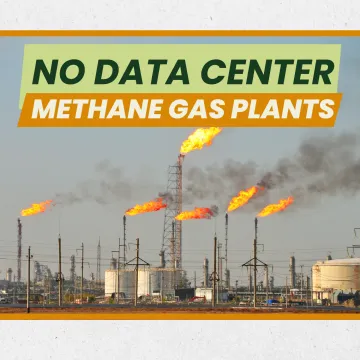
Former Lieutenant Governor Mandela Barnes
“I've worked with farmers. I've worked with business leaders. I've worked with youth advocacy organizations, you name it, to ensure that Wisconsin puts together the most bold, comprehensive plan to address the climate crisis and also create good-paying jobs….And as governor, I will ensure that we continue to invest in renewable energy across the state.”
Greater Milwaukee Committee President Joel Brennan
In Wisconsin, 60% of what we still get is from natural gas, and I think we need to make sure that we're moving forward on renewables. And so we need to make sure that we are in every way possible continuing to address climate change in Wisconsin…And for me, when it comes to natural gas…there is going to be a high bar that will be set around that as we do this transition to a clean energy economy and make sure that we are not falling into this trap of it being either you're for economic development or you're for clean energy.
Milwaukee County Executive David Crowley
“So I would approach Line 5 and any new gas plant with clear standards. We should be asking very simple questions. One, do they protect our water, Two, do they respect tribal sovereignty, Are they making… does this make economic sense for our ratepayers here in the state of Wisconsin? And is this going to move the state of Wisconsin towards the future instead of locking us in the past, having to deal with these fossil fuels?
“...so for new fossil fuel infrastructure, I will require a true public interest review…we should be looking at the climate impacts, the long-term costs for our families, the risk to our water and whether or not there are cleaner alternatives that will create more efficiencies and bring more renewables into more storage online..we cannot say that we're serious about a clean energy future, if we're going to continue to approve projects that lock families into higher costs, and we're going to see higher emissions continue to stay for many decades”
State Rep. Francesca Hong:
“Our state must address the existential issue of our time, which is the climate crisis….We want to make sure that we are investing aggressively in new publicly owned renewable generation that we are partners to local governments, and that they are receiving equitable shared revenue to put towards the programs that are working in their communities.
I am going to be forcefully opposed to approving new gas plants, but that doesn't mean that I'm not going to bring them to the table. But I think it's imperative that the governor's office sets those standards.”
Former WEDC CEO Missy Hughes
“As governor, my plan would include both setting those goals, but then actually making sure we implement them. And we need to implement them both on the side of achieving more renewable energy to make sure that Wisconsin is no longer importing fossil fuels and the tremendous cost to our environment…investing in our grid and investing in renewable energy is going to make people's lives better and more affordable.”
Medical Service technician Andy Manske
“For gas, it's not a good thing… we need to build stuff here that will naturally bring costs down, and also, you know, environmentally be clean in the long run.”
Lieutenant Governor Sara Rodriguez
“…the first thing that I would do as governor is name this as a public health emergency because it is. I would direct the Department of Health Services to work with DNR, DATCP, Emergency management to develop a Wisconsin climate and health action plan. It can be modeled after what Minnesota, Michigan, and California are already doing, and it maps risks down to the zip code and the township.
"As governor, I'll have an administration that pushes utilities forward, not one that protects them from the pace of that change. Michigan passed that 100% clean energy law. Minnesota, Illinois, and we have all of these other ones that have surrounded us, and we only have it by executive order. And so, this is why we'll need that trifecta in 2026 to get this done.”
State Senator Kelda Roys
“The number-one goal that I have related to fossil fuels is to bring coal-fired plants offline. We know that they are hugely problematic to human health. The cost is in the billions of dollars a year of adverse health impacts that we have, and so
transitioning to cleaner, greener energy, has to start by getting rid of coal-fired power plants. But I think we also have to really aggressively question this notion that somehow Wisconsin needs a lot more energy generation, and the only way to do that is just to build more energy generation and natural gas power plants.”
Utility Oversight
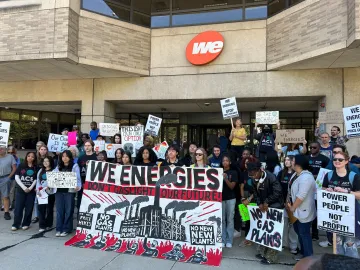
Former Lieutenant Governor Mandela Barnes
“We need to end the use of ratepayer dollars on lobbying other political expenses, we also have to cap executive pay…Right now, they're buying politicians and influencing a very broken system that we will fix.”
Greater Milwaukee Committee President Joel Brennan
“One area through executive action that is absolutely imperative… is who we're going to appoint as public service commissioners…It's one of the most important jobs as governor… we need to make sure that the public's interests are safeguarded… and that we have the balance between what the utilities and the grid have and what the public needs.”
Milwaukee County Executive David Crowley
“I don’t believe that any ratepayers should be footing the bill for lobbying or any level of political activity. “I support giving the PSC even clearer authority to prevent those types of costs from being passed down….I would utilize any executive action that we can to really put utility companies on notice… to focus on how do we bring costs down and how do we build the infrastructure that is absolutely needed.”
State Rep. Francesca Hong
“Right now… [loopholes] have created a rigged system….Ratepayers should not be paying for utilities to lobby against them—full stop. It’s imperative that we have transparency and accountability when it comes to… ratepayer increases. Ensuring that no single lobby dollar is taken from the people of Wisconsin… is absolutely imperative. The Public Service Commission should be acting in the best interest of the public. It’s important… that we also have accountability measures in place… and make sure that the public understands that transparency and accountability is a key part in ensuring that we’re investing in renewables.”
Former WEDC CEO Missy Hughes
“We do need to close loopholes that allow for lobbying that is against what Wisconsin has said its goals are and what we want to do to move the state forward.”
Lieutenant Governor Sara Rodriguez
“As governor, I would fight for the Utility Accountability and Transparency Act. I mean, the three pillars to that: Full disclosure and prohibition. Every dollar a Wisconsin utility spends on lobbying or trade association dues, on political contributions, that has to be paid for by the shareholders, not by the ratepayers. And it's got to be disclosed publicly. And, they can... the shareholders can spend their own money lobbying. They can't spend yours as ratepayers…The PSC commissioners that I appoint, we're not going to have that revolving door. No former utility lobbyists, no, you know, executives transitioning into regulatory roles. We're going to have to bring climate science, ratepayer advocacy, frontline community people, and labor expertise to broaden that talent pool of the PSC so they can make sure that the ratepayers are put first.
State Senator Kelda Roys
“We also guarantee an incredible rate of return despite the fact that this is a monopoly, right? This isn't capitalism and competition. Nearly 10% and far out of step with what our neighboring states do. So the first step we need to do is to bring that guaranteed rate of return down, back to Earth, commensurate with the actual risk, and to take away the incentive to overbuild. We absolutely have to ban recovery from rate payers of any outsized corporate payments, and of any kind of lobbying or advocacy activity, including membership in trade organizations.”
Medical Service technician Andy Manske did not comment on utility oversight
Shutting Down Line 5
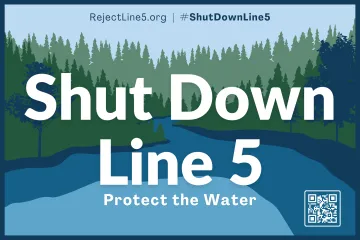
Former Lieutenant Governor Mandela Barnes
“[. . .] when we look at the issue of Line 5, the fact that communities have stood up in opposition, the fact that Tribal sovereignty has been disregarded, the fact that people's pleas for this to not happen and it continues to be ignored is an indictment on the way that things have been going for far too long.”
Greater Milwaukee Committee President Joel Brennan
“Specifically with Line 5 and the Bad River Band, I mean, I think this starts and almost ends with tribal sovereignty and our approach to that and ensuring that we have high regard and respect for the nation-to-nation consultation process and the nation-to-nation relationships.”
Milwaukee County Executive David Crowley
“Corporate convenience, let's be honest, it should never come before treaty rights or clean water or just the health and wealth of the Great Lakes, because it is our greatest asset that we have.”
State Rep. Francesca Hong
"My position on Line 5 since day one is that it should be shut down and not rerouted. I have been actively engaging with water protectors and folks who are on the ground, you know, reporting on what is happening with Enbridge's expansion . . . We have to stop both Line 5 and both its current form and the reroute as well.”
Former WEDC CEO Missy Hughes
“I would work to shut down that project across our very delicate lands, and make sure that we have the focus on building the energy infrastructure that we need. Wisconsin has the opportunity to be the manufacturer of that energy infrastructure, and that's where we need to focus our work and our resources.”
Medical Service technician Andy Manske
“[. . .] what's necessarily good for their profits isn't exactly good for our environment, isn't good for our Great Lakes, isn't good for the future of Wisconsin as a whole [. . . ] this is going through your native land, this is going through your land, this is going through your communities, this is a big thing [. . ]. So end of the day, I mean, what's good for these corporations isn't necessarily good for the people. The people absolutely have to have a say in the matter.”
Lieutenant Governor Sara Rodriguez
“[. . .] the Bad River Band is a sovereign nation, and that the Bad River is their homeland. It's not a pipeline corridor, and the community has been clear what it needs, and I do stand with them about what they're wanting [. . .] Line 5 is a 1953 oil pipeline owned by a Canadian corporation that has a documented history of spills and that happened in Minnesota. And it's moving Canadian oil through Wisconsin to Ontario, so it's not really helping us specifically [. . .] I don't think one foreign oil company gets to dictate what Wisconsin's water future or override a sovereign nation's treaty rights. They just simply don't.”
State Senator Kelda Roys did not comment on the Line 5 pipeline.
Clean Transportation
Greater Milwaukee Committee President Joel Brennan
"The need for the partnership between state and local government to exist around transit, around a train between Madison and Milwaukee, all of the things that we should be doing, both on the global scale, but very much on the local scale to ensure that people are getting where they need to. When you give them opportunities to get out of their car, they take them, and we need to make sure that we are giving opportunities for that in the state of Wisconsin."
Milwaukee County Executive David Crowley
“We have to invest in reliable public transit, right? We have to modernize our grid, we have to expand our charging infrastructure so cleaner transportation options are realistic, and not just urban areas, but our rural communities as well.”
State Rep. Francesca Hong
“Public transit infrastructure is long past due, especially since we lost our trains, thanks to Scott Walker. And so restoring regional transit authorities is going to be key. And that legislation is ready to go in the state assembly, and we would get support from it in the Senate as well. And we don't want these bus lines to stop at county lines either, and we don't want rural areas to bear the brunt of creating clean energy that would not benefit them equally as urban areas. And the EV charging infrastructure, those investments and that build out can create great clean green jobs that are for union workers.”
Medical Service technician Andy Manske
“I've obviously talked about building a high-speed rail from Milwaukee to Green Bay. Building more infrastructure in our public is not a bad thing. Our roads are not in the best condition right now. There's a lot of work we have to do across the board. Our sidewalks are kind of in disarray…We can build a better future here, and we can empower… I mean, our sidewalks are falling apart. You know, walking should be as common as it was back in the day, you know, 100 years ago, 200 years ago, 300 years ago. If people want to walk, they shouldn't be afraid of my grandma, for example, tripping in her walker and falling. We're the richest country in the world. We can do all this. So we can advocate for across-the-board metrics that would cut down on our emissions, cut down on what we're putting into the environment.”
Other critical issues
These are not questions that were asked, but positive statements candidates offered
Knowles- Nelson Stewardship Fund
Greater Milwaukee Committee President Joel Brennan
“Fran mentioned the Knowles Nelson Stewardship Fund like that is one area where we leverage things at the local level and the state level. I think 90% of us live within a mile of a project that has been affected positively by Knowles Nelson since it was introduced in the 1980s. Like, these are the types of things we should do, and it's going away as of June 30th.”
State Senator Kelda Roys
"On Day 1 I will release emergency funding to bring [Knowles Nelson] back online"
Mining Protections
Former Lieutenant Governor Mandela Barnes
"My very first speech on the assembly floor was in opposition to a proposed mine because of the health impacts and the fact that communities had been ignored, people who had voiced their concerns and who ultimately felt left behind and betrayed by a broken system."
Energy Efficiency Programs
Former Lieutenant Governor Mandela Barnes
Wisconsin had the highest adoption rate for the home efficiency rebate program in the entire country, not per capita, but per state on a per state basis. And we're going to continue that work as Governor…So one thing we need to do is update our building codes. We also need to implement a microgrid strategy that will prevent rolling blackouts to ensure that energy can still be distributed amongst communities in the event of one of these extreme storms.
Lieutenant Governor Sara Rodriguez
"First, what I would like to be able to do is expand focus on energy, and it's the Wisconsin's Efficiency program. It returns about $5 for every dollar we invest in it, so we can expand that to target low-income households, renters, manufactured housing, Tribal communities, and make them first, not last."
Agriculture as a Climate Solution
Lieutenant Governor Sara Rodriguez
"Wisconsin farmers are on the front lines of this, whether they signed up for it or not. So, you know, expanding cover crops, managed grazing, conservation cost share, really incentivizing the farmers to make sure that they're doing some of these sustainable practices, and we can fund the producer-led watershed protection program already at the level that it needs to require."
State Senator Kelda Roys
Family farmers want to be great stewards of the land, but they have been forced economically into positions that are completelv untenable. Big corporate agribusinesses are not. Thev tend to be exploitive. thev tend to be big polluters, and they have been allowed to functionally write their own permits by our DNR. So as governor, I'm going to restore environmental law and order and make sure that we're preventing pollution and that it's actually punished and that the polluter pays to remediate the damage that they've caused.
Help us keep these issues front and center
Despite this clear, bipartisan call for clean energy, restrictions on water- and energy-hungry data centers, and protections from Line 5, Wisconsin is backtracking on climate progress. Write a letter-to-the-editor about the need to prioritize these issues. Learn more and write a letter here.
Want to do even more? Join our birddogging team