Enbridge drilling error raises questions and concerns
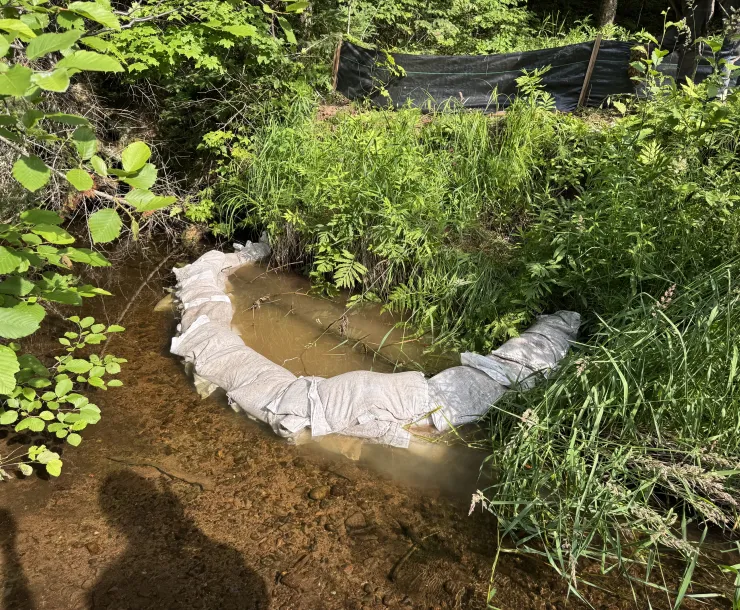
The last week of June news broke that during construction of the Line 5 reroute Enbridge’s construction contractor, Michels, had a “frac out” near Vaughn Creek, on the east side of the route. A frac out is the release of drilling fluid during a process called Horizontal Directional Drilling (HDD). The HDD method requires drilling a hole horizontally into the ground and pumping drilling fluid or mud inside, to eventually install a pipe segment that goes through the hole. Drilling fluid provides lubrication for tools, and helps maintain a straight path for cutting. While this may sound innocuous, mistakes can leave long-lasting and serious impacts.
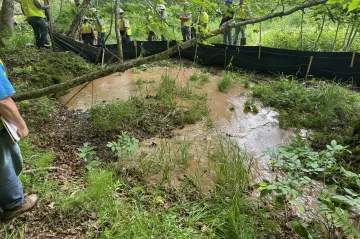
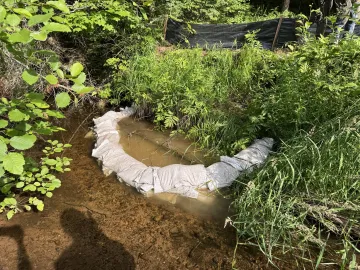
Small variations or cracks in the structure of the drilling hole can lead to frac outs, where the drilling slurry spills out of that pathway and follows the path of least resistance – which might mean it ends up in waterways, wetlands or elsewhere. Frac outs can release bentonite clay, which can smother aquatic life, and other additives. The clay can also settle on the bottom of the rivers and streams and impact the spawning grounds. The drilling slurry that companies use is proprietary, but reports have shown that in other projects that Michels worked on, unapproved additives were also used. A Grand Jury report stated the following:
Uncertified additives
“In addition, some of these uncertified additives were considered “proprietary,” meaning that drillers are not required to divulge the nature of the chemicals being injected into the ground, and potentially into wells, lands and bodies of water.”
Use of uncertified additives
“In general, unapproved additives were most often used in the riskiest situations, in an effort to stop the escape of drilling fluid into the environment. Because these efforts in many cases failed to stop the fluid loss, the unapproved additives themselves undoubtedly escaped into the environment as well.”
The report continued to note that of the many frac outs, “most of these losses of circulation were not reported to DEP [(Department of Environmental Protection)].” In a recent Enbridge pipeline project that Michels worked on, the Line 3 pipeline in Minnesota, frac outs were reported at 67% of crossing sites where this technique was used. A thorough analysis of water and drilling fluid chemistry during Line 3 construction can be found here.
This news has raised fears and concerns. Neighbors are scared, wondering what impacts will be to their wells, how to protect their families, if water is safe to mix for baby formula and more. Much testing is prohibitively expensive, leaving communities with uncertainty.
Great Lakes Advocates Call on Gov. Evers to shut down Enbridge’s Line 5 Expansion Project

Summer Wrap-Up: Protecting Forests, Line 5 Disasters, and No to Data Center Gas Plants
Enbridge’s Line 5 has another frac out as reroute challenge and intimidation concerns escalate
Line 5 Reroute: Construction Concerns

Data Centers and Clean Energy are Major Issues in Governors Race
Line 5 Oil Pipeline Threatens Wisconsin: This is What it Looks Like
ICYMI - Wisconsin Gubernatorial Candidates Show Concern for Line 5

Earth Day Round-Up Part 3: What's next?

Circuit Court Issues Order Limiting Pipeline Construction While Lawsuit Over Line 5 Permits Moves Forward