Tell the PSC: No more rate increases!
We Energies is proposing a $480 million rate increase over the next two years, which is a 14% increase, when many families are already struggling. It's past time to prioritize Wisconsinites over We Energies, the most profitable utility in the state. This is our opportunity to show up and demand that the Public Service Commission say no to higher utility profits and higher customer costs.
Submit a comment at the PSC website here. Some points to consider adding:
- The most important thing is to make your ask clear: deny this rate increase. Aside from that, talking about why you care is key.
- Energy should be affordable and no one should have to choose between what bills to pay.
- We Energies has already made record profits, and is asking for approval to make even more - higher returns to execs shouldn’t come at the expense of everyday people working to make ends meet.
- We cannot invest in and pay for more fossil fuel infrastructure. We need to avoid the looming climate crisis.
- Please deny We Energies' rate proposal.

Most recent update: Thirsty Power: Coal and gas will leave us high and dry
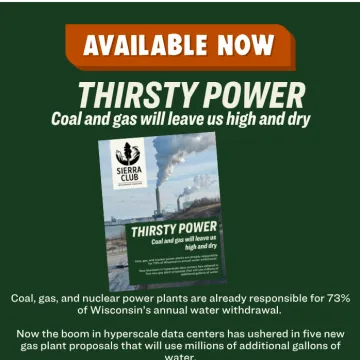
A new report from the Sierra Club, Thirsty Power: Coal and gas will leave us high and dry analyzes Wisconsin’s current power generation, the water needed for that power, and the potential impacts on Wisconsin’s water as Big Tech tries to build more data centers across the state. These data centers require enormous amounts of power– and in some cases are prompting entirely new gas plants that will compound water and energy use at peak times.
The report found, among other things, that:
- Wisconsin’s current dirty energy power fleet– including coal, gas, and nuclear plants– withdraws 1.35 trillion gallons of water annually. Meanwhile, solar and wind use so little water that the EIA doesn’t even track their usage. This is more than 7 times all of the municipalities in Wisconsin combined, and 18 times more than agricultural irrigation.
- Five new gas plants, known or assumed to be proposed for data centers, would use 142 million gallons of water a year on average – the equivalent of the annual drinking water for 778,082 people– and the majority of which would be needed during summer months when energy and water use has been strained by drought and heat. The proposed Red Oak Ridge gas plant in Kenosha would consume an estimated maximum of 266,400 gallons of water from the Great Lakes per day – the equivalent of daily consumption of nearly 3,248 average Americans. The proposed Foundry Ridge plant would use an estimated maximum of 55,152 gallons of groundwater from local wells per day.
- The five new proposed gas plants confirmed or suspected of being proposed solely to power data centers in Wisconsin equate to almost 4 gigawatts of power – or enough electricity to power approx. 3 million average homes. There are only 2.84 million homes in Wisconsin.
- The proposed Red Oak Ridge gas plant will become the second-largest gas plant in the state and use 266,400 gallons of water per day when it runs at full capacity. Plant owner Invenergy seeks to use Lake Michigan water, which will require special approval under the Great Lakes Compact.
Submit Your Comment

Data Centers Need Proper Environmental Review
63% complete
Send My Message
Upcoming events:
Check back for more soon!
Why it Matters
100% clean energy will dramatically improve public health. The burning of fossil fuels, like gas and coal, lead to water and air pollution. This leads to respiratory problems, cancer, and numerous other health issues. A transition to clean energy means the same benefits that fossil fuels give us, like electricity, without the air and water pollution.
100% clean energy will lead to more jobs, boosting our economy and providing family-sustaining jobs. In fact, Wisconsin is home to a robust and growing clean energy economy. There are more jobs in Wisconsin in clean energy generation than in electric generation from fossil fuels.
Clean energy is less expensive than fossil fuels, and it's home-grown. Wisconsin has great resources for wind and solar energy right here, and we will soon have the Midwest’s largest solar farm in Cobb, WI!
Switching to 100% clean energy will allow us to lower emissions that exacerbate climate change. The burning of fossil fuels adds carbon dioxide and methane, two major greenhouse gasses, into the atmosphere. These gases trap in heat and warm our planet. Climate change is already harming marginalized communities around the globe and will eventually lead to catastrophic damage to ecosystems, lands, and livelihoods.
A 100% clean energy future is possible -- if we build the political will and our legislators pass strong clean energy today. Your action can make a brighter future possible.
Blog Posts
Trump Moves to Strip EPA of Authority to Limit Power Plant Carbon Pollution

Summer Wrap-Up: Protecting Forests, Line 5 Disasters, and No to Data Center Gas Plants