Gardening and Composting capture or eliminate CO2 from the atmosphere. Our industrial food system has depleted our soil. Gardening and composting can help build a soil structure that is rich in nutrients and microorganisms. Healthy
soil absorbs carbon dioxide, filters water, and prevents nutrient runoff and soil erosion. Soil is a non-renewable natural resource – takes 1000s of years to create an inch of soil.
Contact Info Cynthia Blackwood (fhsprestorationmanager@gmail.com) or Emily Davis (emilylambertdavis@gmail.com)
To ask a question or learn how you can contribute to Composting and Gardening solutions, use the SPG Volunteer Interest Form. A volunteer leader will get back to you.
Composting
When we compost our food waste instead of putting it in the trash (landfill), there is a 78% reduction in Green House Gas emissions. These emissions are primarily methane. When we use compost in our gardens, we add valuable organic matter to the soil which improves plant growth, conserves and reduces the need for inorganic fertilizers and we speed the creation of healthy soil It takes nature 1000s of years to create an inch of soil. In the U.S. and around the world, our topsoil has been lost, degraded, and eroded. This leads to water quality issues and reduced productivity of agricultural and other lands. According to the Food and Agriculture Organization of the United Nations, about 33% of soils worldwide are moderately or highly degraded. Adding compost to soil increases the capacity of soil to absorb and retain water, which improves resilience to drought and reduces risks from flooding.
Gardening
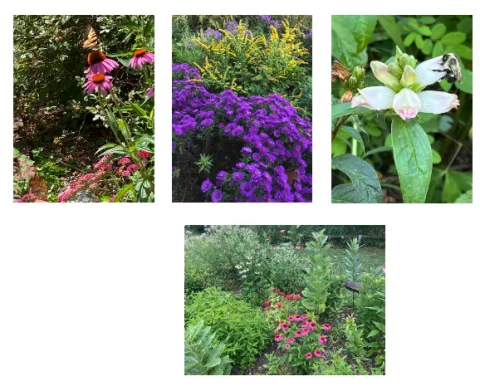
“For those of us who care about the natural world, the decision to plant natives in the garden is one of the most impactful and important choices we can make. With so much under threat from a changing climate, invasive species, habitat loss and fragmentation and declining numbers of birds and insects, planting natives in your garden shows that you are trying to make a difference. Native plants have the power heal our landscapes, welcome wildlife into our gardens, and inspire us. Let us enter into a new partnership, where our gardens provide a bridge between us and the wonders of the natural world.” (Uli Lorimer)
Volunteer Organization
The Friends of High School Park (www.fhsp.org) has community Workday Weekend the 1st and 3rd Weekends from 10am-12noon, March through November at High School Park, Elkins PA 19027 (Rsvp to fhsprestorationmanager@gmail.com)
More Resources
WEBSITES
. Soil Health and Climate Change (Sierra Club flyer)
. https://extension.psu.edu/home-composting-a-guide-for-home-gardeners
. https://homegrownnationalpark.org/
. https://extension.psu.edu/soil-health-soil-physical-properties (video)
. https://extension.psu.edu/soil-testing
. https://www.phila.gov/services/trees-parks-the-environment/get-organic-materials/
BOOKS
"Food" by Fabio Parasecoli (2019)
"Omnivore’s Dilemma" by Michael Pollen (2006)
"The Northeast Native Plant Primer" by Uli Lorimer (Native Plant Trust)
"A New Garden Ethic" by Benjamin Vogt
"Nature’s Best Hope: A New Approach to Conservation That Starts in Your Yard" by Douglas Tallamy
"Weeds of the Northeast" by Richard H. Uva, Joseph C. Neal and Joseph M. DiTomaso
"Bringing Nature Home: How You Can Sustain Wildlife with Native Plants" by Douglas Tallamy
"The Edible Ecosystem Solution: Growing Biodiversity in Your Backyard and Beyond" By. Zach Loeks
"Garden Revolution: How Our Landscapes Can be a Source of Environmental Change" by Larry Weaner and Thomas Christopher
"The Living Landscape: Designing for Beauty and Biodiversity in the Home Garden" by Rick Darke and Douglas Tallamy
"A Gardener’s Guide to Native Plants of Northeaster Pennsylvania" by Geoffrey Mehl
"Native Pants of the Northeast: a Guide for Gardening and Conservation" by Donald J. Leopold