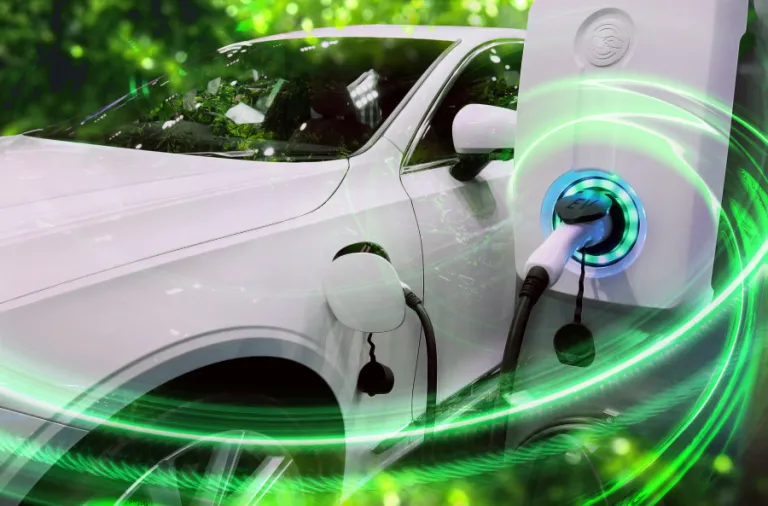
Amid high gas prices and a tight state budget, Vermont must do more to swiftly spend federal funding for EV charging to help drivers go electric
MONTPELIER — Vermont made meaningful progress on rolling out federal EV charging dollars in 2025, but the vast majority of funding remains unspent, according to a new Sierra Club report out today.
“We commend Governor Scott for taking decisive action to obligate $21 million in federal EV NEVI charging funds and move the state from planning into implementation,” said Robb Kidd, Chapter Director of the Vermont Sierra Club. “With these investments moving forward, Vermont has a real opportunity to accelerate its buildout of a statewide charging network and ensure the state stays on track to meet its clean transportation goals. However, Governor Scott's recent lack of commitment to budgeting EV incentives, the pause of the Advanced Clean Cars II standard, and the adoption of an EV mileage tax have us concerned that Vermont is slipping in its EV leadership. The key now is continued momentum — getting more EV charging stations online so that Vermont drivers can confidently make the switch to electric.”
In February 2025, the Trump administration illegally froze the National Electric Vehicle Infrastructure (NEVI) program. Sierra Club, Vermont, and other states and nonprofit partners challenged that action in federal court and successfully lifted the freeze. NEVI funds were unavailable to Vermont for nearly five months in 2025 and only fully secured after a final court order in January 2026. Despite these months-long obstructions, 2025 was still the most productive year in the program’s four-year history.
States have to jump through a lot of hoops to implement and spend federal funds for EV charging — including developing statewide plans for NEVI, selecting projects, “obligating” funding (which legally binds the federal government to reimburse their spending), and moving ahead with permitting, design, and construction. By the end of 2025, Vermont had:
- Opened 1 NEVI charging station to the public.
- Obligated 100% ($21M) and spent 3% ($0.58M) out of its $21M of available federal dollars for EV charging stations along highways
To speed up the rollout of federal EV charging funds, the report recommends Vermont and other states use their attorneys general offices to address issues with access to funds, engage with utility regulators and public service commissions to stretch funding, set targets and timelines for rolling out funds, and maximize coordination between state agencies, project applicants, and electric utilities.
Beyond federally-funded projects, last year was also the biggest year on record for deployment of privately-funded EV charging stations. According to data released by Paren, more than 18,000 new fast-charging ports were installed nationwide in 2025 (a 30% year-over-year increase). As of today, Vermont has at least 540 charging stations with 1,388 charging ports open to the public, according to the U.S. Department of Energy.
###
About the Sierra Club
The Sierra Club is America’s largest and most influential grassroots environmental organization, with millions of members and supporters. In addition to protecting every person's right to get outdoors and access the healing power of nature, the Sierra Club works to promote clean energy, safeguard the health of our communities, protect wildlife, and preserve our remaining wild places through grassroots activism, public education, lobbying, and legal action. For more information, visit www.sierraclub.org.