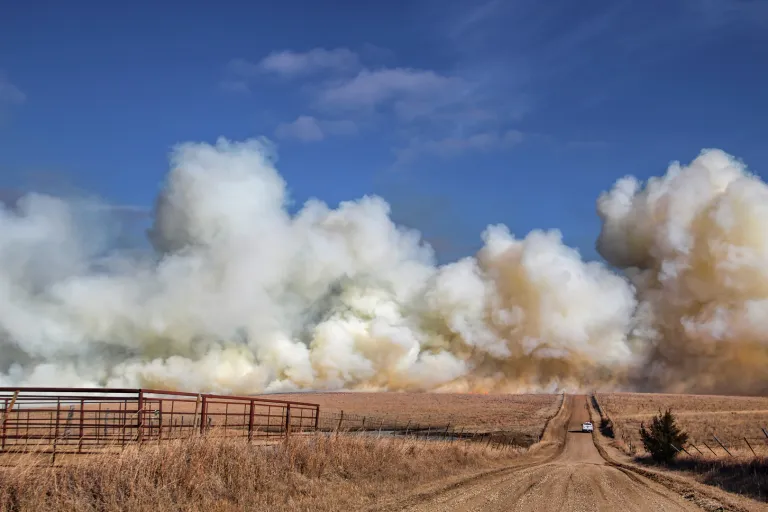
Prairie smoke | Photo Tom Arnhold, Sierra Club Kansas Chapter
By Craig Volland, Kansas Chapter Agriculture and Air Quality Chair
As of March 20 only 60,000 acres have burned, way fewer than the average 2 million acres burned every spring. The first burns of any size were March 25 and 26 mainly toward the north of the Flint Hills.
A couple of Purple Air fine particulate monitors picked up the smoke well above the Air Quality Index (AQI) of 100 (35 mg/l). Monitor reports from Sierra Club volunteers near central Manhattan and Zeandale just outside town show how Manhattan is a sitting duck for all this burning where there are no official KDHE air monitors. You can see the Real Time AQI monitoring from Sierra Club Volunteers.
This burn is normal for its slow progress because of the high winds, relatively low temperatures or high humidity typical of early spring in Kansas. What usually happens is that during the first two weeks of April many of the ranchers jump in at once whenever decent conditions present.
Despite what we are told, It was never really necessary to burn everything in early spring. The real reason for early burns is catering to the beef industry's desired schedule. This is the time of year when a million of so young cattle from points south are brought in to feed on fresh grass for about 3 months and then are shipped out to the vast cattle feedlots in western Kansas. Industrial agriculture at its finest!