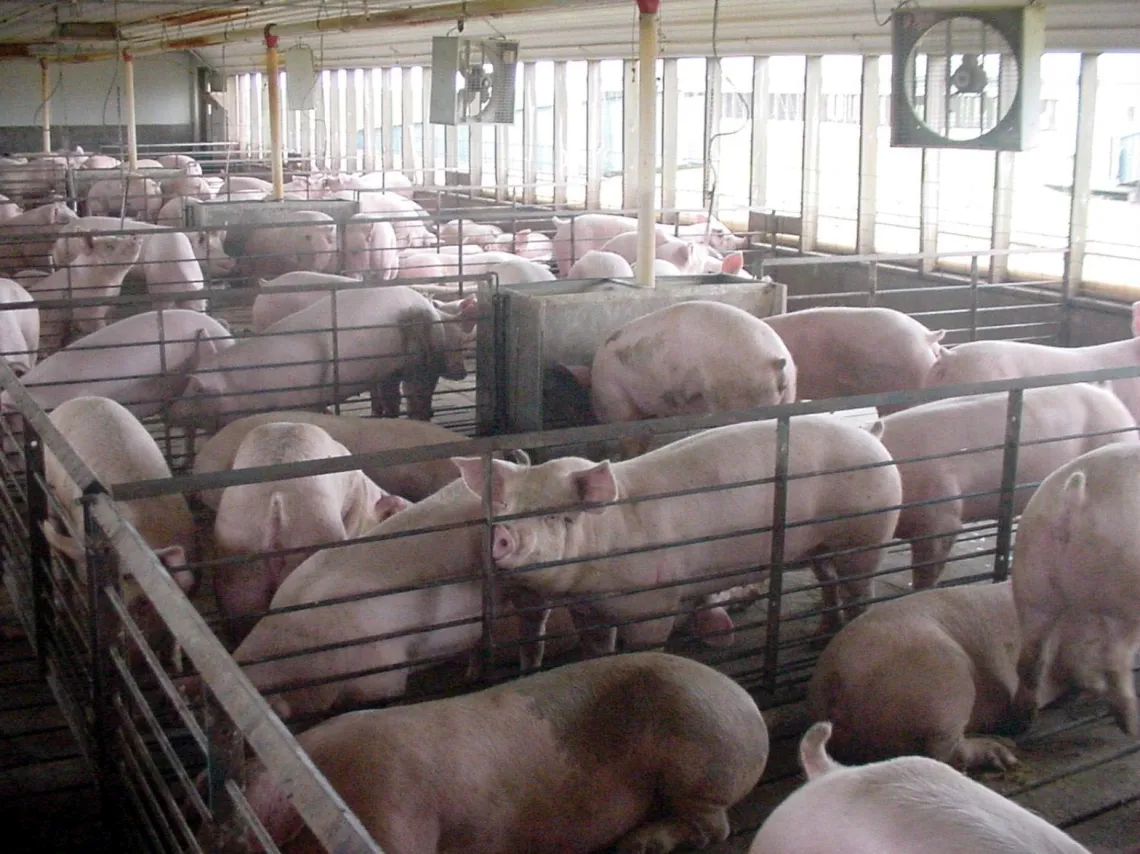
CAFO: a Concentrated Animal Feeding Operation. This is what they look like.
Contact Craig Volland, Chapter Agriculture Chair
What is a CAFO?
CAFO is the polite term for an industrial meat production facility.
The U.S. Environmental Protection Agency (EPA) defines animal feeding operations (AFOs) as agricultural enterprises where animals are kept and raised in confined situations. There are approximately 450,000 AFOs in the United States. When AFOs reach a certain size, about 1,000 cows or 2,500 hogs, they are classified as concentrated animal feeding operations (CAFOs) of which there are about 21,000 in the US. CAFOs congregate animals, feed, manure and urine, dead animals, and production operations on a small land area. Feed is brought to the animals instead of allowing them to to graze in pastures, fields, or on rangeland.
Kansas Hosts Large CAFOs
Kansas hosts some of the nation's largest CAFOs, mainly cattle feedlots, dairies and hog factories, located primarily in the drought-prone areas of western Kansas. This includes a cattle feedlot permitted for 140,000 cows, a dairy permitted for 100,000 cows, and a hog factory permitted for 198,000 mature hogs. In the 1990s the Kansas Chapter worked with rural citizens who were fighting new hog CAFOs and succeeded in getting new regulations through the legislature. Although these changes require CAFOs to report more data that help us monitor their environmental impacts, they don't protect our aquifers and do little to shield neighbors from dangerous dust and noxious odors. We continue our efforts to hold the Kansas Department of Health and Environment (KDHE) accountable for the unhealthy pollution of rural air and water.
CAFOs and Prairie Burns Affect Air Quality and Bird Habitat
The massive cattle feedlots of western Kansas are linked to industrial scale cattle grazing in the Flint Hills of eastern Kansas. The intensive burning and overstocking of grasslands in the early spring each year have caused serious air quality problems in eastern Kansas and downwind states such as Nebraska and Missouri. These practices are destroying valuable habitat for grassland birds. The Chapter is promoting a new patch burn technique that according to recent research preserves wildlife habitat without significantly hurting ranching productivity. We also encourage ranchers to conduct their burns in late summer for better invasive weed control.
Industrial Agriculture is Bad for the Planet
Industrial agriculture is a significant source of greenhouse gases, so the Chapter recognizes the need for people to pursue a healthier diet containing less processed food and meat. We support efforts to connect urban food consumers with family farmers who produce organically grown crops and humanely raised, free-range animal products.
Our CAFO Lawsuits
We are now in year 8 of our fight against KDHE for conspiring with some hog CAFO producers to evade the statute designed to protect nearby streams and residents. With the support of thousands of volunteer hours, we have spent thousands of dollars in litigation costs challenging KDHE's enforcement failures. We have persisted in this struggle through administrative proceedings, followed by lawsuits. Our December 2019 district court victory was reversed by the Court of Appeals on technical grounds. That ruling was overturned by the Kansas Supreme Court in June of 2023, finding that the case was moot because the original permits had been modified. The opinion left open the possibility of future litigation and we have filed another case that is ongoing.
RESOURCES
Sierra Club Policy on Food and Agriculture
Sierra Club National CAFO Team
This newly developed Sierra Club website section summarizes important technical information on CAFOs and experiences and successes of Club anti-CAFO activists around the country. It can be used to educate the public about CAFO harms and how we can avoid supporting CAFOs through changes in our diet and buying decisions.
History of the Kansas CAFO Struggles
Pawnee County Cattle Feedlot Battle (Kansas Reflector, March 27, 2025)
CAFOs Contribute to Nitrates in Drinking Water, A Growing Problem in Kansas (Waypoints, March 4, 2025)
Sierra Club Press Release on Supreme Court Decision (June 2023)
Sierra Club vs. Andersen, Memorandum Decision and Order (December 6, 2019) Sierra Club Joins Petition to EPA (Waypoints, December 1, 2021)
As Massive Livestock Operations Move In, Fighting Them Gets Harder For Rural Neighbors (Kansas Reflector, June 14, 2021)
Sierra Club Blows the Whistle on KDHE Plan to reform hog farm regulations (Kansas Reflector, May 25, 2021)
KDHE’s actions on Hog CAFOs don’t pass the smell test (Waypoints, April 29, 2021)
KDHE Continues to Indulge Big Hog Producers (Waypoints, March 28, 2019)
New Study: CAFO Barn Fires Kill Millions of Farm Animals (Waypoints, December 29, 2018)
A Move To Shift Some Flint Hills Burning into the Fall (Waypoints, August 2018)
Range Management Practices are Biggest Threat To Grassland Birds (Planet Kansas, August 2016)