By: Felix Revello, Conservation Committee Chair
Craig Volland, Agriculture Committee Chair
Some 52 years after the passage of the federal Clean Water Act, large numbers of streams and lakes in Kansas, as in many other states, remain “impaired” or polluted. In the early days most attempts at remediation were focused on treating human sewage and certain industrial wastes that previously had been dumped into rivers and streams. Considerable progress was made in controlling those sources.
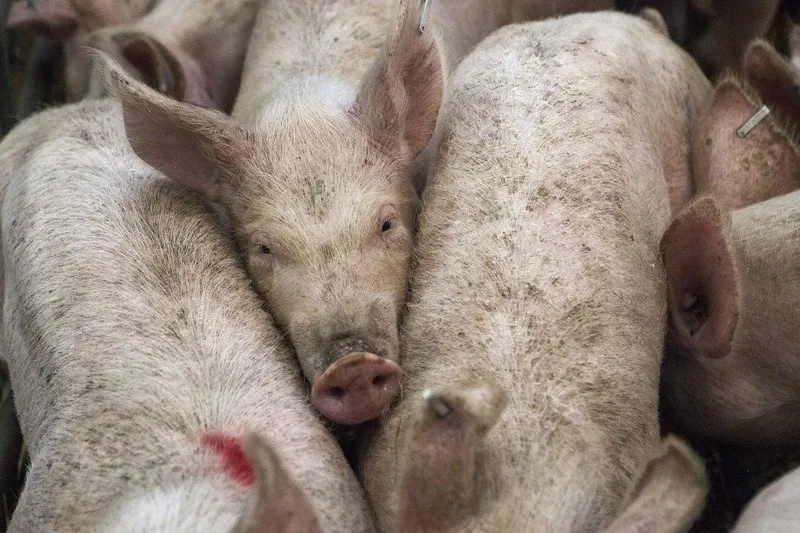
However, during this period, we have witnessed the industrialization of agriculture where, in addition to the increased use of chemical fertilizers, livestock raised on pasture and in small, outdoor pens on family farms were replaced by concentrated animal feeding operations. In CAFOs, feed is brought to the animals usually crowded into tight spaces, unable to express their natural behaviors. The endless fields of corn and soybeans you see in rural Kansas and elsewhere primarily exist to provide animal
feed for CAFOs.
For example, in 1970 the typical dairy consisted of 40 to 120 cows on pasture. This year a dairy in western Kansas expanded to over 100,000 cows. KDHE also issued a permit for a new, 88,000 head cattle feedlot on a square mile of highly permeable soil above the shallow Great Bend Prairie aquifer in Pawnee County. It will require 47 square miles of crop land to get rid of all the solid manure each year. In western Kansas groundwater pollution is a major problem.
CAFO technology is deeply flawed. When you confine huge numbers of animals in one location you also concentrate their manure. In many instances the disposal of this waste onto crop fields is poorly supervised. For example, KDHE inspectors rarely inspect crop fields to ensure that runoff barriers near streams are properly maintained. The main reason for overapplication of manure is that it is expensive to spread that much manure and still be profitable. Many of these operations could not be profitable without polluting the air and water of Rural Americans… pollution that impacts and violates the property rights of Kansans who can no longer safely drink water from their wells and enjoy the outdoors on their own property.
Why should our urban Chapter members care? Well, for one thing, water flows downhill carrying fecal matter with it. The Republican and Kansas Rivers can bring pollution eventually to Topeka, Lawrence and Kansas City, and the Arkansas River flows through Wichita. In addition, much of the nitrogen in manure-covered CAFO pens and waste impoundments enters the atmosphere as ammonia where it combines with other elements to form fine particulate as it drifts to the east. Crowding of the animals amidst their waste increases the risk of food contamination.
The impacts from CAFOs on our rural citizens represents environmental injustice just as much as that suffered by those who live near power plants, chemical plants, refineries and waste disposal operations. In recent permit correspondence KDHE said that, under the Water Pollution Control Permitting Program, they do not have the authority to evaluate living conditions and general issues related to quality of life. We have learned that challenging CAFO permits in court is a tortuous process. So, our Chapter is broadening our efforts to combat CAFOs. These will include proposing new legislation to close regulatory gaps and participating in proceedings of the state’s Water Plan, while continuing to help rural citizens navigate the CAFO regulatory process. We can also educate our members, and the public, on how to avoid unknowingly supporting CAFOs through our daily food choices. Big Ag cannot force us to eat their stuff, no matter how many happy cows they show on their package labels.
We will need your help as Chapter members. You can send letters to your legislators and to the Governor. You could help us research and list sources of free-range meat, dairy & eggs from family farms in your area. By doing so, you will join the fight to save traditional family farms struggling against questionable corporate business practices. They still exist though not in sufficient quantity to support a typical meat-heavy diet. Thus, we will also encourage folks to move to a more plant-based diet which is healthier for most people anyway. A model for this exists as the Food Circle in Kansas City.
If you are interested in helping with these efforts, please contact our new Chapter Coordinator, Eliese Holt. Look for future articles in Waypoints that address the need for our campaign against animal factories.