Craig Volland, Air Quality Committee Chair, Sierra Club Kansas Chapter
It was a typical year for the burning of grasslands in the Flint Hills: 2.03 million acres burned in 2026 compares to the average since the year 2000 of 2.07 million acres. Of the 47 days, starting with the first significant burns on March 9 to the last burns on April 24, there were 11 days of moderate widespread burning plus 5 we can call Big Burn Days that were both very dense and widespread over the entire area (Apr. 5-7, 16 & 19).
This extreme variation of burn activity is also very typical. That’s because early spring is a bad time to be burning grasslands given the frequency of high winds and precipitation. When good burn conditions do present, especially with wind to the north, many rancher/landowners jump in at once to burn. Their goal is to bring in their young cows by May 1 to feed on new grass until August when they are shipped out to the huge cattle feedlots in southwest Kansas. Of course, this causes the Big Smoke Days that frequently impact the public health especially in the northern reaches of the Flint Hills.
In late March there were 8 modest exceedances of the ozone air quality standard in southeast Kansas and in the Kansas City metro area. There were only two exceedances of the fine particulate (PM2.5) standard this year. That’s because KDHE’s on-line smoke model trains ranchers to burn when the smoke will move along the south - north axis of the Flint Hills. There are no PM2.5 regulatory monitors between Topeka and the Cedar Bluff monitor to the west near Hays, Ks, and no such monitors between Wichita and Chanute to the east. Thus, the more intense smoke plumes from big burn days are not recorded for purposes of compliance with Feder al air quality standards.
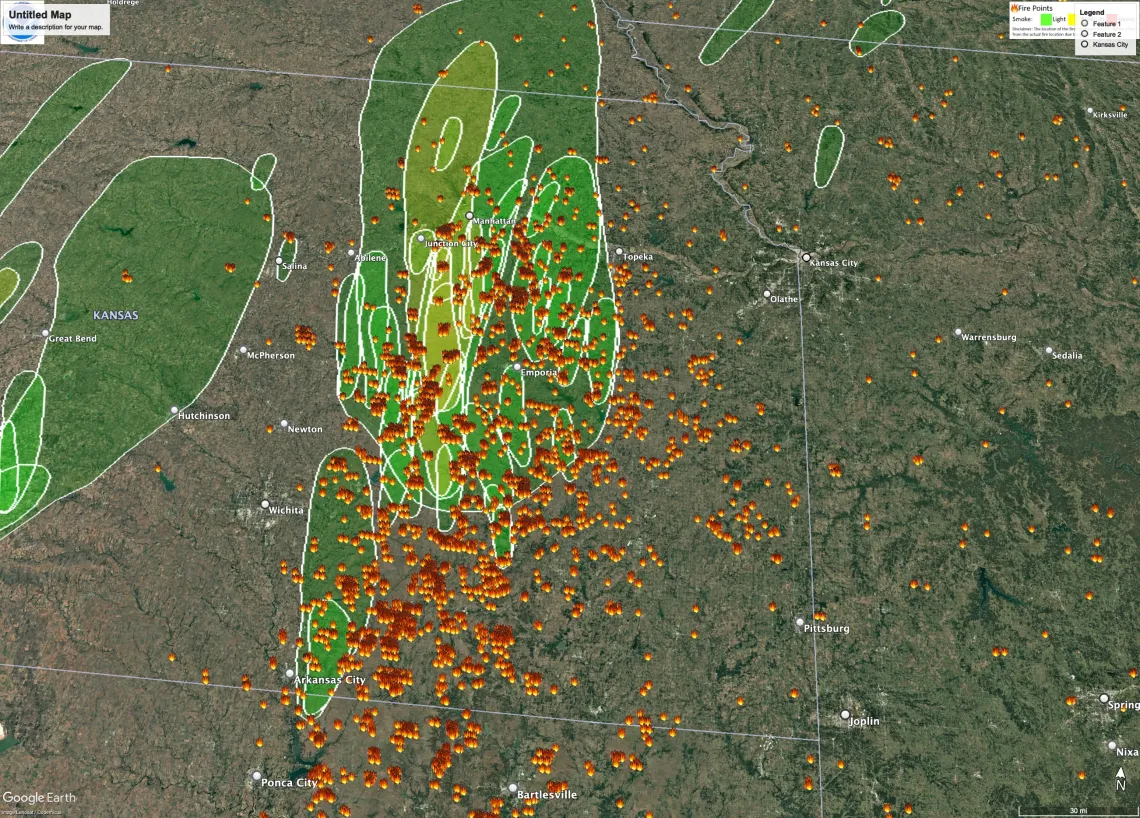
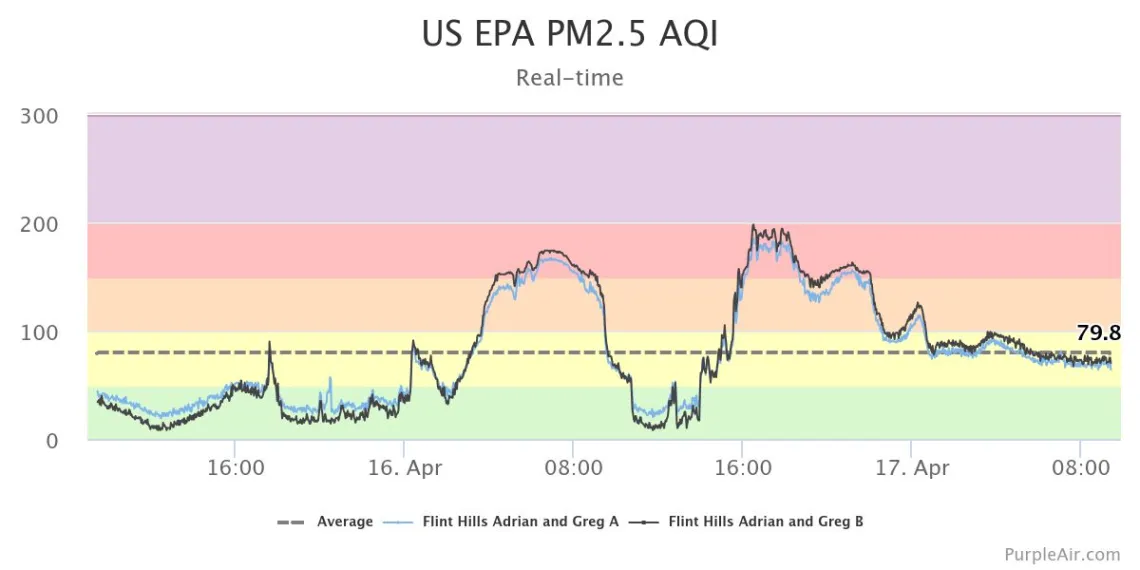
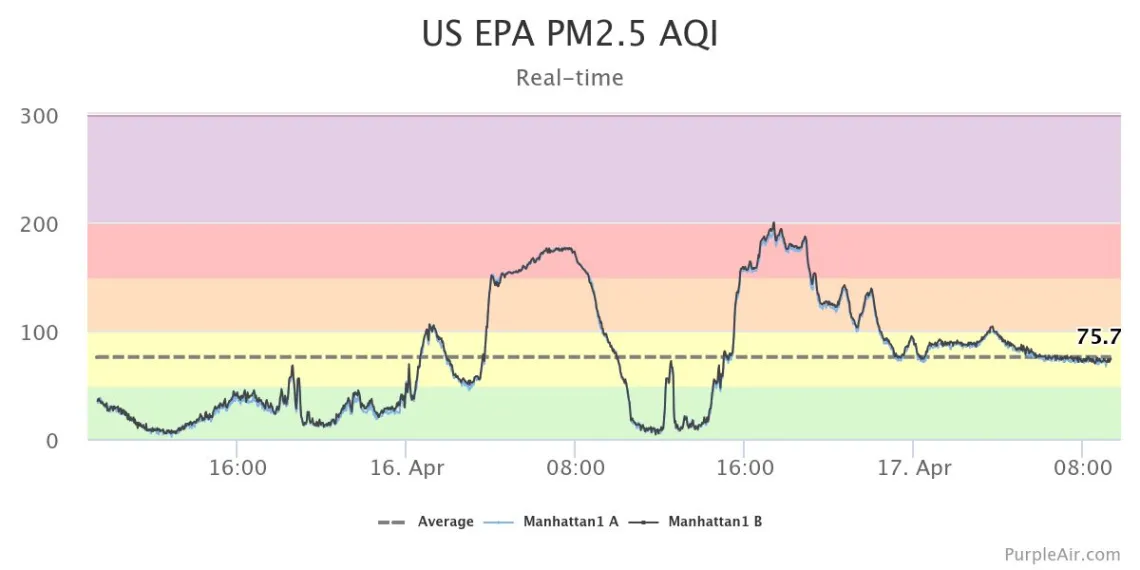
This is demonstrated by the attached graphic from the National Oceanic and Atmospheric Administration (NOAA) for the big burn day that occurred on April 16. The more intense plumes narrowly missed the monitors in Wichita and Topeka. But they didn’t miss the Manhattan-Junction City area where there are no official monitors despite the large population. We do have the results from two of the Chapter -owned Purple Air monitors that the Kansas Chapter’s Flint Hills Group installed in that area. The first is near the dam at the lake just north of town and the second is in Manhattan proper. The period covering the 24 hours of April 16 showed peaks at twice the air quality standard (AQI = 100), with a 24-hour average above the standard.
Some progress is being made in convincing ranchers to burn in the late summer or early fall, but KDHE is reluctant to fill in the regulatory monitoring gaps. So, while the annual burn helps preserve the tall grass prairie, its current method of practice is just another example of the health impacts of industrial agriculture.