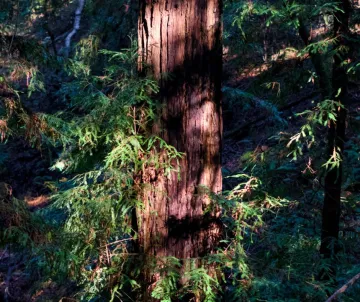
A forest might look quiet from the outside, but the bark of every tree is alive with activity. Just beneath the rough surface, entire microbial communities are busy consuming gases that shape Earth’s climate. For years, scientists assumed that trees mostly released methane, since the gas can travel upward from the soil through their trunks. However, new research reveals a far more nuanced story, one in which trees act not just as conduits, but as unexpected cleaners of the atmosphere.
In the highlighted study, after peeling bark from native trees, Australian researchers discovered thriving populations of microbes that feed on methane, hydrogen, and carbon monoxide. These organisms aren’t passive passengers. They actively pull gases from both the soil and the air, breaking them down even at incredibly low concentrations. In some cases, the microbes consume more than a third of the methane moving through a tree, quietly reducing the amount that escapes into the atmosphere.
What surprised the scientists even more was the diversity of these microbial communities. Each tree species hosts a unique mix of gas‑eating microbes, suggesting that forests may play a much larger and more complex role in regulating the climate than previously understood. Some trees appear to be especially good at harboring methane‑eaters, while others support microbes that specialize in hydrogen or carbon monoxide.
Taken together, these tiny organisms may remove tens of millions of tons of greenhouse gases every year, a hidden climate service happening on the surface of trunks around the world. The discovery hints at new possibilities; if certain tree species naturally support more effective microbial communities, reforestation efforts could one day be designed not just to store carbon, but to cultivate forests that actively scrub multiple greenhouse gases from the air.
In this new view of the forest, bark becomes more than a protective shell. It’s a bustling habitat, a microscopic world working quietly and constantly to keep the planet’s atmosphere in balance.
Further, evidence indicates that different tree species support distinct microbial communities, each possessing unique climate-regulating abilities. A diverse forest is not only more resilient but may also be more effective at cleansing the atmosphere. Additionally, in a region where wildfire policy often favors cutting trees to reduce fuel, the research offers a quiet yet powerful counterpoint. Removing a living tree doesn’t just eliminate its carbon storage. It erases a miniature ecosystem on its bark, one that may be consuming methane every hour of every day. It’s a reminder that forests provide climate services we’re only beginning to understand.
In the Santa Cruz Mountains, where redwoods rise through the fog and oak woodlands stitch together the hillsides, the Sierra Club Loma Prieta Chapter’s Forest Protection Committee has long argued that forests are far more than collections of trees. They’re living systems, layered with relationships that stretch from the soil to the canopy. Yet even with that holistic view, a new discovery adds an unexpected chapter to the story the committee has been telling.
For Committee members, these discoveries feel like confirmation of something they’ve been saying all along: forests are intricate, irreplaceable systems whose value can’t be reduced to timber volume or carbon accounting. When the Committee pushes back against aggressive thinning proposals or advocates preserving mature trees, they’re defending not just trunks and branches but also the countless forms of life that depend on them, including these newly recognized microbial allies.
These findings also support the committee's argument for the advantages of natural recovery in forests following events such as wildfires, and its consistent emphasis on promoting native species and avoiding simplistic, one-size-fits-all planting strategies.
Finally, in light of these new discoveries, the Forest Protection Committee’s work takes on an even deeper resonance. Their advocacy isn’t just about saving trees. It’s about safeguarding the hidden worlds that live upon them, the subtle processes that stabilize the climate, and the complex web of life that makes a forest more than the sum of its parts. The bark of a tree, once thought to be little more than a protective shell, is actually a bustling frontier of climate action, and the Committee’s efforts help ensure that frontier remains intact for generations to come.
Resources about the Microbial World of Common Trees in the Loma Prieta Chapter: Oaks, Coastal Redwoods, Madrones, Douglas Firs, Tan Oaks, and California Bay Laurel
Oaks:
Oak trees rely on microbes to survive drought and disease - Earth.com
Hidden tree bark microbes munch on important climate gases
Coastal Redwoods:
The World Of Fungi Within A Redwood - Natural Reserve System
Flames And Foliage: Can Microbes Support Redwood Resistance To Fire? - Natural_Reserve System
Madrones:
Microbes in Tree Bark Cycle Greenhouse Gases | The Scientist
Bacteria in tree bark are hungry for methane
Microbes in bark ‘eat’ climate gases - Australian Geographic
Douglas Firs:
Biomass and distribution patterns of conifer twig microepiphytes in a Douglas fir forest
A 400-year-old Douglas fir tree and its epiphytes: biomass, surface area, and their distributions
Comparative Analysis of Microbial Communities in Adult Trees and Seedlings of Douglas fir
Tan Oaks:
California Bay Laurel:
California Bay Laurel | National Wildlife Federation
What's In your Watershed: Bay Laurel - The Watershed Project
California-Laurel | Silvics of North America